


Amblyopia treatment of adults with dichoptic training using the virtual reality oculus rift head mounted display: preliminary results
- PMID: 28659140
- PMCID: PMC5490155
- DOI: 10.1186/s12886-017-0501-8
Amblyopia treatment of adults with dichoptic training using the virtual reality oculus rift head mounted display: preliminary results
Abstract
Background: The gold standard treatments in amblyopia are penalizing therapies, such as patching or blurring vision with atropine that are aimed at forcing the use of the amblyopic eye. However, in the last years, new therapies are being developed and validated, such as dichoptic visual training, aimed at stimulating the amblyopic eye and eliminating the interocular supression.
Purpose: To evaluate the effect of dichoptic visual training using a virtual reality head mounted display in a sample of anisometropic amblyopic adults and to evaluate the potential usefulness of this option of treatment.
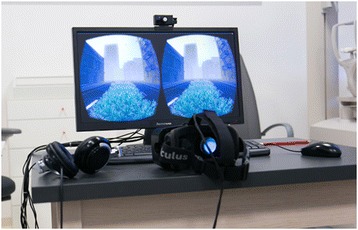
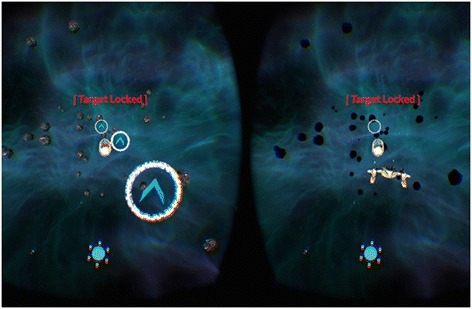
Methods: A total of 17 subjects (10 men, 7 women) with a mean age of 31.2 years (range, 17-69 year) and anisometropic amblyopia were enrolled. Best corrected visual acuity (BCVA) and stereoacuity (Stereo Randot graded circle test) changes were evaluated after 8 sessions (40 min per session) of dichoptic training with the computer game Diplopia Game (Vivid Vision) run in the Oculus Rift OC DK2 virtual reality head mounted display (Oculus VR).
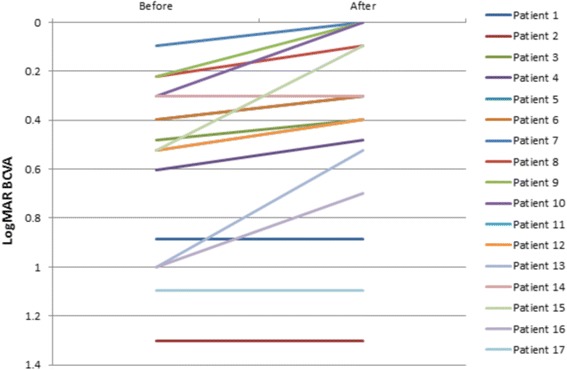
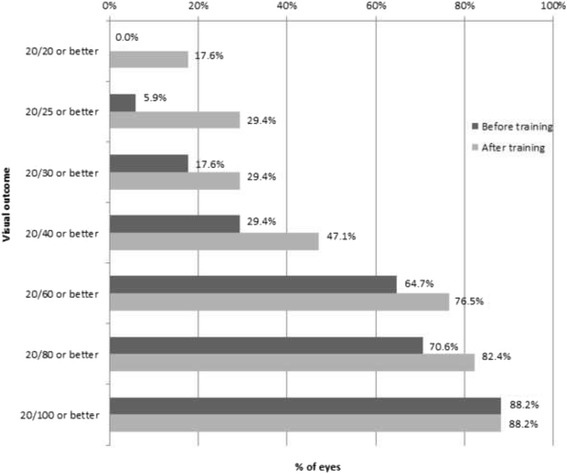
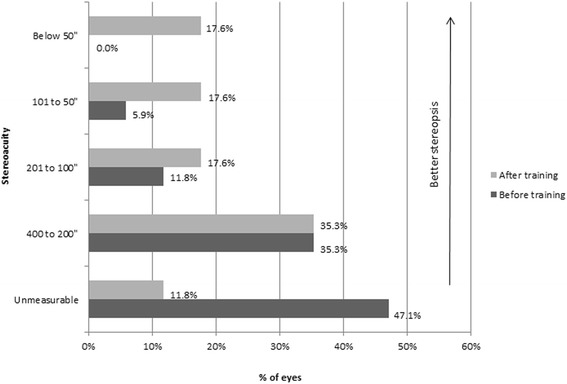
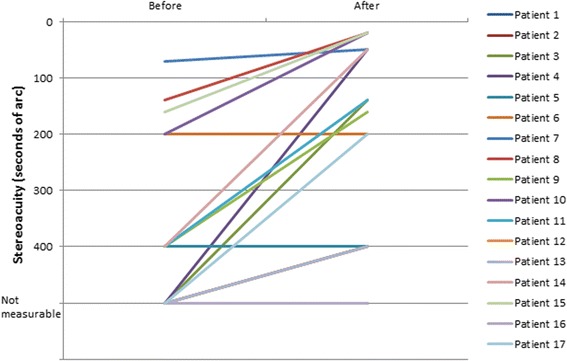
Results: Mean BCVA in amblyopic eye improved significantly from a logMAR value of 0.58 ± 0.35 before training to a post-training value of 0.43 ± 0.38 (p < 0.01). Forty-seven percent of the participants achieved BCVA of 20/40 or better after the training as compared to 30% before the training. Mean stereoacuity changed from a value of 263.3 ± 135.1 before dichoptic training to a value of 176.7 ± 152.4 s of arc after training (p < 0.01). A total of 8 patients (47.1%) before dichoptic treatment had unmeasurable stereoacuity while this only occurred in 2 patients (11.8%) after training.
Conclusions: Dichoptic training using a virtual reality head mounted display seems to be an effective option of treatment in adults with anisometropic amblyopia. Future clinical trials are needed to confirm this preliminary evidence.
Trial registration: Trial ID: ISRCTN62086471 . Date registered: 13/06/2017. Retrospectively registered.
Keywords: Amblyopia; Dichoptic training; Oculus rift; Stereopsis; Virtual reality.
Conflict of interest statement
Ethics approval and consent to participate
All participants in this study provided consent to participate. The parents or guardians provided consent for participants under the age of 18.
The study was approved by the Ethics Committe of Jessenius Medical School, Commenius University in Martin (date of approval: 08/03/2016; reference number: EK 1795/2016)
Consent for publication
Not applicable
Competing interests
The authors declare that they have no competing interests.
Publisher’s Note
Springer Nature remains neutral with regard to jurisdictional claims in published maps and institutional affiliations.
Figures
Comment in
-
A pilot non-randomized trial of smartphone-based anaglyph system for treatment of adult amblyopia through VR (Virtual Reality).Indian J Ophthalmol. 2023 Aug;71(8):3001-3004. doi: 10.4103/IJO.IJO_3225_22. Indian J Ophthalmol. 2023. PMID: 37530272 Free PMC article.
References
-
- Wiesel TN, Hubel DH. Comparison of the effects of unilateral and bilateral eye closure on cortical unit responses in kittens. J Neurophysiol. 1965;28:1029–1040. - PubMed
MeSH terms
LinkOut - more resources
Full Text Sources
Other Literature Sources
Medical
