


Microbial Community Structure of Deep-sea Hydrothermal Vents on the Ultraslow Spreading Southwest Indian Ridge
- PMID: 28659873
- PMCID: PMC5468387
- DOI: 10.3389/fmicb.2017.01012
Microbial Community Structure of Deep-sea Hydrothermal Vents on the Ultraslow Spreading Southwest Indian Ridge
Abstract
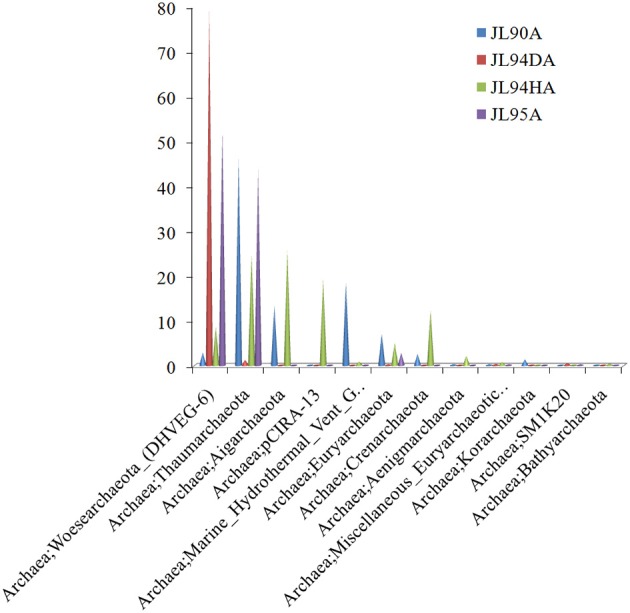
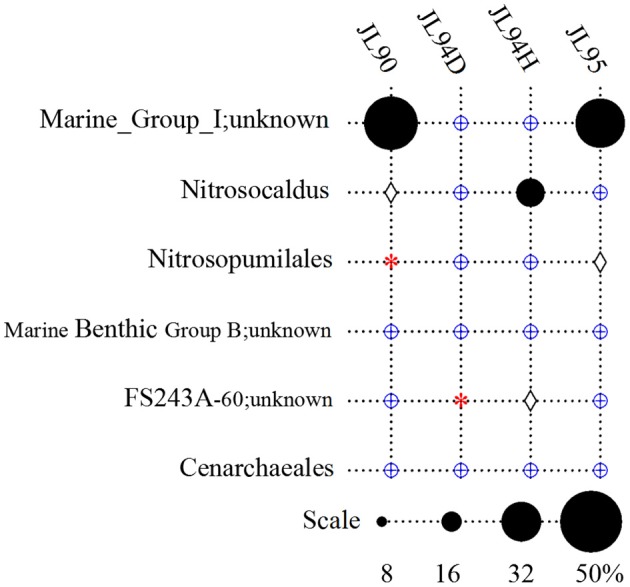
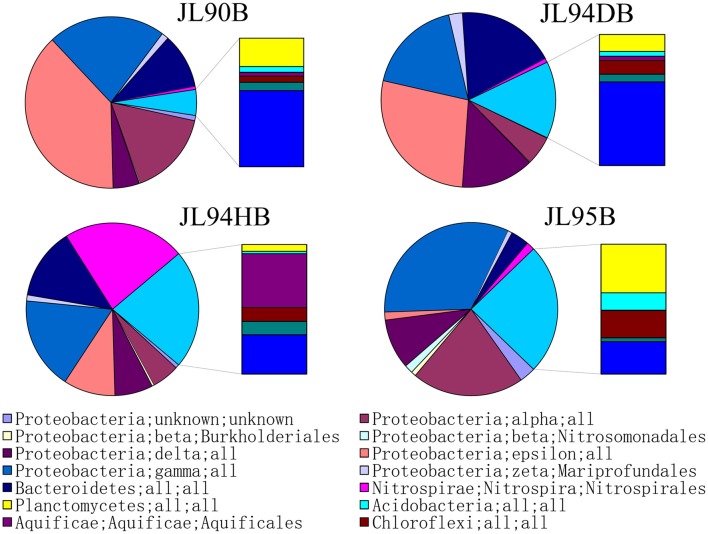
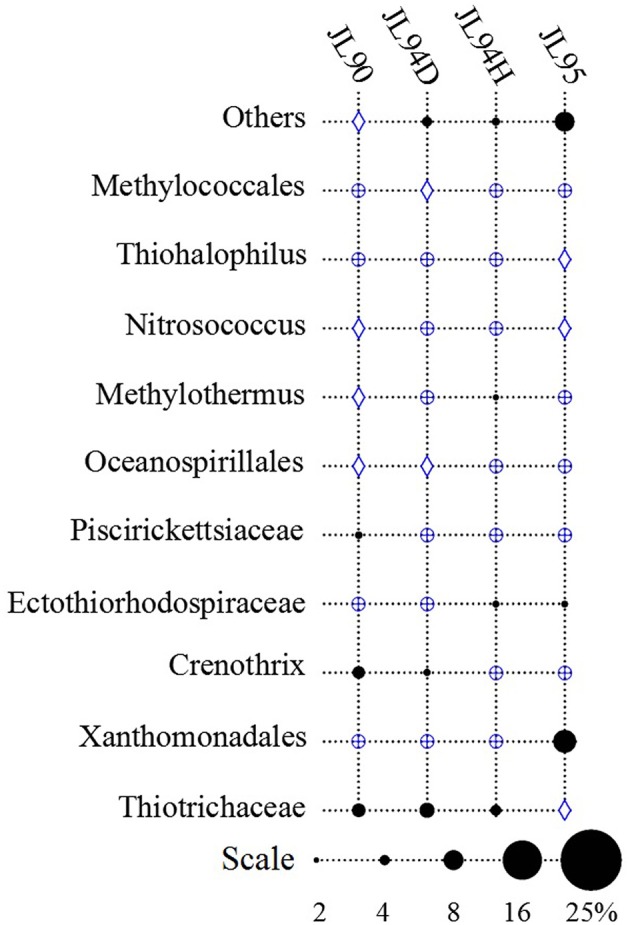
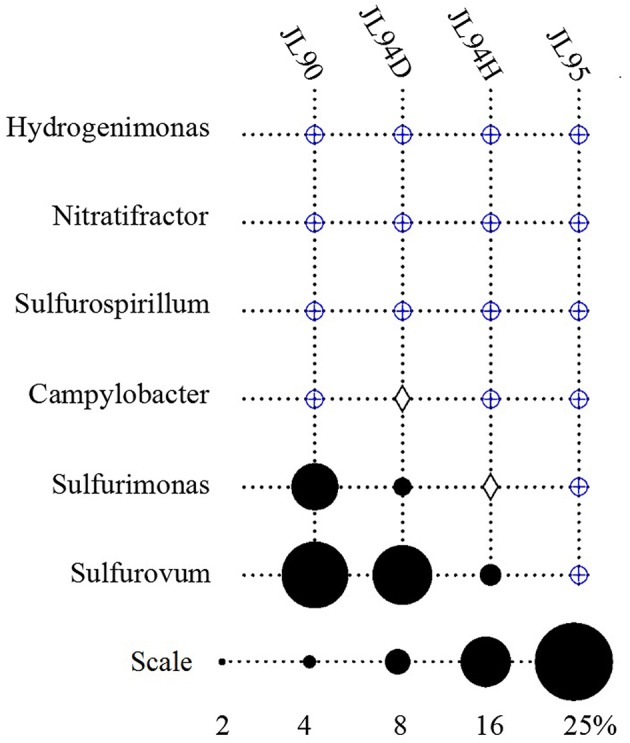
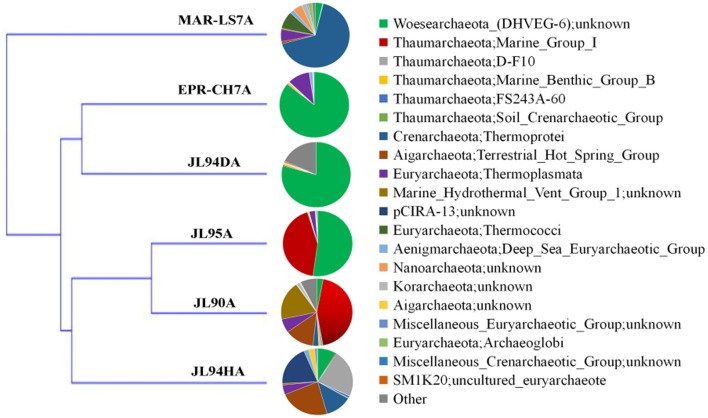
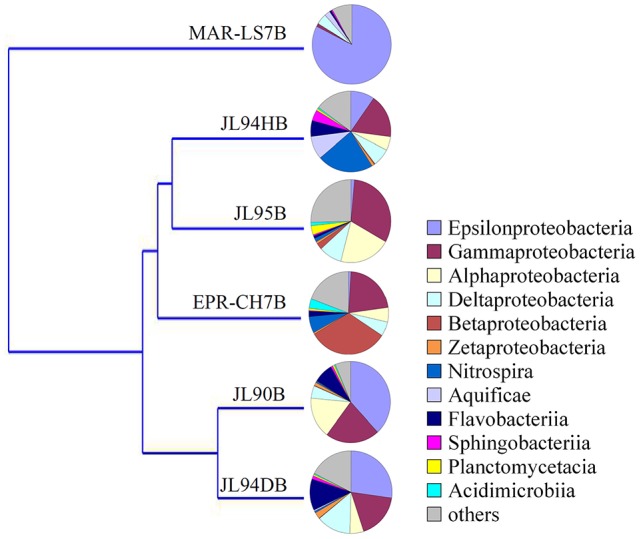
Southwest Indian Ridge (SWIR) is a typical oceanic ultraslow spreading ridge with intensive hydrothermal activities. The microbial communities in hydrothermal fields including primary producers to support the entire ecosystem by utilizing geochemical energy generated from rock-seawater interactions. Here we have examined the microbial community structures on four hydrothermal vents from SWIR, representing distinct characteristics in terms of temperature, pH and metal compositions, by using Illumina sequencing of the 16S small subunit ribosomal RNA (rRNA) genes, to correlate bacterial and archaeal populations with the nature of the vents influenced by ultraslow spreading features. Epsilon-, Gamma-, Alpha-, and Deltaproteobacteria and members of the phylum Bacteroidetes and Planctomycetes, as well as Thaumarchaeota, Woesearchaeota, and Euryarchaeota were dominant in all the samples. Both bacterial and archaeal community structures showed distinguished patterns compared to those in the fast-spreading East Pacific Ridge or the slow-spreading Mid-Atlantic Ridge as previously reported. Furthermore, within SWIR, the microbial communities are highly correlated with the local temperatures. For example, the sulfur-oxidizing bacteria were dominant within bacteria from low-temperature vents, but were not represented as the dominating group recovered from high temperature (over 300°C) venting chimneys in SWIR. Meanwhile, Thaumarchaeota, the ammonium oxidizing archaea, only showed high relative abundance of amplicons in the vents with high-temperature in SWIR. These findings provide insights on the microbial community in ultraslow spreading hydrothermal fields, and therefore assist us in the understanding of geochemical cycling therein.
Keywords: 16S ribosomal RNA; SWIR; hydrothermal vent; microbial community; ultraslow-spreading ridge.
Figures
References
-
- Baker E. T., German C. R. (2004). On the global distribution of hydrothermal vent fields, in Mid-Ocean Ridges: Hydrothermal Interactions between the Lithosphere and Oceans, eds German C. R., Lin J., Parson L. M. (Washington DC: American Geophysical Union; ), 245–266.
-
- Bourbonnais A., Juniper S., Butterfield D., Devol A., Kuypers M., Lavik G., et al. (2012). Activity and abundance of denitrifying bacteria in the subsurface biosphere of diffuse hydrothermal vents of the Juan de Fuca Ridge. Biogeosciences 9, 4661–4678. 10.5194/bg-9-4661-2012 - DOI
-
- Campbell B. J., Jeanthon C., Kostka J. E., Luther G. W., Cary S. C. (2001). Growth and phylogenetic properties of novel bacteria belonging to the Epsilon subdivision of the Proteobacteria enriched from Alvinella pompejana and deep-Sea hydrothermal vents. Appl. Environ. Microbiol. 67, 4566–4572. 10.1128/AEM.67.10.4566-4572.2001 - DOI - PMC - PubMed
LinkOut - more resources
Full Text Sources
Other Literature Sources
