


The role of structured education in the management of hypoglycaemia
- PMID: 28660491
- PMCID: PMC6448987
- DOI: 10.1007/s00125-017-4334-z
The role of structured education in the management of hypoglycaemia
Abstract
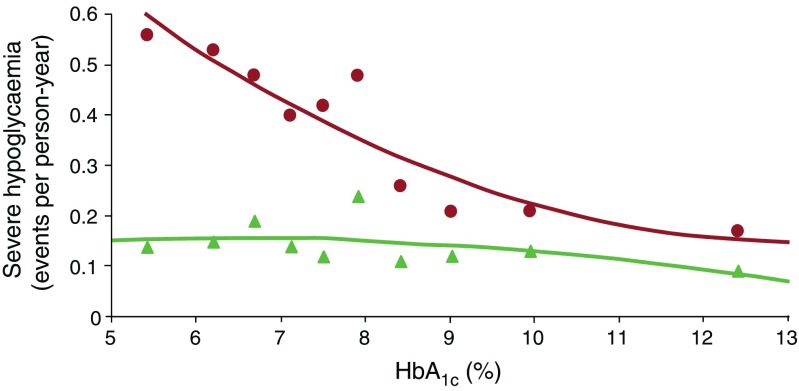
The role of intensive glycaemic control in preventing microvascular disease in diabetes is well established. Iatrogenic hypoglycaemia is, however, a major barrier to effective treatment. Hypoglycaemia is associated with a significant level of morbidity and, despite pharmacological and technological therapeutic advances, reported rates of severe hypoglycaemia in clinical practice have not fallen over the last 20 years. This suggests that human factors are of major relevance and that ensuring the effective self-management of diabetes is an important strategy for the reduction of hypoglycaemic risk. Most of the evidence for the impact of this strategy on hypoglycaemia risk is confined to adults with type 1 diabetes although, in this review, we also cite studies that have specifically addressed this in type 2 diabetes. There are relatively few adequately powered RCTs that have rigorously evaluated the effectiveness of structured education and training programmes on hypoglycaemia; however, the available data suggest a subsequent reduction in severe hypoglycaemia rates of around 50%, a rate reduction that is comparable with that observed following technological interventions. Furthermore, longitudinal observational cohorts support these data, showing similar reductions in rates of hypoglycaemia following structured education. Those who continue to experience recurrent hypoglycaemia and impaired awareness of hypoglycaemia despite education and training in diabetes self-management may benefit from technological interventions and/or interventions that specifically address psychological factors that contribute to hypoglycaemia risk; however, there is urgent need for further research in this area. In the meantime, structured education for effective self-management of diabetes should be part of routine therapy for all those with type 1 diabetes.
Keywords: Hypoglycaemia; Review; Structured education; Type 1 diabetes; Type 2 diabetes.
Conflict of interest statement
Duality of interest
AI has no duality of interest associated with this manuscript. SRH has served on speaker panels for Sanofi-Aventis, Eli Lilly, Takeda, Novo Nordisk and AstraZeneca for which he has received remuneration. He has served on advisory panels or as a consultant for Boehringer Ingelheim, Novo Nordisk, Eli Lilly and Takeda for which his institution has received remuneration. He is chief investigator on an NIHR-funded programme grant developing and researching the DAFNE intervention and is a co-investigator on a JDRF-funded project to develop and trial the DAFNE-HART intervention now named, Beyond Education: A Hypoglycaemia Awareness Restoration Program for people with type 1 diabetes and problematic hypoglycaemia persisting despite optimised self-care (HARPdoc).
Contribution statement
AI and SRH were responsible for drafting the article and revising it critically for important intellectual content. Both authors approved the version to be submitted for publication.
Figures
References
Publication types
MeSH terms
Substances
Grants and funding
LinkOut - more resources
Full Text Sources
Other Literature Sources
Medical
