Botulism in Italy, 1986 to 2015
- PMID: 28661393
- PMCID: PMC5479972
- DOI: 10.2807/1560-7917.ES.2017.22.24.30550
Botulism in Italy, 1986 to 2015
Abstract
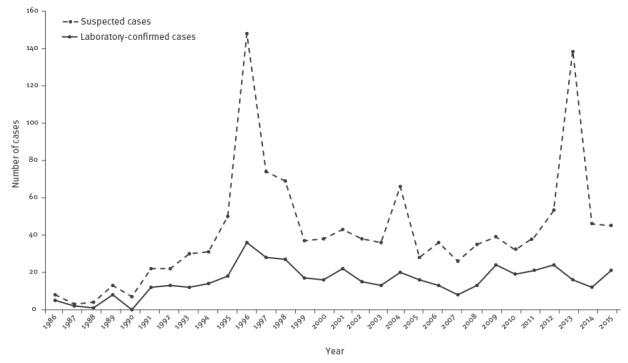
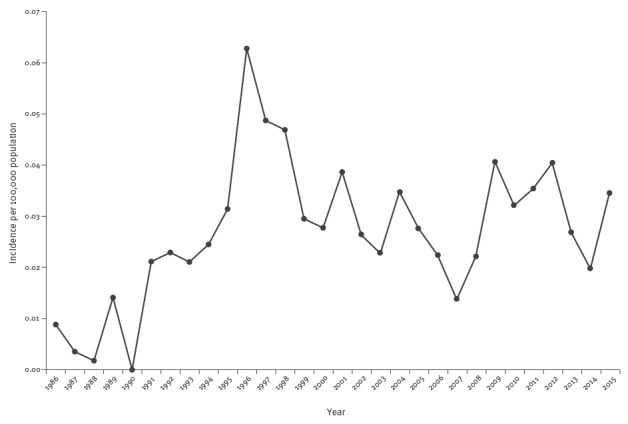
Botulism is a rare but severe neuroparalytic disease caused by botulinum toxins. Because of its high potential impact on public health, botulism is a closely monitored communicable disease in Europe. In Italy, which has one of the highest incidence rates in Europe (0.03 cases per 100,000 population), botulism is monitored through a case-based passive surveillance system: the front-line physician who diagnoses a suspected case must notify the Local Health Units immediately, and the Ministry of Health's office within 12 hours. From 1986 to 2015, 466 confirmed cases of botulism were recorded in Italy (of 1,257 suspected cases). Of these, 421 were food-borne (the most frequently seen form of botulism due to the consumption of improperly home-canned foods), 36 were infant botulism, which accounts for ca 50% of all these types of cases registered in Europe, six were wound-related and three were due to adult intestinal colonisation. This scenario suggests that stronger efforts should be made towards raising public awareness of the risk of food-borne botulism, especially with respect to home-preserved foods, as well as improving the training of front-line medical personnel, to ensure that a quick and accurate diagnosis of botulism can be made.
Keywords: BoNT-producing Clostridium; Botulism; Epidemiology; Infectious diseases; Surveillance.
This article is copyright of The Authors, 2017.
Conflict of interest statement
Figures
References
MeSH terms
Substances
LinkOut - more resources
Full Text Sources
Other Literature Sources
Medical