. 2017 Jun 29;12(6):e0180034.
doi: 10.1371/journal.pone.0180034. eCollection 2017.

Intratumoural production of TNFα by bacteria mediates cancer therapy

Affiliations

Intratumoural production of TNFα by bacteria mediates cancer therapy

Carola Murphy et al. PLoS One. .

Abstract

Systemic administration of the highly potent anticancer therapeutic, tumour necrosis factor alpha (TNFα) induces high levels of toxicity and is responsible for serious side effects. Consequently, tumour targeting is required in order to confine this toxicity within the locality of the tumour. Bacteria have a natural capacity to grow within tumours and deliver therapeutic molecules in a controlled fashion. The non-pathogenic E. coli strain MG1655 was investigated as a tumour targeting system in order to produce TNFα specifically within murine tumours. In vivo bioluminescence imaging studies and ex vivo immunofluorescence analysis demonstrated rapid targeting dynamics and prolonged survival, replication and spread of this bacterial platform within tumours. An engineered TNFα producing construct deployed in mouse models via either intra-tumoural (i.t.) or intravenous (i.v.) administration facilitated robust TNFα production, as evidenced by ELISA of tumour extracts. Tumour growth was impeded in three subcutaneous murine tumour models (CT26 colon, RENCA renal, and TRAMP prostate) as evidenced by tumour volume and survival analyses. A pattern of pro-inflammatory cytokine induction was observed in tumours of treated mice vs.

Controls: Mice remained healthy throughout experiments. This study indicates the therapeutic efficacy and safety of TNFα expressing bacteria in vivo, highlighting the potential of non-pathogenic bacteria as a platform for restricting the activity of highly potent cancer agents to tumours.


Conflict of interest statement

Competing Interests: The authors have declared that no competing interests exist.

Figures

Fig 1
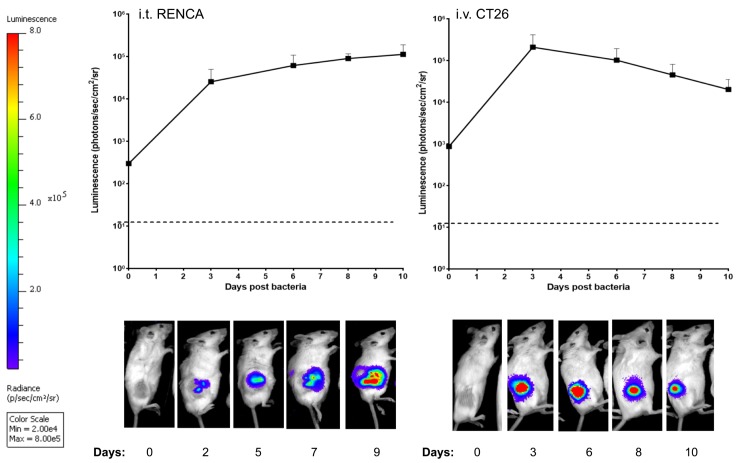
Fig 1. Administration of luminescent E. coli MG1655 to tumour bearing mice.
Subcutaneous RENCA tumours were injected i.t. with 106 cfu and monitored by BLI over the shown time points (left). Mice (n = 6) bearing CT26 tumours were injected with 106 bacteria to the lateral tail vein and all mice monitored at each time point over the course of time (right). The change in bacterial luminescence (relative to day 0) is shown. A representative image at each time point is shown. Luminescence remained stable across the range of time-points indicating that robust numbers of viable bacteria persisted within the tumour throughout the experiment.
Fig 2
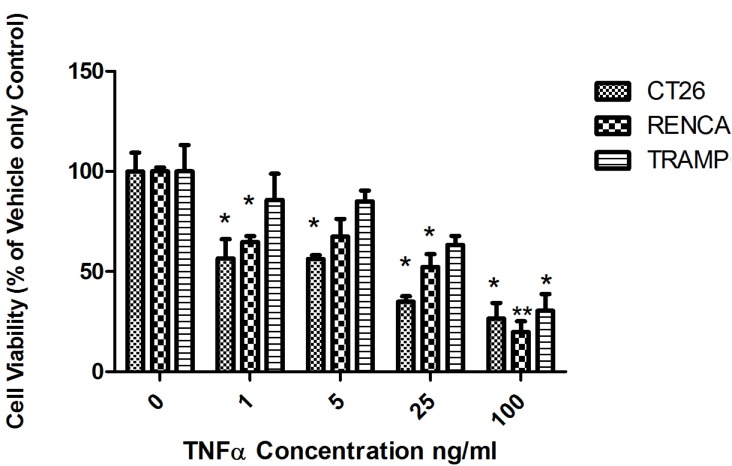
Fig 2. Tumour cell sensitivity to TNFα in vitro.
MTT-based in vitro cytotoxicity assays following incubation of CT26, RENCA or TRAMP cells with varying concentrations of TNFα indicate significant sensitivity to TNFα with all cell lines examined (*p < 0.05, **p < 0.01).
Fig 3
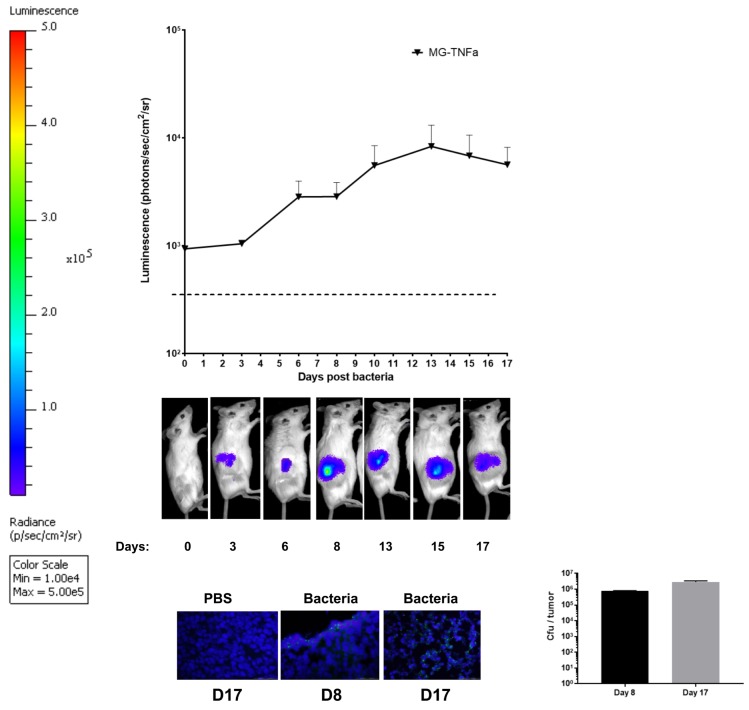
Fig 3. Intravenous administration of MG-Tnfα to tumour bearing mice.
Balb/C mice bearing s.c. CT26 flank tumours (n = 6) received 106 cfu of MG-TNFα i.v.. Growth of bacteria in tumours was analysed by (a) BLI and (b) immunofluorescence (IF), while (c) plating of tumour extracts on agar plates quantified viable bacteria. A representative image for each BLI group is shown. For IF, tissue sections from 2 individual mice per time point were analysed by fluorescence microscopy. (Original magnification, 400x), Scale bars, 50 μm.
Fig 4
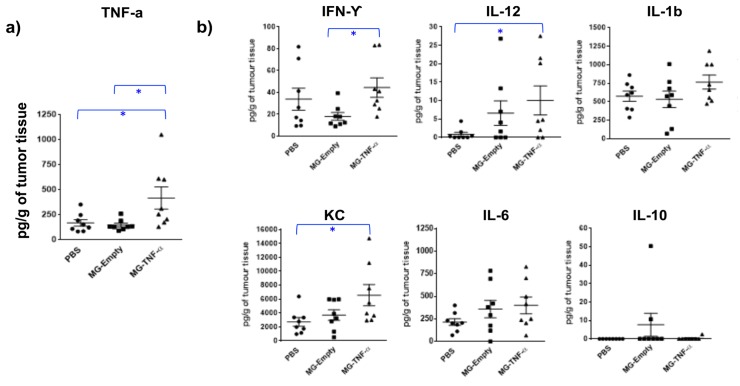
Fig 4. Intratumoural TNFα production and cytokine profiles.
(a) Cytokine analysis of CT26 tumour extracts following treatment with bacteria. (b) Multiplex cytokine analysis of treated CT26 tumour extracts. * p ≤ 0.05.
Fig 5
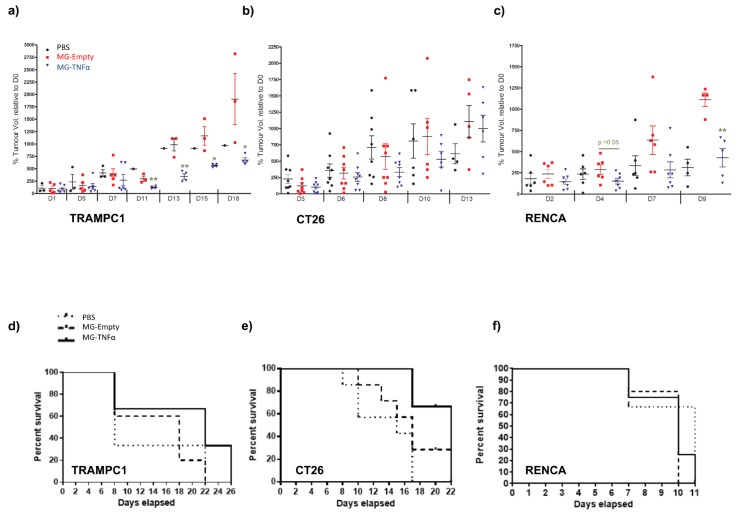
Fig 5. Tumour therapy via in vivo production of Tnfα.
BALB/c or C57 mice bearing s.c. flank tumours were administered MG-Empty, MG-TNFα or vehicle (PBS). Tumours were monitored for changes in volume every other day. Tumour volume (%) relative to the first day of bacterial administration (day 0) is shown for (i) TRAMPC1 (ii) CT26 and (iii) RENCA (a-c). Statistical analysis at each time point is based on number of subjects alive. (d-e) Kaplan-Meier survival plots of each group starting from the first day of bacterial administration. *p < 0.05, **p < 0.01.

References

    1. Carswell EA, Old LJ, Kassel RL, Green S, Fiore N, Williamson B. An endotoxin-induced serum factor that causes necrosis of tumors. Proc Natl Acad Sci U S A. 1975;72(9):3666–70. ; PubMed Central PMCID: PMC433057. - PMC - PubMed
    1. O'Brien ME, Saini A, Smith IE, Webb A, Gregory K, Mendes R, et al. A randomized phase II study of SRL172 (Mycobacterium vaccae) combined with chemotherapy in patients with advanced inoperable non-small-cell lung cancer and mesothelioma. Br J Cancer. 2000;83(7):853–7. doi: 10.1054/bjoc.2000.1401 . - DOI - PMC - PubMed
    1. Yuan Z, Syrkin G, Adem A, Geha R, Pastoriza J, Vrikshajanani C, et al. Blockade of inhibitors of apoptosis (IAPs) in combination with tumor-targeted delivery of tumor necrosis factor-alpha leads to synergistic antitumor activity. Cancer gene therapy. 2013;20(1):46–56. doi: 10.1038/cgt.2012.83 ; PubMed Central PMCID: PMC3534156. - DOI - PMC - PubMed
    1. Datta R, Rubin E, Sukhatme V, Qureshi S, Hallahan D, Weichselbaum RR, et al. Ionizing radiation activates transcription of the EGR1 gene via CArG elements. Proc Natl Acad Sci U S A. 1992;89(21):10149–53. . - PMC - PubMed
    1. Datta R, Taneja N, Sukhatme VP, Qureshi SA, Weichselbaum R, Kufe DW. Reactive oxygen intermediates target CC(A/T)6GG sequences to mediate activation of the early growth response 1 transcription factor gene by ionizing radiation. Proc Natl Acad Sci U S A. 1993;90(6):2419–22. . - PMC - PubMed

MeSH terms

Substances