


Researching Mental Health Disorders in the Era of Social Media: Systematic Review
- PMID: 28663166
- PMCID: PMC5509952
- DOI: 10.2196/jmir.7215
Researching Mental Health Disorders in the Era of Social Media: Systematic Review
Abstract
Background: Mental illness is quickly becoming one of the most prevalent public health problems worldwide. Social network platforms, where users can express their emotions, feelings, and thoughts, are a valuable source of data for researching mental health, and techniques based on machine learning are increasingly used for this purpose.
Objective: The objective of this review was to explore the scope and limits of cutting-edge techniques that researchers are using for predictive analytics in mental health and to review associated issues, such as ethical concerns, in this area of research.
Methods: We performed a systematic literature review in March 2017, using keywords to search articles on data mining of social network data in the context of common mental health disorders, published between 2010 and March 8, 2017 in medical and computer science journals.
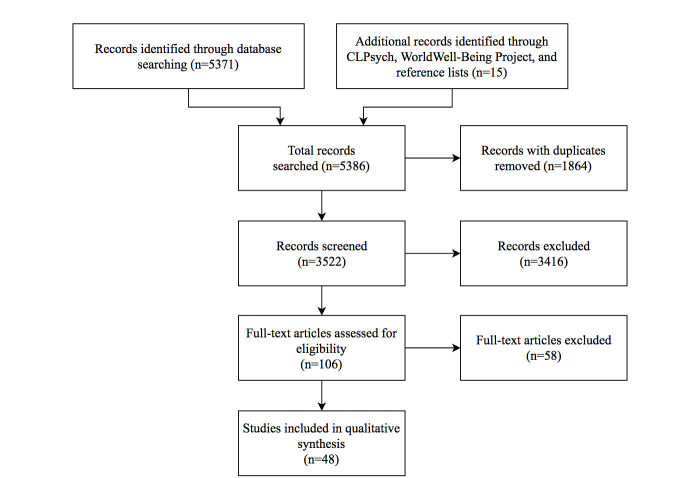
Results: The initial search returned a total of 5386 articles. Following a careful analysis of the titles, abstracts, and main texts, we selected 48 articles for review. We coded the articles according to key characteristics, techniques used for data collection, data preprocessing, feature extraction, feature selection, model construction, and model verification. The most common analytical method was text analysis, with several studies using different flavors of image analysis and social interaction graph analysis.
Conclusions: Despite an increasing number of studies investigating mental health issues using social network data, some common problems persist. Assembling large, high-quality datasets of social media users with mental disorder is problematic, not only due to biases associated with the collection methods, but also with regard to managing consent and selecting appropriate analytics techniques.
Keywords: anxiety; artificial intelligence; depression; infodemiology; machine learning; mental disorders; mental health; public health informatics; social networking.
©Akkapon Wongkoblap, Miguel A Vadillo, Vasa Curcin. Originally published in the Journal of Medical Internet Research (http://www.jmir.org), 29.06.2017.
Conflict of interest statement
Conflicts of Interest: None declared.
Figures
References
-
- Marcus M, Yasamy M, van Ommeren OM, Chisholm D. Depression: a global public health concern. Geneva, Switzerland: World Health Organization, Department of Mental Health and Substance Abuse; 2012. [2016-08-24]. http://www.who.int/mental_health/management/depression/who_paper_depress... .
-
- McManus S, Meltzer H, Brugha T, Bebbington P, Jenkins R. Adult Psychiatric Morbidity in England: Results of a Household Survey. Leeds, UK: NHS Information Centre for Health and Social Care; 2007.
-
- Bloom D, Cafiero E, Jané-Llopis E, Abrahams-Gessel S, Bloom R, Fathima S, Feigl B, Gaziano T, Mowafi M, Pandya A, Prettner K, Rosenberg L, Seligman B, Stein A, Weinstein C. The global economic burden of noncommunicable diseases. World Economic Forum; 2011. [2012-11-26]. http://www3.weforum.org/docs/WEF_Harvard_HE_GlobalEconomicBurdenNonCommu... .
-
- Hamilton M. Development of a rating scale for primary depressive illness. Br J Soc Clin Psychol. 1967 Dec;6(4):278–96. - PubMed
Publication types
MeSH terms
LinkOut - more resources
Full Text Sources
Other Literature Sources
Medical
