


Analysis of Sasang constitutional types using facial features with compensation for photographic distance
- PMID: 28664044
- PMCID: PMC5481682
- DOI: 10.1016/j.imr.2012.09.003
Analysis of Sasang constitutional types using facial features with compensation for photographic distance
Abstract
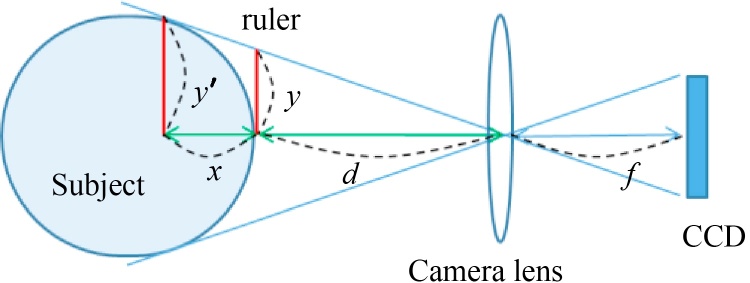
Background: Facial features are regarded as representative and reliable characteristics for diagnosing a person's Sasang Constitution (SC). However, the description of these features tends to depend on the interpretation and the opinion of the doctor that follows the SC approach. In this paper, we performed a facial feature analysis of SC types in an objective and quantitative manner. Here, site-to-site variability can be an obstacle to properly analyzing facial features when images are taken from various sites, which may have different experimental environments. A compensation technique to reduce the site-to-site variability was proposed before performing the feature analysis.
Methods: The frontal and profile images of 1464 patients recruited from various oriental medical clinics (19 sites) were used. Candidate feature variables were created, which were inspired by the facial characteristics of the SC types described in the Sasang constitutional medicine literature. To resolve the problems involved in processing data collected from various sites with heterogeneous experimental environments, a compensation technique was proposed. Statistical analysis techniques were employed to observe the differences among the SC types and to demonstrate how effectively the site-to-site variability was reduced.
Results: The facial features that were significant for diagnosing the SC types were identified by a statistical analysis, and it was verified that the compensation technique reduced the site-to-site variability produced by the differences in photographic distance.
Conclusion: It is noted that the significant facial features represent common characteristics of each SC type in the sense that we collected extensive opinions from many Sasang constitutional medicine doctors with various points of view. Additionally, a compensation method for the photographic distance is needed to find the significant facial features. We expect these findings and the related compensation technique to contribute to establishing a scientific basis for the precise diagnosis of SC types in clinical practice.
Keywords: Sasang constitution; face; facial features; oriental medicine; quantitative standard; traditional Korean medicine.
Figures

References
-
- Chae H., Lyoo I.K., Lee S.J., Cho S., Bae H., Hong M. An alternative way to individualized medicine: psychological and physical traits of Sasang typology. J Altern Complem Med. 2003;9:519–528. - PubMed
-
- Shim E.B., Lee S., Kim J.Y., Earm Y.E. Physiome and Sasang constitutional medicine. J Physiol Sci. 2008;58:433–440. - PubMed
-
- Yin C.S., Park H.J., Chung J.H., Lee H.J., Lee B.C. Genome-wide association study of the four-constitution medicine. J Altern Complem Med. 2009;15:1327–1333. - PubMed
-
- Yoo J.H., Kim J.W., Kim K.K., Kim J.Y., Koh B.H., Lee E.J. Sasangin diagnosis questionnaire: test of reliability. J Altern Complem Med. 2007;13:111–122. - PubMed
LinkOut - more resources
Full Text Sources
