


Exercise-induced myokines in health and metabolic diseases
- PMID: 28664094
- PMCID: PMC5481763
- DOI: 10.1016/j.imr.2014.09.007
Exercise-induced myokines in health and metabolic diseases
Abstract
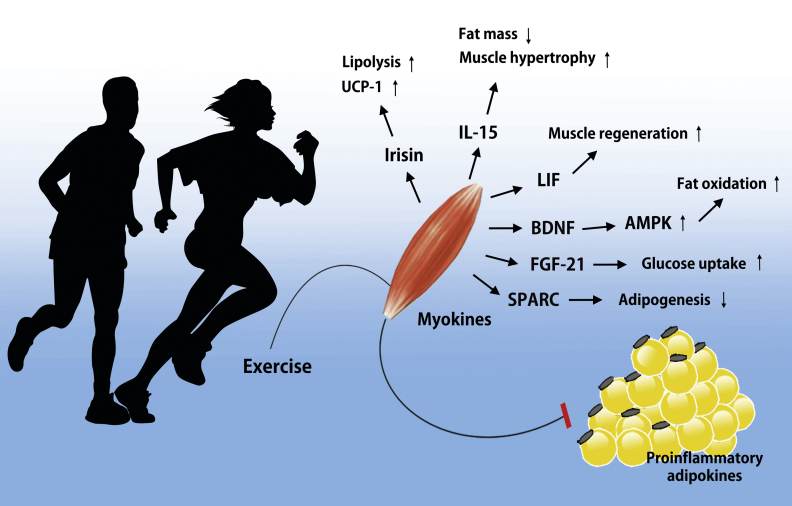
Skeletal muscle has been emerging as a research field since the past 2 decades. Contraction of a muscle, which acts as a secretory organ, stimulates production, secretion, and expression of cytokines or other muscle fiber-derived peptides, i.e., myokines. Exercise-induced myokines influence crosstalk between different organs in an autocrine, endocrine, or paracrine fashion. Myokines are recently recognized as potential candidates for treating metabolic diseases through their ability to stimulate AMP-activated protein kinase signaling, increase glucose uptake, and improve lipolysis. Myokines may have positive effects on metabolic disorders, type 2 diabetes, or obesity. Numerous studies on myokines suggested that myokines offer a potential treatment option for preventing metabolic diseases. This review summarizes the current understanding of the positive effects of exercise-induced myokines, such as interleukin-15, brain-derived neurotrophic factor, leukemia inhibitory factor, irisin, fibroblast growth factor 21, and secreted protein acidic and rich in cysteine, on metabolic diseases.
Keywords: exercise; health; metabolic diseases; myokines.
Figures
References
-
- Pedersen B.K., Saltin B. Evidence for prescribing exercise as therapy in chronic disease. Scand J Med Sci Sports. 2006;16(Suppl 1):3–63. - PubMed
-
- Tanasescu M., Leitzmann M.F., Rimm E.B., Willett W.C., Stampfer M.J., Hu F.B. Exercise type and intensity in relation to coronary heart disease in men. JAMA. 2002;288:1994–2000. - PubMed
-
- Motl R.W., Pilutti L.A. The benefits of exercise training in multiple sclerosis. Nat Rev Neurol. 2012;8:487–497. - PubMed
-
- Pedersen B.K., Febbraio M.A. Muscles, exercise and obesity: skeletal muscle as a secretory organ. Nat Rev Endocrinol. 2012;8:457–465. - PubMed
-
- Scherer P.E. Adipose tissue: from lipid storage compartment to endocrine organ. Diabetes. 2006;55:1537–1545. - PubMed
Publication types
LinkOut - more resources
Full Text Sources
Other Literature Sources
Miscellaneous
