


Behavioural changes, sharing behaviour and psychological responses after receiving direct-to-consumer genetic test results: a systematic review and meta-analysis
- PMID: 28664264
- PMCID: PMC5752648
- DOI: 10.1007/s12687-017-0310-z
Behavioural changes, sharing behaviour and psychological responses after receiving direct-to-consumer genetic test results: a systematic review and meta-analysis
Erratum in
-
Correction to: Behavioural changes, sharing behaviour and psychological responses after receiving direct-to-consumer genetic test results:a systematic review and meta-analysis.J Community Genet. 2019 Apr;10(2):321. doi: 10.1007/s12687-017-0353-1. J Community Genet. 2019. PMID: 29294252 Free PMC article.
Abstract
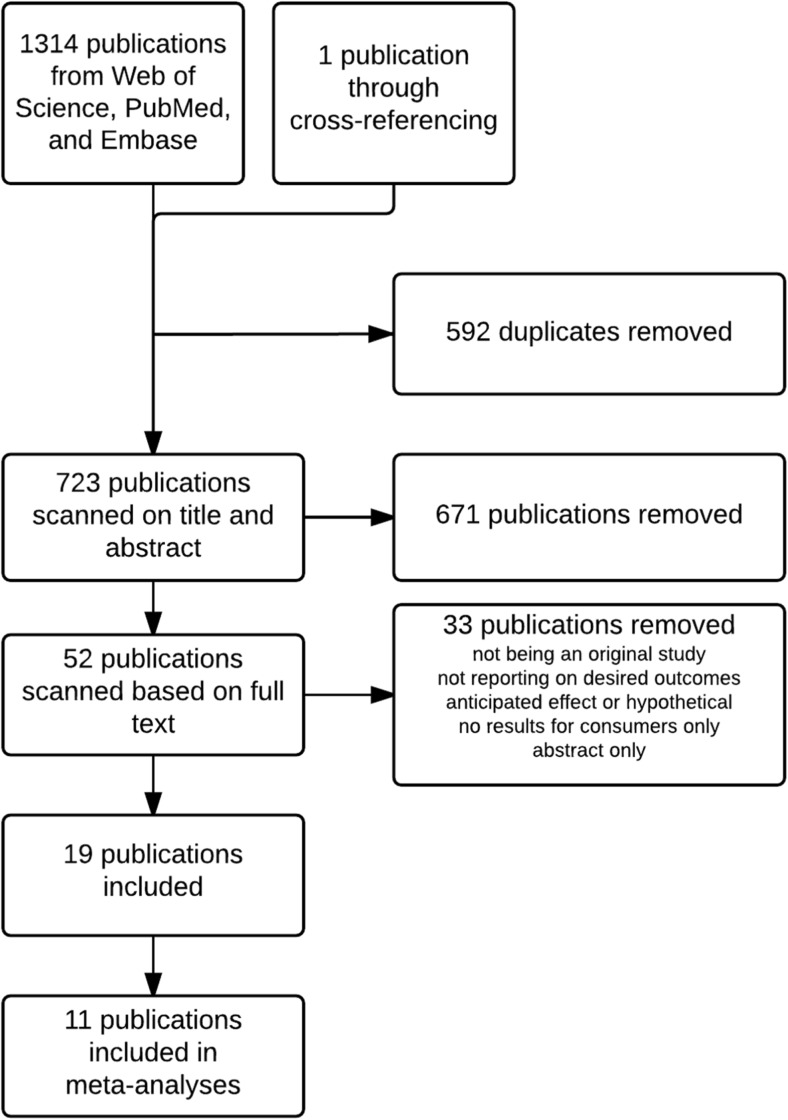
It has been hypothesised that direct-to-consumer genetic tests (DTC-GTs) could stimulate health behaviour change. However, genetic testing may also lead to anxiety and distress or unnecessarily burden the health care system. The aim is to review and meta-analyse the effects of DTC-GT on (1) behaviour change, (2) psychological response and (3) medical consumption. A systematic literature search was performed in three databases, using "direct-to-consumer genetic testing" as a key search term. Random effects meta-analyses were performed when at least two comparable outcomes were available. After selection, 19 articles were included involving 11 unique studies. Seven studies involved actual consumers who paid the retail price, whereas four included participants who received free genetic testing as part of a research trial (non-actual consumers). In meta-analysis, 23% had a positive lifestyle change. More specifically, improved dietary and exercise practices were both reported by 12%, whereas 19% quit smoking. Seven percent of participants had subsequent preventive checks. Thirty-three percent shared their results with any health care professional and 50% with family and/or friends. Sub-analyses show that behaviour change was more prevalent among non-actual consumers, whereas sharing was more prevalent among actual consumers. Results on psychological responses showed that anxiety, distress and worry were low or absent and that the effect faded with time. DTC-GT has potential to be effective as a health intervention, but the right audience needs to be addressed with tailored follow-up. Research is needed to identify consumers who do and do not change behaviour or experience adverse psychological responses.
Keywords: Behaviour change; Direct-to-consumer genetic testing; Meta-analysis; Psychological responses; Sharing behaviour; Systematic review.
Conflict of interest statement
Conflict of interest
The authors declare they have no conflict of interest. A spin-off genetic prevention service that aims to provide information to health professionals may be launched in the future, which will then be led by Maurice Zeegers.
Ethical approval
This article does not contain any studies with human participants or animals performed by any of the authors.
References
-
- Begg CB, Mazumdar M (1994) Operating characteristics of a rank correlation test for publication bias. Biometrics:1088–1101 - PubMed
Publication types
LinkOut - more resources
Full Text Sources
Other Literature Sources
Miscellaneous
