


SLC and ABC Transporters: Expression, Localization, and Species Differences at the Blood-Brain and the Blood-Cerebrospinal Fluid Barriers
- PMID: 28664465
- PMCID: PMC6467070
- DOI: 10.1208/s12248-017-0110-8
SLC and ABC Transporters: Expression, Localization, and Species Differences at the Blood-Brain and the Blood-Cerebrospinal Fluid Barriers
Abstract
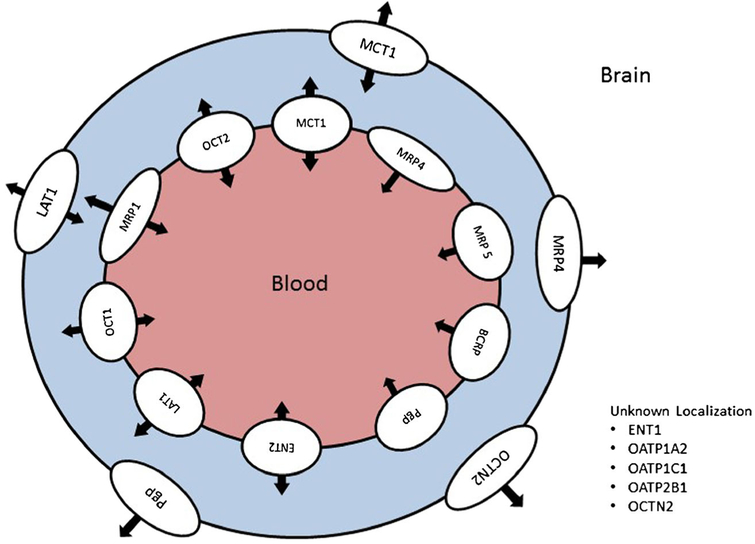
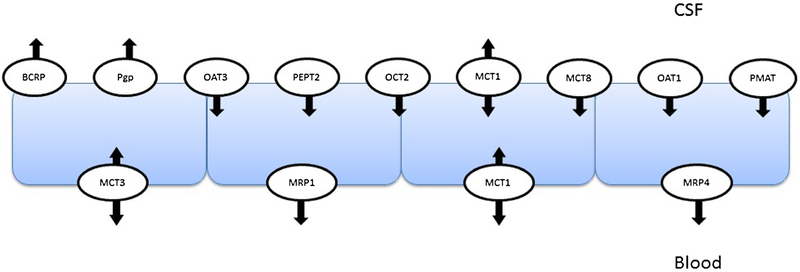
The blood-brain barrier (BBB) and the blood-cerebrospinal fluid barrier (BCSFB) separate the brain and cerebrospinal fluid (CSF) from the systemic circulation and represent a barrier to the uptake of both endogenous compounds and xenobiotics into the brain. For compounds whose passive diffusion is limited due to their ionization or hydrophilicity, membrane transporters can facilitate their uptake across the BBB or BCSFB. Members of the solute carrier (SLC) and ATP-binding case (ABC) families are present on these barriers. Differences exist in the localization and expression of transport proteins between the BBB and BCSFB, resulting in functional differences in transport properties. This review focuses on the expression, membrane localization, and different isoforms present at each barrier. Diseases that affect the central nervous system including brain tumors, HIV, Alzheimer's disease, Parkinson's disease, and stroke affect the integrity and expression of transporters at the BBB and BCSFB and will be briefly reviewed.
Keywords: blood-brain barrier; blood-cerebral spinal fluid barrier; efflux transporters; uptake transporters.
Figures
References
-
- Chaves C, Shawahna R, Jacob A, Scherrmann JM, Decleves X. Human ABC transporters at blood-CNS interfaces as determinants of CNS drug penetration. Curr Pharm Des. 2014;20(10):1450–62. - PubMed
-
- Stieger B, Gao B. Drug transporters in the central nervous system. Clin Pharmacokinet. 2015;54(3):225–42. - PubMed
Publication types
MeSH terms
Substances
Grants and funding
LinkOut - more resources
Full Text Sources
Other Literature Sources
