


Novel translational approaches to the search for precision therapies for acute respiratory distress syndrome
- PMID: 28664850
- PMCID: PMC7103930
- DOI: 10.1016/S2213-2600(17)30187-X
Novel translational approaches to the search for precision therapies for acute respiratory distress syndrome
Abstract
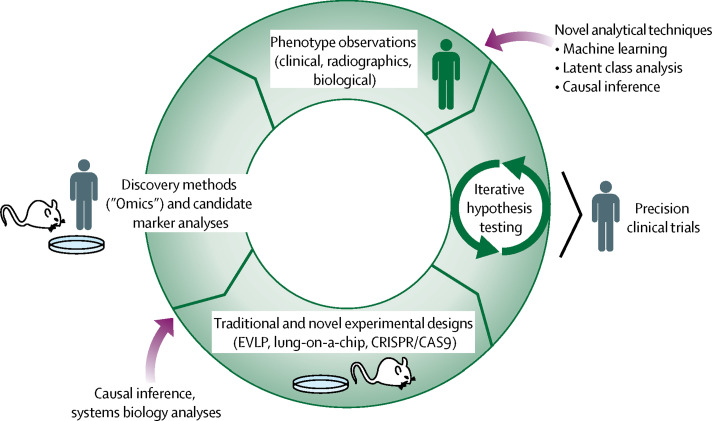
In the 50 years since acute respiratory distress syndrome (ARDS) was first described, substantial progress has been made in identifying the risk factors for and the pathogenic contributors to the syndrome and in characterising the protein expression patterns in plasma and bronchoalveolar lavage fluid from patients with ARDS. Despite this effort, however, pharmacological options for ARDS remain scarce. Frequently cited reasons for this absence of specific drug therapies include the heterogeneity of patients with ARDS, the potential for a differential response to drugs, and the possibility that the wrong targets have been studied. Advances in applied biomolecular technology and bioinformatics have enabled breakthroughs for other complex traits, such as cardiovascular disease or asthma, particularly when a precision medicine paradigm, wherein a biomarker or gene expression pattern indicates a patient's likelihood of responding to a treatment, has been pursued. In this Review, we consider the biological and analytical techniques that could facilitate a precision medicine approach for ARDS.
Copyright © 2017 Elsevier Ltd. All rights reserved.
Figures

References
-
- Ashbaugh DG, Bigelow DB, Petty TL, Levine BE. Acute respiratory distress in adults. Lancet. 1967;290:319–323.
-
- Network ARDS. Ventilation with lower tidal volumes as compared with traditional tidal volumes for acute lung injury and the acute respiratory distress syndrome. The Acute Respiratory Distress Syndrome Network. N Engl J Med. 2000;342:1301–1308. - PubMed
-
- Rhodes A, Evans LE, Alhazzani W. Surviving Sepsis Campaign: international guidelines for management of sepsis and septic shock: 2016. Crit Care Med. 2017;45:486–552. - PubMed
-
- Ouellette DR, Patel S, Girard TD. Liberation from mechanical ventilation in critically ill adults: an official American College of Chest Physicians/American Thoracic Society clinical practice guideline: inspiratory pressure augmentation during spontaneous breathing trials, protocols minimizing sedation, and noninvasive ventilation immediately after extubation. Chest. 2017;151:166–180. - PubMed
Publication types
MeSH terms
Substances
Grants and funding
LinkOut - more resources
Full Text Sources
Other Literature Sources
Medical
