


Reliability, Validity, and Factor Structure of the Hopkins Symptom Checklist-25: Population-Based Study of Persons Living with HIV in Rural Uganda
- PMID: 28667469
- PMCID: PMC6613367
- DOI: 10.1007/s10461-017-1843-1
Reliability, Validity, and Factor Structure of the Hopkins Symptom Checklist-25: Population-Based Study of Persons Living with HIV in Rural Uganda
Abstract
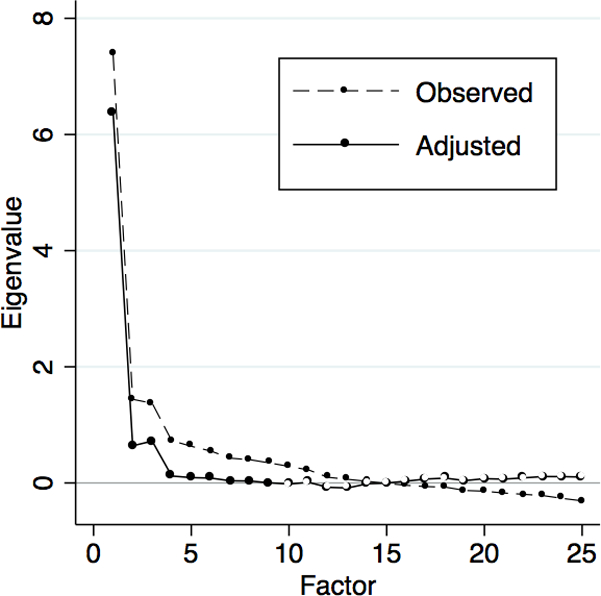
Depression and anxiety are highly comorbid among people living with HIV (PLHIV), but few instruments for screening or measurement have been validated for use in sub-Saharan Africa. The objective of this study was to determine the reliability, validity, and factor structure of the 25-item Hopkins Symptom Checklist (HSCL) in a population-based sample of PLHIV in rural Uganda. This study was nested within an ongoing population-based cohort of all residents living in Nyakabare Parish, Mbarara District, Uganda. All participants who identified as HIV-positive by self-report were included in this analysis. We performed parallel analysis on the scale items and estimated the internal consistency of the identified sub-scales using ordinal alpha. To assess construct validity we correlated the sub-scales with related constructs, including subjective well being (happiness), food insecurity, and health status. Of 1814 eligible adults in the population, 158 (8.7%) self-reported being HIV positive. The mean age was 41 years, and 68% were women. Mean HSCL-25 scores were higher among women compared with men (1.71 vs. 1.44; t = 3.6, P < 0.001). Parallel analysis revealed a three-factor structure that explained 83% of the variance: depression (7 items), anxiety (5 items), and somatic symptoms (7 items). The ordinal alpha statistics for the sub-scales ranged from 0.83 to 0.91. Depending on the sub-scale, between 27 and 41% of the sample met criteria for caseness. Strong evidence of construct validity was shown in the estimated correlations between sub-scale scores and happiness, food insecurity, and self-reported overall health. The HSCL-25 is a reliable and valid measure of mental health among PLHIV in rural Uganda. In cultural contexts where somatic complaints are commonly elicited when screening for symptoms of depression, it may be undesirable to exclude somatic items from depression symptom checklists administered to PLHIV.
Keywords: Anxiety; Case-finding; Depression; HIV; Screening; Sub-Saharan Africa; Uganda.
Conflict of interest statement
We have no conflicts of interest to disclose.
Figures
References
-
- GBD 2015 DALYs and HALE Collaborators. Global, regional, and national disability-adjusted life-years (DALYs) for 315 diseases and injuries and healthy life expectancy (HALE), 1990–2015: a systematic analysis for the Global Burden of Disease Study 2015. Lancet 2016;388(10053):1603–1658. - PMC - PubMed
-
- Weiser SD, Wolfe WR, Bangsberg DR. The HIV epidemic among individuals with mental illness in the United States. Current HIV/AIDS reports 2004;1(4):186–192. - PubMed
-
- Bing EG, Burnam MA, Longshore D, et al. Psychiatric disorders and drug use among human immunodeficiency virus-infected adults in the United States. Arch. Gen. Psychiatry 2001;58(8):721–728. - PubMed
-
- Tsai AC, Weiser SD, Petersen ML, Ragland K, Kushel MB, Bangsberg DR. A marginal structural model to estimate the causal effect of antidepressant medication treatment on viral suppression among homeless and marginally housed persons with HIV. Arch. Gen. Psychiatry 2010;67(12):1282–1290. - PMC - PubMed
Publication types
MeSH terms
Substances
Grants and funding
LinkOut - more resources
Full Text Sources
Other Literature Sources
Medical
Miscellaneous
