


Cardiac Autoimmunity: Myocarditis
- PMID: 28667560
- PMCID: PMC5706653
- DOI: 10.1007/978-3-319-57613-8_10
Cardiac Autoimmunity: Myocarditis
Abstract
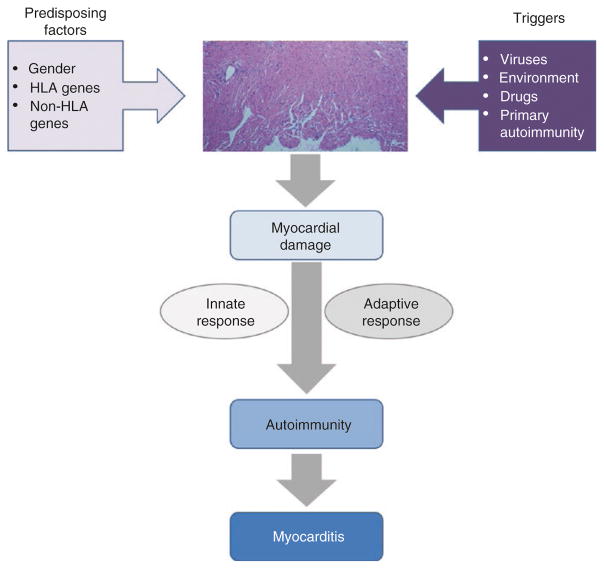
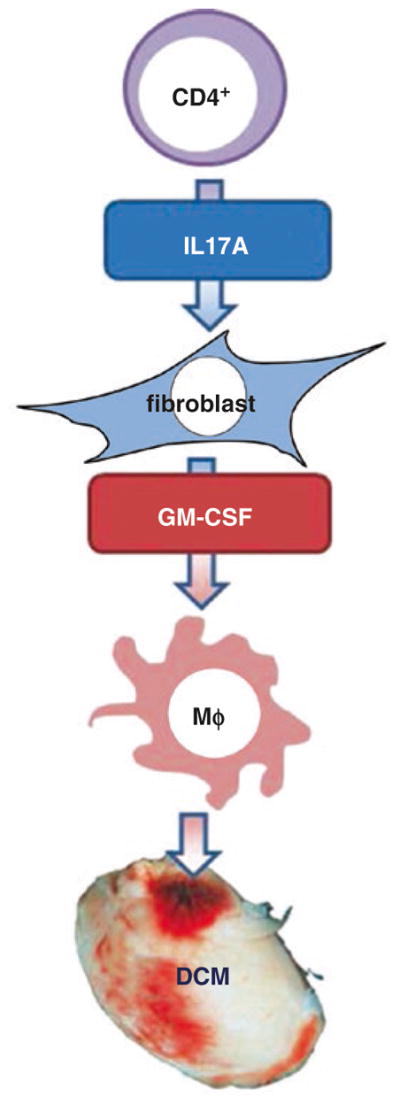
Myocarditis is the inflammation of the muscle tissues of the heart (myocardium). After a pathologic cardiac-specific inflammatory process, it may progress to chronic damage and dilated cardiomyopathy. The latter is characterized by systolic dysfunction, whose clinical correlate is heart failure. Nevertheless, other acute complications may arise as consequence of tissue damage and electrophysiologic disturbances. Different etiologies are involved in triggering myocarditis. In some cases, such as giant cell myocarditis or eosinophilic necrotizing myocarditis, it is an autoimmune process. Several factors predispose the development of autoimmune myocarditis such as systemic/local primary autoimmunity, viral infection, HLA and gender bias, exposure of cryptic antigens, mimicry, and deficient thymic training/Treg induction. Once the anti-myocardium autoimmune process is triggered, several components of the immune response orchestrate a sustained attack toward myocardial tissues with particular timing and immunopathogenic features. Innate response mediated by monocytes/macrophages, neutrophils, and eosinophils parallels the adaptive response, playing a final effector role and not only a priming function. Stromal cells like fibroblast are also involved in the process through specific cytokines. Furthermore, adaptive T cell responses have anti-paradigmatic features, as Th17 response is dispensable for acute myocarditis but is the main driver of the process leading to dilated cardiomyopathy. Humoral response, thought to be a bystander, is important in the appearance of late-stage hemodynamic complications. The complexity of that process, as well as the unspecific and variable clinical presentation, had generated difficulties for diagnosis and treatment, which remain suboptimal. In this chapter, we will discuss the most relevant immunopathogenic findings from a basic science and clinical perspective.
Keywords: Adaptive response; Autoimmunity; Dilated cardiomyopathy; Myocarditis.
Figures
References
-
- Bracamonte-Baran W, Burlingham W. Non-inherited maternal antigens, pregnancy, and allotolerance. Biom J. 2015;38(1):39–51. - PubMed
-
- Ozen S, Bilginer Y. A clinical guide to autoinflammatory diseases: familial Mediterranean fever and next-of-kin. Nat Rev Rheumatol. 2014;10(3):135–47. - PubMed
-
- Caforio AL, et al. Current state of knowledge on aetiology, diagnosis, management, and therapy of myocarditis: a position statement of the European Society of Cardiology Working Group on Myocardial and Pericardial Diseases. Eur Heart J. 2013;34(33):2636–48. 2648a–2648d. - PubMed
-
- Kindermann I, et al. Update on myocarditis. J Am Coll Cardiol. 2012;59(9):779–92. - PubMed
Publication types
MeSH terms
Substances
Grants and funding
LinkOut - more resources
Full Text Sources
Other Literature Sources
Medical
Research Materials
