


Women's Experience with Non-Invasive Prenatal Testing and Emotional Well-being and Satisfaction after Test-Results
- PMID: 28667567
- PMCID: PMC5672853
- DOI: 10.1007/s10897-017-0118-3
Women's Experience with Non-Invasive Prenatal Testing and Emotional Well-being and Satisfaction after Test-Results
Abstract
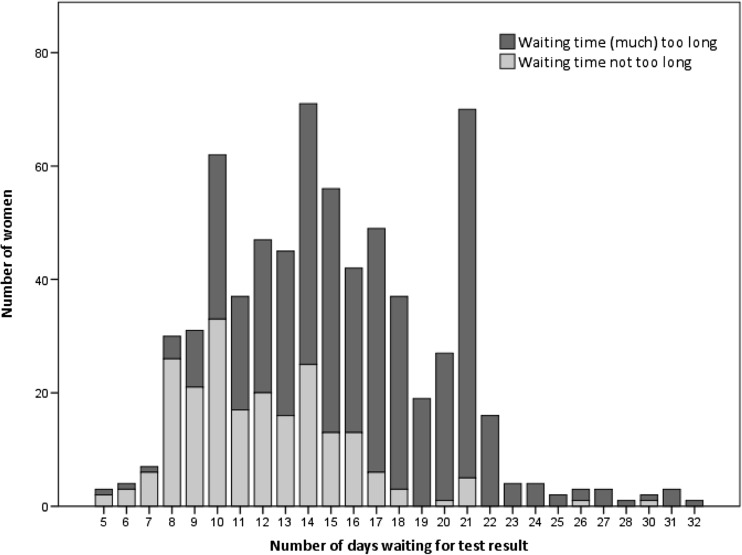
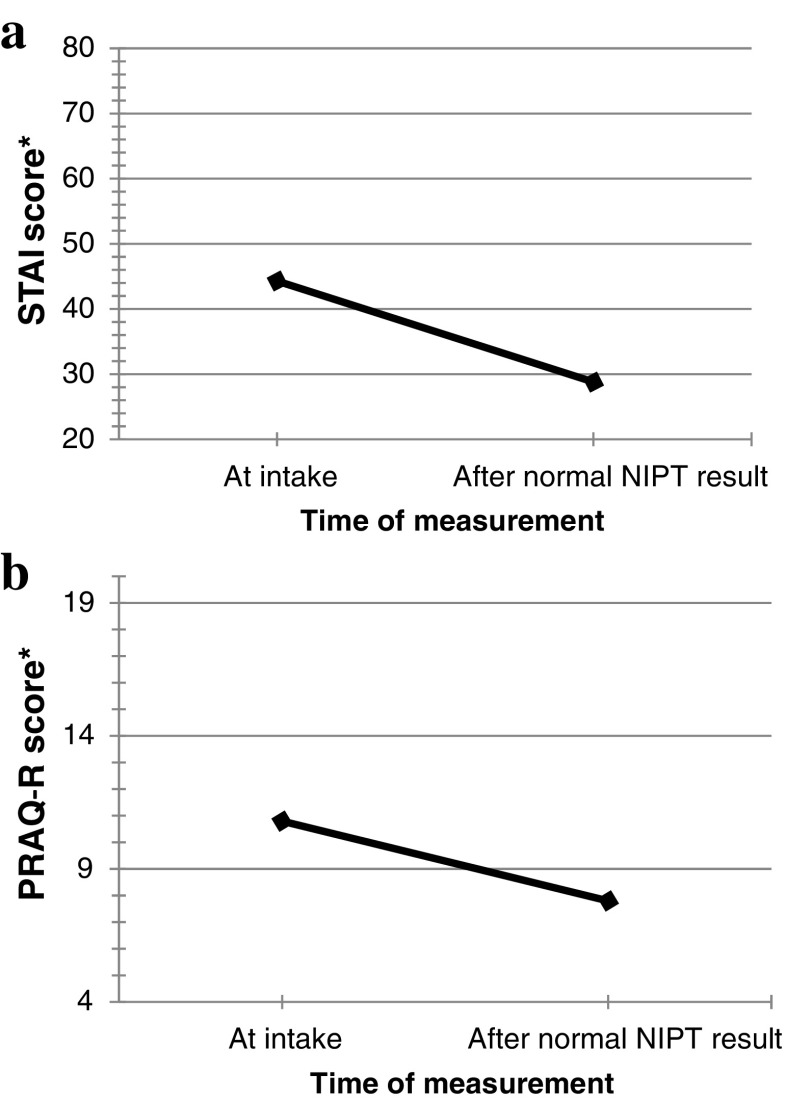
Increasingly, high-risk pregnant women opt for non-invasive prenatal testing (NIPT) instead of invasive diagnostic testing. Since NIPT is less accurate than invasive testing, a normal NIPT result might leave women less reassured. A questionnaire study was performed among pregnant women with elevated risk for fetal aneuploidy based on first-trimester combined test (risk ≥1:200) or medical history, who were offered NIPT in the nationwide Dutch TRIDENT study. Pre- and post-test questionnaires (n = 682) included measures on: experiences with NIPT procedure, feelings of reassurance, anxiety (State-Trait Anxiety Inventory, STAI), child-related anxiety (PRAQ-R), and satisfaction. The majority (96.1%) were glad to have been offered NIPT. Most (68.5%) perceived the waiting time for NIPT results (mean: 15 days, range 5-32) as (much) too long. Most women with a normal NIPT result felt reassured (80.9%) or somewhat reassured (15.7%). Levels of anxiety and child-related anxiety were significantly lower after receiving a normal NIPT result as compared to the moment of intake (p < 0.001). Women with inadequate health literacy or a medical history (e.g. previous child with trisomy) experienced significantly higher post-test-result anxiety (Mean (M) STAI = 31.6 and 30.0, respectively) compared to those with adequate health literacy (M = 28.6) and no medical history (M = 28.6), indicating these women might benefit from extra information and/or guidance when communicating NIPT test-results. Introducing NIPT as an alternative to invasive testing, led to an offer that satisfied and largely reassured high-risk pregnant women.
Keywords: Anxiety; NIPT; Non-invasive Prenatal Testing; Prenatal Screening; Reassurance; Satisfaction.
Conflict of interest statement
Conflict of Interest
Lieve Page-Christiaens has been employed as an Associated Medical Director at Illumina Inc. since January, 2016. Dick Oepkes previously participated in clinical research sponsored by Ariosa Diagnostics and Natera Inc. All the other authors declare they have no conflict of interest.
Human Studies and Informed Consent
All procedures performed in studies involving human participants were in accordance with the ethical standards of the institutional and/or national research committee and with the 1964 Helsinki declaration and its later amendments or comparable ethical standards. Informed consent was obtained from all participants for being included in the study.
Animal Studies
No animal studies were carried out by the authors for this article.
Figures
References
MeSH terms
LinkOut - more resources
Full Text Sources
Other Literature Sources
Medical
Molecular Biology Databases
