. 2017 Jul:21:142-149.
doi: 10.1016/j.ebiom.2017.06.026. Epub 2017 Jun 27.

Next Generation DNA Sequencing of Tissues from Infected Diabetic Foot Ulcers

Affiliations

Next Generation DNA Sequencing of Tissues from Infected Diabetic Foot Ulcers

M Malone et al. EBioMedicine. 2017 Jul.

Abstract

We used next generation DNA sequencing to profile the microbiome of infected Diabetic Foot Ulcers (DFUs). The microbiota was correlated to clinical parameters and treatment outcomes to determine if directed antimicrobial therapy based on conventional microbiological cultures are relevant based on genomic analysis. Patients≥18years presenting with a new Diabetic Foot Infection (DFI) who had not received topical or oral antimicrobials in the two weeks prior to presentation, were eligible for enrolment. Tissue punch biopsies were obtained from infected DFUs for analysis. Demographics, clinical and laboratory data were collected and correlated against microbiota data. Thirty-nine patients with infected DFUs were recruited over twelve-months. Shorter duration DFUs (<six weeks) all had one dominant bacterial species (n=5 of 5, 100%, p<0.001), Staphylococcus aureus in three cases and Streptococcus agalactiae in two. Longer duration DFUs (≥six weeks) were diversely polymicrobial (p<0.01) with an average of 63 (range 19-125) bacterial species. Severe DFIs had complex microbiomes and were distinctly dissimilar to less severe infections (p=0.02), characterised by the presence of low frequency microorganisms. Nineteen patients (49%) during the study period experienced antimicrobial treatment failure, but no overall differences existed in the microbiome of patients who failed therapy and those who experienced treatment success (p=0.2). Our results confirm that short DFUs have a simpler microbiome consisting of pyogenic cocci but chronic DFUs have a highly polymicrobial microbiome. The duration of a DFU may be useful as a guide to directing antimicrobial therapy.

Keywords: 16S rRNA; Diabetic foot infections; Diabetic foot ulcers; Microbiome; Next generation DNA sequencing.


Figures

Fig. 1
Fig. 1
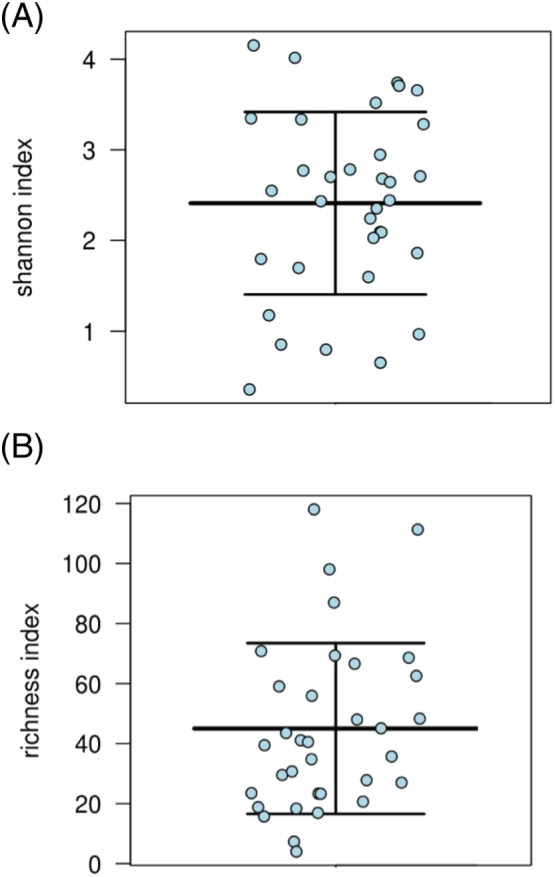
Community diversity and richness reported for 39 patients with DFI. (A) Community diversity of DFUs presented using the Shannon-Weaver index at maximum read length of 300 (Price et al., 2009). Shannon Weaver Index is a measure of diversity that includes the number of unique microbial taxa and their relative evenness within each sample. Thus, a higher Shannon Weaver Index correlates to a greater diversity. (B) Community richness of DFUs presented using richness index reporting the number of unique OTUs in each wound sample. Data sets were normalised to remove low abundance OTUs contributing too less then 1% within each wound sample.
Fig. 2
Fig. 2
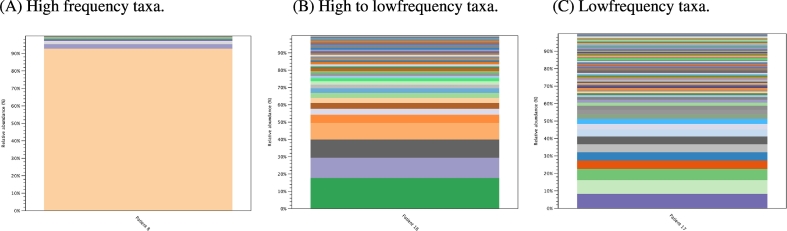
Bar chart represents relative abundances (%) of taxa profiles for 39 DFUs. Each bar represents individual genera/species. (A) High frequency taxa were observed in ten patients (26%), mostly comprised of a single microorganism (± 3) (i.e. monomicrobial infection) contributing to ≥ 88% (± 5.4%) of total abundance. (B) High to low frequency taxa were the most common profile and were observed in 25 patients (64%). Low frequency taxa comprised on average of ≥ 20 (±) minor microorganisms each contributing < 1%–5% abundance and no single microorganism contributing > 10% (complex polymicrobial infection). (C) Low frequency taxa were infrequently observed in only four patients (10%) and contained higher relative abundances of environmental microorganisms (p < 0.01).
Fig. 3
Fig. 3
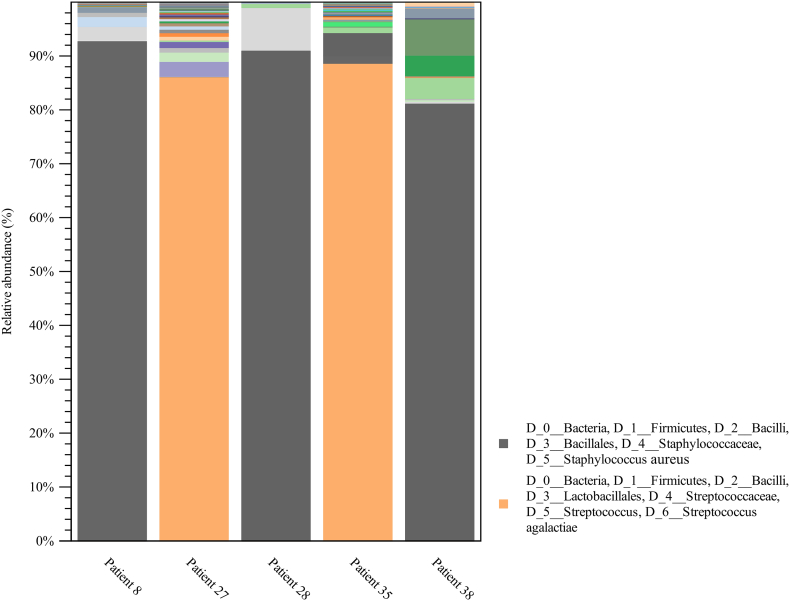
Bar chart representing relative abundance of taxa in acute diabetic foot ulcers (< 6 weeks duration).
Fig. 4
Fig. 4
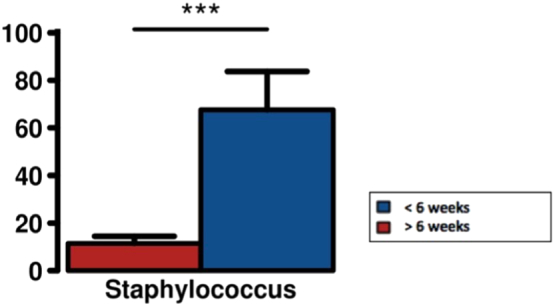
Analysis of variance between Staphylocci spp., relative abundance (%) in DFUs based on duration. In DFUs < six weeks Staphyloccci spp., were present as the dominant taxa (high frequency). The average relative abundance of Staphyloccci in DFUs > six-weeks is far less and this is because DFUs of longer duration are typically polymicrobial.
Fig. 5
Fig. 5
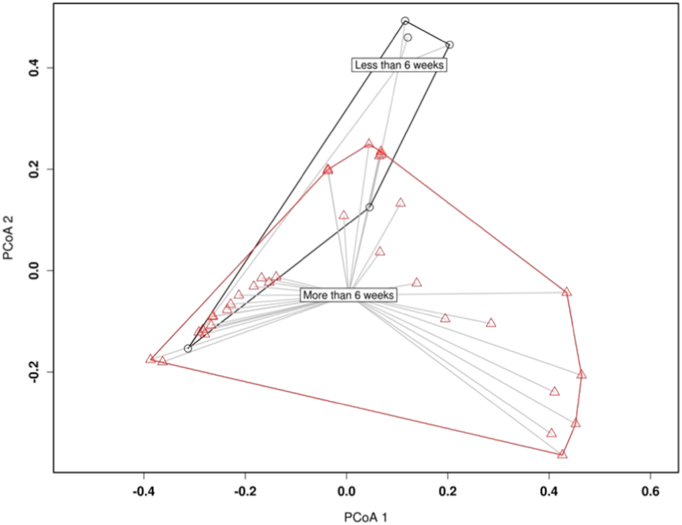
PCoA bray-curtis plots identify that differences are present in the community structures between longer and shorter duration DFUs.
Fig. 6
Fig. 6
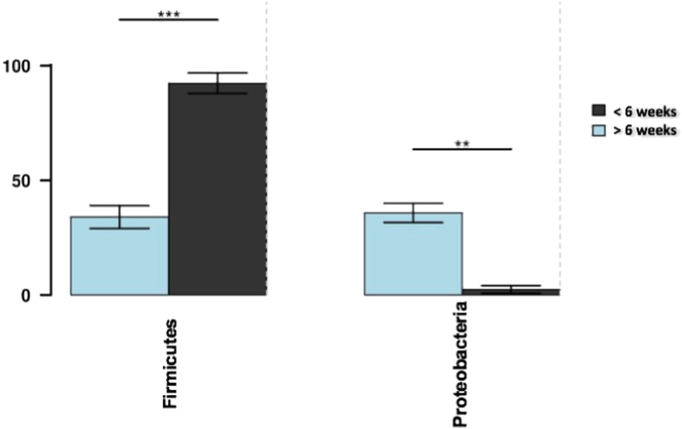
Analysis of variance identifies that ulcer duration > 6 weeks was associated with a greater relative abundance of Proteobacteria (p < 0.05), whilst ulcer duration <6 weeks was associated with greater relative abundance of Firmicutes (p < 0.001). The genera responsible for the high relative abundance of firmicutes in DFUs < 6 weeks were Staphylococcus spp., and Streptococcus spp predominantly.
Fig. 7
Fig. 7
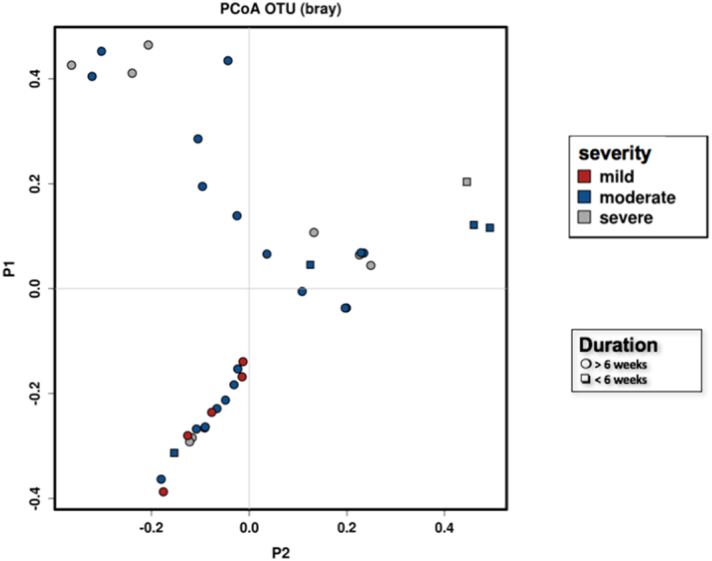
PCoA Bray-curtis plot demonstrates the community structure difference between infection severities in addition to defining the duration of DFU.

References

    1. Abbott C.A., Carrington A.L., Ashe H., Bath S., Every L.C., Griffiths J., Boulton A.J.M. The north-west diabetes foot care study: incidence of, and risk factors for, new diabetic foot ulceration in a community-based patient cohort. Diabet. Med. 2002;19(5):377–384. - PubMed
    1. Citron D.M., Goldstein E.J., Merriam C.V., Lipsky B.A., Abramson M.A. Bacteriology of moderate-to-severe diabetic foot infections and in vitro activity of antimicrobial agents. J. Clin. Microbiol. 2007;45 - PMC - PubMed
    1. Dowd S., Sun Y., Secor P., Rhoads D., Wolcott B., James G., Wolcott R. Survey of bacterial diversity in chronic wounds using pyrosequencing, DGGE, and full ribosome shotgun sequencing. BMC Microbiol. 2008;8(1):43. - PMC - PubMed
    1. Dowd S.E., Wolcott R., Sun Y., McKeehan T., Smith E., Rhoads D. Polymicrobial nature of chronic diabetic foot ulcer biofilm infections determined using bacterial tag encoded FLX amplicon pyrosequencing (bTEFAP) PLoS One. 2008;3(10):3326. - PMC - PubMed
    1. Field N., Cohen T., Struelens M.J., Palm D., Cookson B., Glynn J.R., Abubakar I. Strengthening the reporting of molecular epidemiology for infectious diseases (STROME-ID): an extension of the STROBE statement. Lancet Infect. Dis. 2014;(4):341–352. - PubMed

Substances