


Ex vivo tumor culture systems for functional drug testing and therapy response prediction
- PMID: 28670477
- PMCID: PMC5481868
- DOI: 10.4155/fsoa-2017-0003
Ex vivo tumor culture systems for functional drug testing and therapy response prediction
Abstract
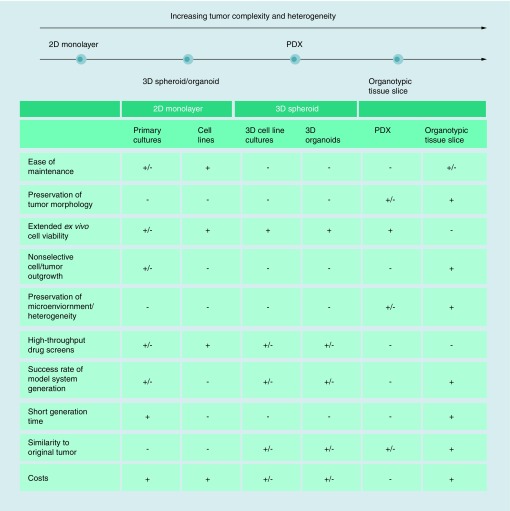
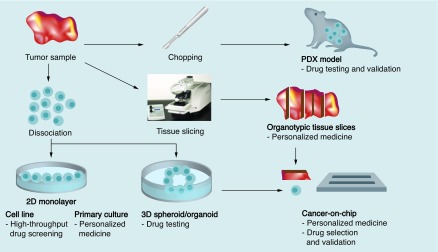
Optimal patient stratification is of utmost importance in the era of personalized medicine. Prediction of individual treatment responses by functional ex vivo assays requires model systems derived from viable tumor samples, which should closely resemble in vivo tumor characteristics and microenvironment. This review discusses a broad spectrum of model systems, ranging from classic 2D monolayer culture techniques to more experimental 'cancer-on-chip' procedures. We mainly focus on organotypic tumor slices that take tumor heterogeneity and tumor-stromal interactions into account. These 3D model systems can be exploited for patient selection as well as for fundamental research. Selection of the right model system for each specific research endeavor is crucial and requires careful balancing of the pros and cons of each technology.
Keywords: PDX; cancer-on-chip; cell culture; functional drug testing; organoids; organotypic tissue slices; personalized medicine.
Conflict of interest statement
Financial & competing interests disclosure The authors acknowledge grant support by the Netherlands Organization for Scientific Research (ZON-MW grant 40-42600-98-018) and The Netherlands Cancer Foundation KWF/Alpe d'HuZes (grant EMCR 2014-7048). The authors have no other relevant affiliations or financial involvement with any organization or entity with a financial interest in or financial conflict with the subject matter or materials discussed in the manuscript apart from those disclosed. No writing assistance was utilized in the production of this manuscript.
Figures
References
-
- Chang JC, Wooten EC, Tsimelzon A, et al. Gene expression profiling for the prediction of therapeutic response to docetaxel in patients with breast cancer. Lancet. 2003;362(9381):362–369. - PubMed
-
- Spentzos D, Levine DA, Kolia S, et al. Unique gene expression profile based on pathologic response in epithelial ovarian cancer. J. Clin. Oncol. 2005;23(31):7911–7918. - PubMed
Publication types
LinkOut - more resources
Full Text Sources
Other Literature Sources
Medical
Miscellaneous
