


Crohn's Strictures-Moving Away from the Knife
- PMID: 28670577
- PMCID: PMC5472668
- DOI: 10.3389/fped.2017.00141
Crohn's Strictures-Moving Away from the Knife
Abstract
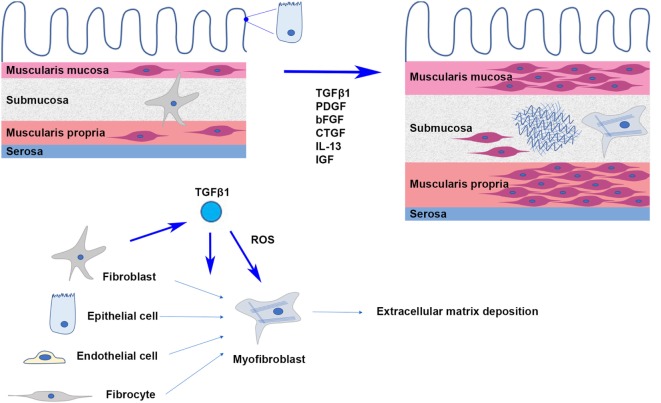
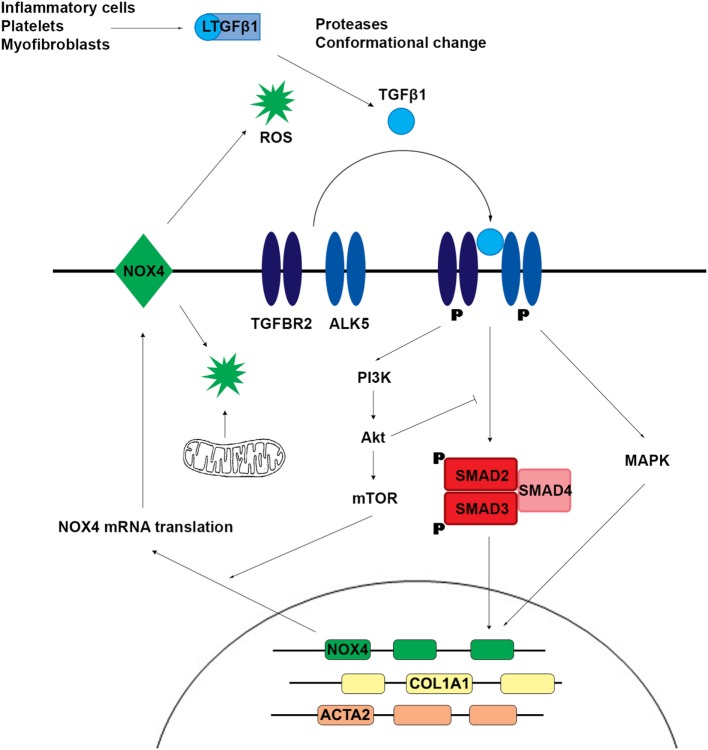
Crohn's disease (CD) is a lifelong inflammatory bowel disease with a rapidly rising incidence in the pediatric population. A common complication of CD is the development of fibrotic strictures, which may be present at initial diagnosis or develop many years later. Clinical presentation depends on stricture location and degree of obstruction, and strictures frequently contain a mixture of inflammatory and fibrotic tissue. Histological examination of Crohn's strictures shows thickening of the muscular layers and the submucosa, where increased collagen deposition by activated myofibroblasts is concentrated around islands of smooth muscle cells and at the superficial margin of the muscularis propria. No antifibrotic therapies for Crohn's strictures exist. Profibrotic transforming growth factor-β (TGFβ)/bone morphogenetic protein signaling stimulates myofibroblast differentiation and extracellular matrix deposition. Understanding and targeting TGFβ1 downstream signaling is the main focus of current research, raising the possibility of specific antifibrotic therapy in CD becoming available in the future.
Keywords: Crohn’s disease; NADPH oxidase; fibrosis; inflammatory bowel disease; intestine; reactive oxygen species.
Figures
References
-
- Silverberg MS, Satsangi J, Ahmad T, Arnott ID, Bernstein CN, Brant SR, et al. Toward an integrated clinical, molecular and serological classification of inflammatory bowel disease: report of a working party of the 2005 Montreal World Congress of gastroenterology. Can J Gastroenterol (2005) 19(Suppl A):5a–36a. 10.1155/2005/269076 - DOI - PubMed
Publication types
LinkOut - more resources
Full Text Sources
Other Literature Sources
