


Identifying maternal needs following childbirth: A qualitative study among mothers, fathers and professionals
- PMID: 28673272
- PMCID: PMC5496411
- DOI: 10.1186/s12884-017-1398-1
Identifying maternal needs following childbirth: A qualitative study among mothers, fathers and professionals
Abstract
Background: Pregnancy and childbirth are two critical stages in a woman's life. Various studies have suggested that psychological distress is common during the year after childbirth. The objectives of this exploratory study were (1) to explore the needs of mothers in the year following childbirth; (2) to compare these needs between mothers who did not have the feeling of living a psychological disorder or a depression and mothers who lived a psychological disorder or had the impression of living a depression; and (3) to compare the needs expressed by mothers with the perception of professionals and fathers about the mothers' needs.
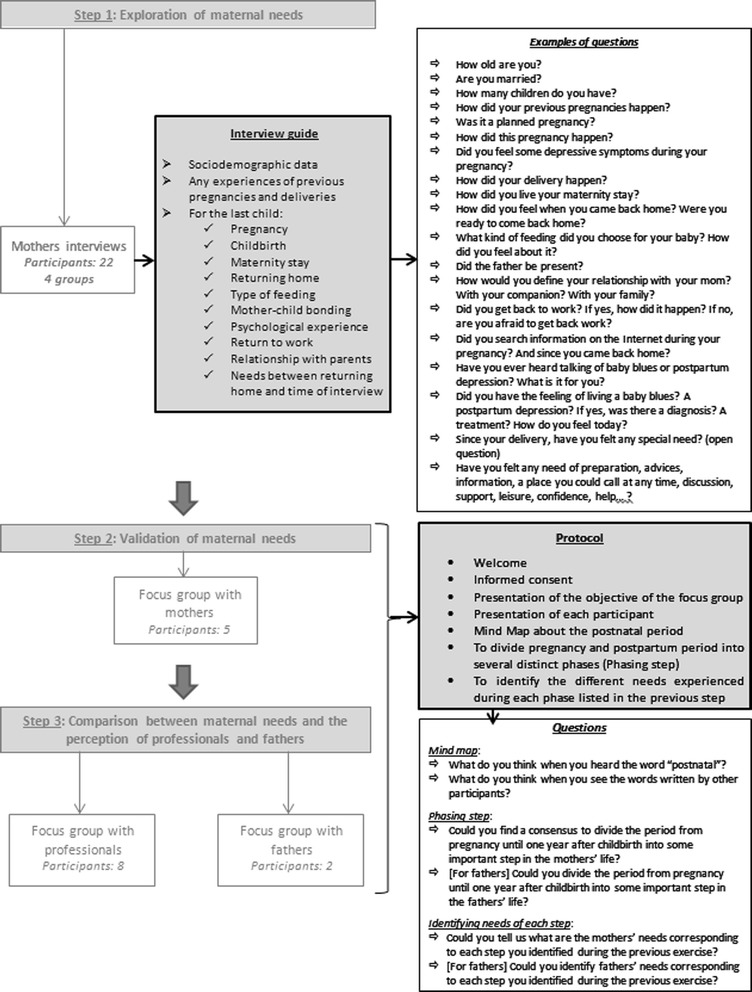
Methods: First, we proceeded to 22 individual qualitative interviews followed by one focus group, with mothers, with and without experience of psychological distress. Then, we conducted 2 focus groups: one with professionals and one with fathers.
Results: Needs of mothers after childbirth have been indexed in four categories: need of information, need of psychological support, need to share experience, and need of practical and material support. Women do not feel sufficiently informed about this difficult period of life. They do not feel sufficiently supported, not only from a psychological point of view but also from a more practical point of view, for example with household chores. They need to share their experience of life, they need to be reassured and they need to feel understood. It seems that some differences exist between mothers' and professionals' experiences but also between mothers' and fathers' experiences.
Conclusion: Young mothers apparently feel a lack of support at different levels in the year following childbirth. This study provides ways to meet women's needs and to try to prevent the risk of postpartum psychological distress during this period of time.
Keywords: Information; Needs; Postpartum period; Practical support; Psychological support; Sharing experience.
Conflict of interest statement
Ethics approval and consent to participate
The study was approved by the “Comité d’Ethique Hospitalo-Facultaire Universitaire de Liège”, under the number 2015/48. A written description of the research, including intends to publish, was provided to the participant and informed consent was collected.
Consent for publication
Not applicable.
Competing interests
The authors declare that they have no conflict of interests.
Publisher’s Note
Springer Nature remains neutral with regard to jurisdictional claims in published maps and institutional affiliations.
Figures
References
-
- Cristescu T, Behrman S, Jones SV, Chouliaras L, Ebmeier KP. Be vigilant for perinatal mental health problems. [Internet] Practitioner. 2015;259:19–23. - PubMed
-
- Norhayati MN, Nik Hazlina NH, Asrenee AR, Wan Emilin WM. Magnitude and risk factors for postpartum symptoms: a literature review. J Affect Disord. 2014;175c:34–52. - PubMed
MeSH terms
LinkOut - more resources
Full Text Sources
Other Literature Sources
Medical
