


Experience and lessons from health impact assessment guiding prevention and control of HIV/AIDS in a copper mine project, northwestern Zambia
- PMID: 28673329
- PMCID: PMC5496403
- DOI: 10.1186/s40249-017-0320-4
Experience and lessons from health impact assessment guiding prevention and control of HIV/AIDS in a copper mine project, northwestern Zambia
Abstract
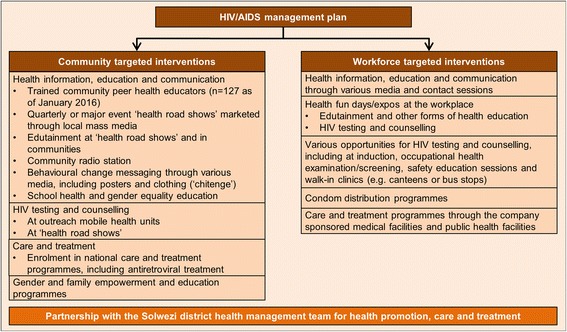
Background: To avoid or mitigate potential project-related adverse health effects, the Trident copper project in Kalumbila, northwestern Zambia, commissioned a health impact assessment. HIV was identified a priority health issue based on the local vulnerability to HIV transmission and experience from other mining projects in Africa. Hence, an HIV/AIDS management plan was developed, including community and workplace interventions, with HIV testing and counselling (HTC) being one of the key components. We present trends in HTC data over a 4-year period.
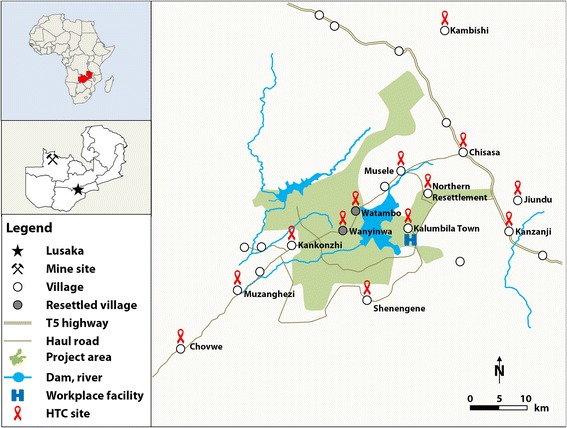
Methods: In 13 communities affected by the Trident project, HTC was implemented from 2012 onwards, using rapid diagnostic tests, accompanied by pre- and post-test counselling through trained personnel. In addition, HTC was initiated in the project workforce in 2013, coinciding with the launch of the mine development. HTC uptake and HIV positivity rates were assessed in the study population and linked to demographic factors using regression analysis.
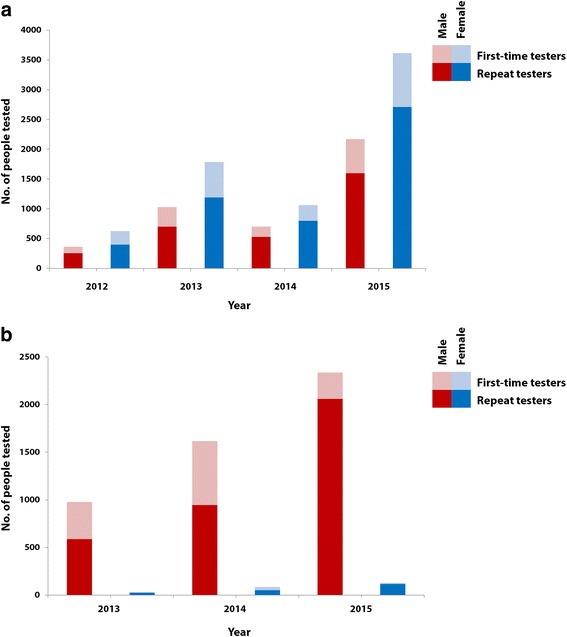
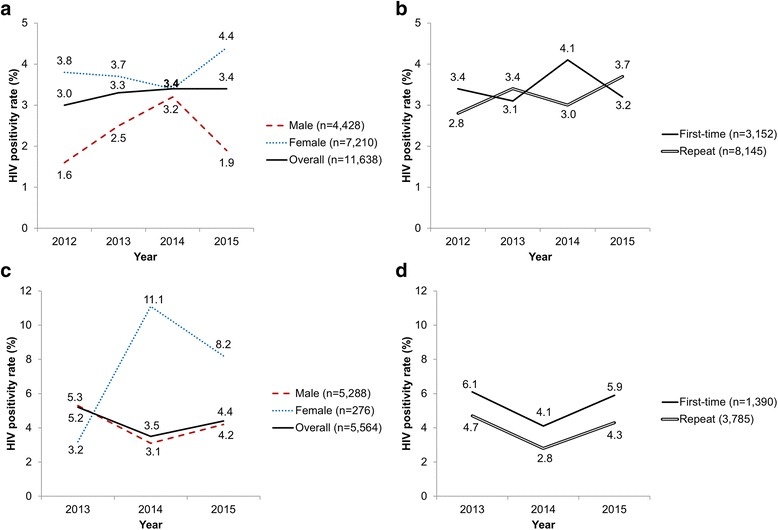
Results: In total, 11,638 community members and 5564 workers have taken up HTC with an increase over time. The HIV positivity rate in the community was 3.0% in 2012 and 3.4% in 2015, while positivity rate in the workforce was 5.2% in 2013 and 4.3% in 2015. Females showed a significantly higher odds of having a positive test result than males (odds ratio (OR) = 1.96, 95% confidence interval (CI): 1.55-2.50 among women in the community and OR = 2.90, 95% CI: 1.74-4.84 among women in the workforce). HTC users in the 35-49 years age group were most affected by HIV, with an average positivity rate of 6.6% in the community sample and 7.9% in the workforce sample. These study groups had 4.50 and 4.95 higher odds of being positive, respectively, compared to their younger counterparts (15-24 years).
Conclusions: While HTC uptake increased five-fold in the community and almost three-fold in the workplace, the HIV positivity rates were insignificantly higher in 2015 compared to 2012. Our data can be used alongside other surveillance data to track HIV transmission in this specific context. Guided by the health impact assessment, the HIV prevention and control programme was readily adapted to the current setting through the identification of socioeconomic and environmental determinants of health.
Keywords: Community health management; HIV; Health impact assessment; Mining; Occupational health; Sexually transmitted infections; Zambia.
Figures
References
-
- APP . Africa progress report 2013: equity in extractives: stewarding Africa's natural resources for all. Geneva: Africa Progress Panel; 2013.
-
- Erlanger TE, Krieger GR, Singer BH, Utzinger J. The 6/94 gap in health impact assessment. Environ Impact Assess Rev. 2008;28:349–358. doi: 10.1016/j.eiar.2007.07.003. - DOI
-
- Fehr R, Viliani F, Nowacki J, Martuzzi M. Health in impact assessments: opportunities not to be missed. Copenhagen: WHO Regional Office for Europe; 2014.
MeSH terms
LinkOut - more resources
Full Text Sources
Other Literature Sources
Medical
