


Delineation of an immunosuppressive gradient in hepatocellular carcinoma using high-dimensional proteomic and transcriptomic analyses
- PMID: 28674001
- PMCID: PMC5530700
- DOI: 10.1073/pnas.1706559114
Delineation of an immunosuppressive gradient in hepatocellular carcinoma using high-dimensional proteomic and transcriptomic analyses
Abstract
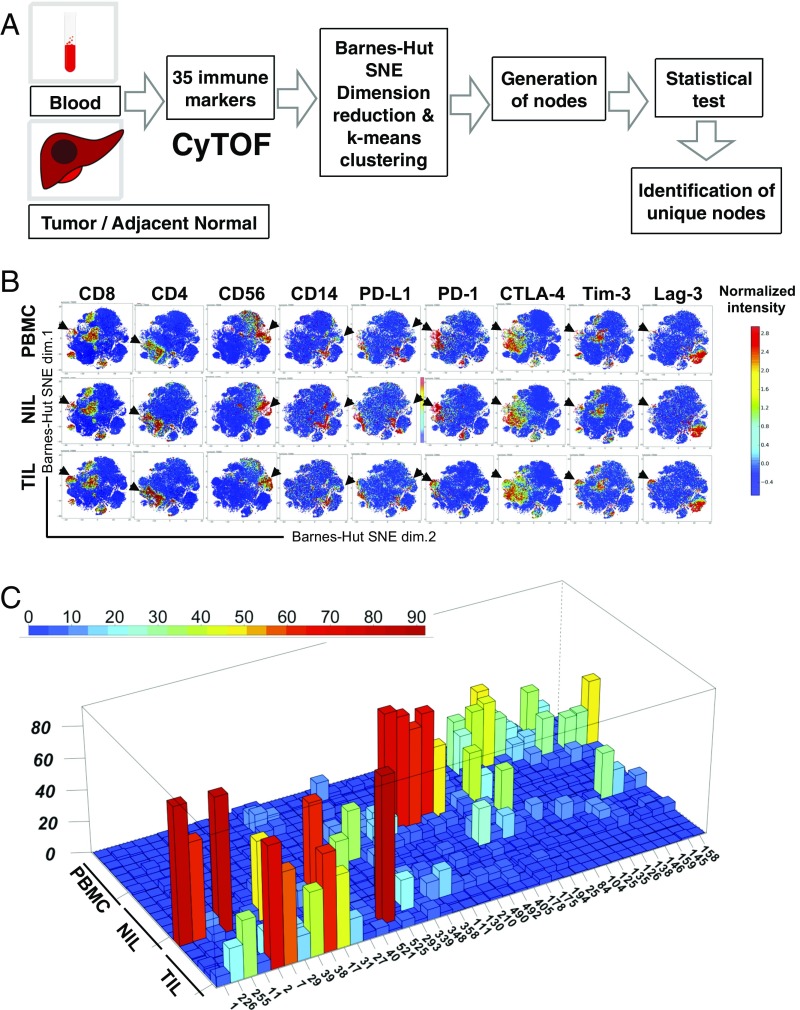
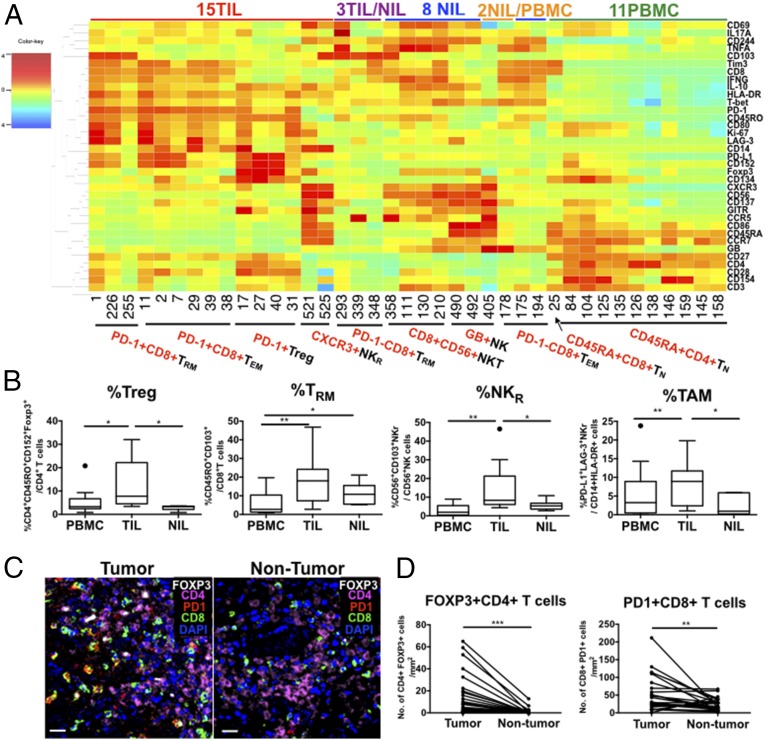
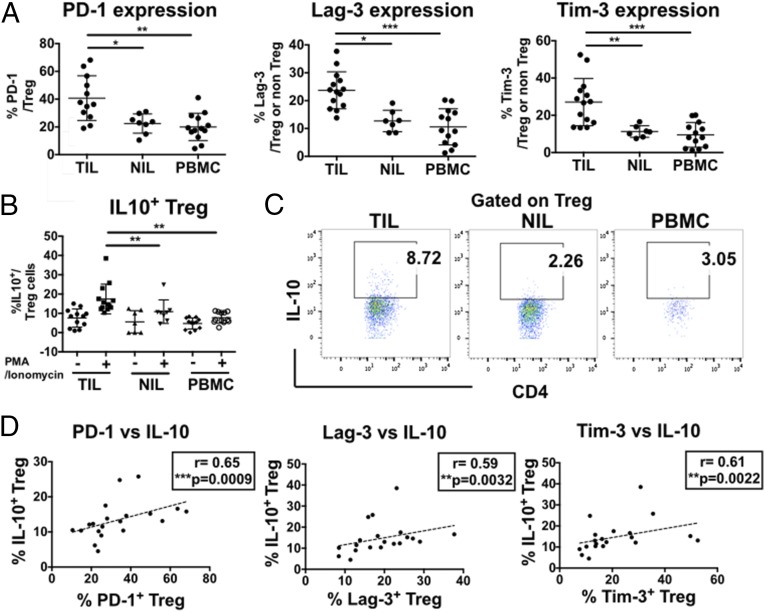
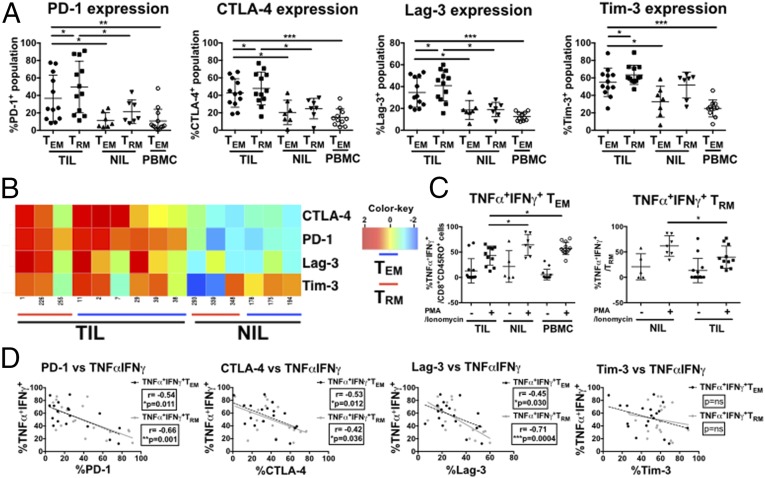
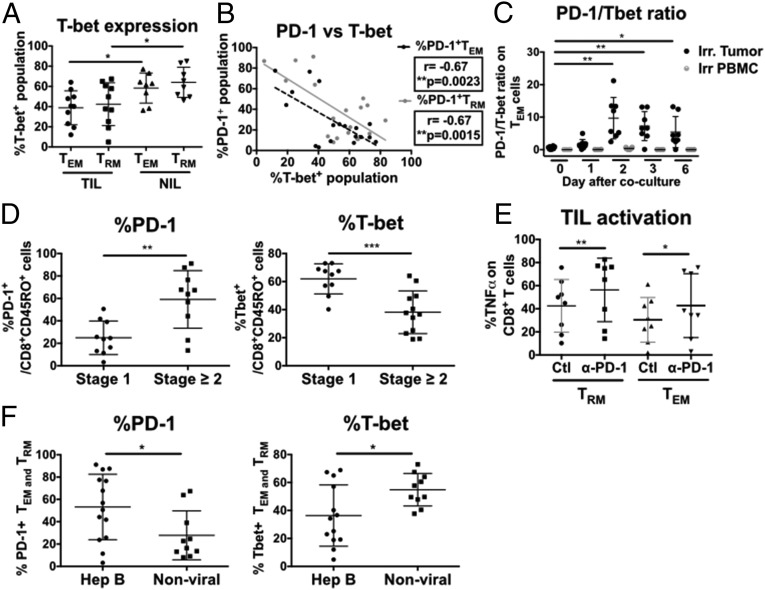
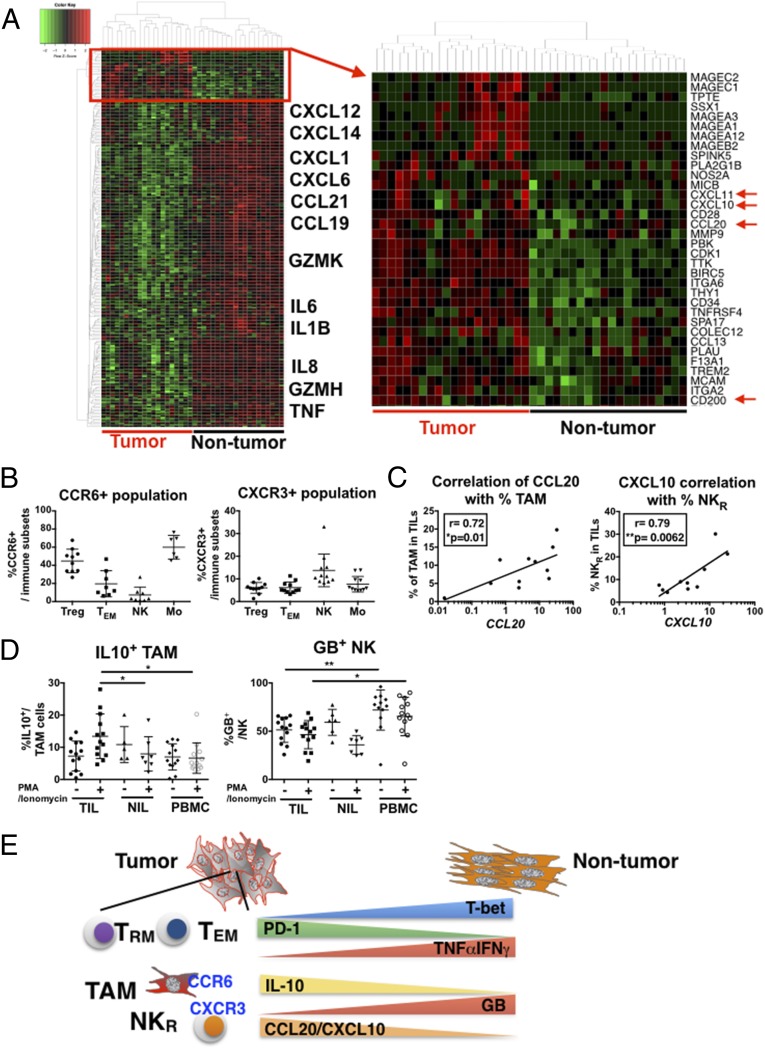
The recent development of immunotherapy as a cancer treatment has proved effective over recent years, but the precise dynamics between the tumor microenvironment (TME), nontumor microenvironment (NTME), and the systemic immune system remain elusive. Here, we interrogated these compartments in hepatocellular carcinoma (HCC) using high-dimensional proteomic and transcriptomic analyses. By time-of-flight mass cytometry, we found that the TME was enriched in regulatory T cells (Tregs), tissue resident memory CD8+ T cells (TRMs), resident natural killer cells (NKRs), and tumor-associated macrophages (TAMs). This finding was also validated with immunofluorescence staining on Foxp3+CD4+ and PD-1+CD8+ T cells. Interestingly, Tregs and TRMs isolated from the TME expressed multiple markers for T-cell exhaustion, including PD-1, Lag-3, and Tim-3 compared with Tregs and TRMs isolated from the NTME. We found PD-1+ TRMs were the predominant T-cell subset responsive to anti-PD-1 treatment and significantly reduced in number with increasing HCC tumor progression. Furthermore, T-bet was identified as a key transcription factor, negatively correlated with PD-1 expression on memory CD8+ T cells, and the PD-1:T-bet ratio increased upon exposure to tumor antigens. Finally, transcriptomic analysis of tumor and adjacent nontumor tissues identified a chemotactic gradient for recruitment of TAMs and NKRs via CXCR3/CXCL10 and CCR6/CCL20 pathways, respectively. Taken together, these data confirm the existence of an immunosuppressive gradient across the TME, NTME, and peripheral blood in primary HCC that manipulates the activation status of tumor-infiltrating leukocytes and renders them immunocompromised against tumor cells. By understanding the immunologic composition of this gradient, more effective immunotherapeutics for HCC may be designed.
Keywords: CyTOF; hepatocellular carcinoma; regulatory T cells; resident memory T cells; tumor microenvironment.
Conflict of interest statement
The authors declare no conflict of interest.
Figures
References
-
- Fridman WH, Pagès F, Sautès-Fridman C, Galon J. The immune contexture in human tumours: Impact on clinical outcome. Nat Rev Cancer. 2012;12:298–306. - PubMed
-
- Makarova-Rusher OV, Medina-Echeverz J, Duffy AG, Greten TF. The yin and yang of evasion and immune activation in HCC. J Hepatol. 2015;62:1420–1429. - PubMed
-
- Couzin-Frankel J. Breakthrough of the year 2013. Cancer immunotherapy. Science. 2013;342:1432–1433. - PubMed
-
- Errico A. Immunotherapy: PD-1-PD-L1 axis: Efficient checkpoint blockade against cancer. Nat Rev Clin Oncol. 2015;12:63. - PubMed
Publication types
MeSH terms
Substances
LinkOut - more resources
Full Text Sources
Other Literature Sources
Medical
Research Materials
