


Association of baseline, longitudinal serum high-sensitive C-reactive protein and its change with mortality in peritoneal dialysis patients
- PMID: 28676043
- PMCID: PMC5496342
- DOI: 10.1186/s12882-017-0624-4
Association of baseline, longitudinal serum high-sensitive C-reactive protein and its change with mortality in peritoneal dialysis patients
Abstract
Background: The prognostic values of baseline, longitudinal high-sensitivity C-reactive protein (hs-CRP) and its change over time on mortality in patients undergoing continuous ambulatory peritoneal dialysis (CAPD) remain uncertain.
Methods: We retrospectively studied 1228 consecutive CAPD patients from 2007 to 2012, and followed up through December 2014. Cox regression models were performed to assess the association of hs-CRP on outcomes using serum hs-CRP levels as: (1) stratified by tertile of baseline or longitudinal hs-CRP levels; (2) baseline or longitudinal hs-CRP levels as continuous variables; and (3) categorized by tertile of slopes of hs-CRP change per year for each subject.
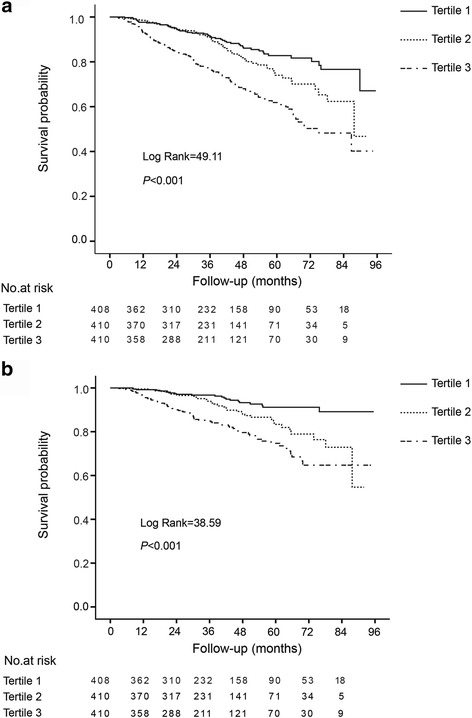
Results: Higher baseline hs-CRP levels were not associated with clinical outcomes after adjustment for potential confounders. However, patients with the upper tertile of longitudinal hs-CRP had a nearly twice-fold increased risk of both all-cause and cardiovascular mortality [adjusted hazard ratio (HR) 1.77; (95% CI 1.16-2.70) and 2.08 (1.17-3.71), respectively], as compared with those with lower tertile. Results were similar when baseline or longitudinal hs-CRP was assessed as continuous variable. Additionally, the risk of all-cause and cardiovascular mortality in patients with increased trend in serum hs-CRP levels over time (tertile 3) was significantly higher [adjusted HR 2.48 (1.58-3.87) and 1.99 (1.11-3.56), respectively] when compared to those with relatively stable hs-CRP levels during follow-up period. These associations persisted after excluding subjects with less than 1-year follow up.
Conclusions: Higher longitudinal serum hs-CRP levels and its elevated trend over time, but not baseline levels were predictive of worse prognosis among CAPD patients.
Keywords: All-cause mortality; Cardiovascular mortality; Change of hs-CRP; Continuous ambulatory peritoneal dialysis; Longitudinal hs-CRP.
Conflict of interest statement
Competing interests
The authors declare that they have no competing interests.
Consent for publication
Not applicable
Ethics approval and consent to participate
The study was approved by the First Affiliated Hospital of Sun Yat-sen University Institutional Review Boards. Each patient gave his/her consent to participate in the study and to publish the results obtained.
Publisher’s Note
Springer Nature remains neutral with regard to jurisdictional claims in published maps and institutional affiliations.
Figures

References
-
- Kawaguchi T, Tong L, Robinson BM, Sen A, Fukuhara S, Kurokawa K, Canaud B, Lameire N, Port FK, Pisoni RL. C-reactive protein and mortality in hemodialysis patients: the dialysis outcomes and practice patterns study (DOPPS) Nephron Clinical practice. 2011;117(2):c167–c178. doi: 10.1159/000320116. - DOI - PubMed
MeSH terms
Substances
LinkOut - more resources
Full Text Sources
Other Literature Sources
Research Materials
Miscellaneous
