. 2017 Jul 4;7(1):4562.
doi: 10.1038/s41598-017-04650-4.

Analysis of reactive oxygen and nitrogen species generated in three liquid media by low temperature helium plasma jet

Affiliations

Analysis of reactive oxygen and nitrogen species generated in three liquid media by low temperature helium plasma jet

Julie Chauvin et al. Sci Rep. .

Abstract

In order to identify aqueous species formed in Plasma activated media (PAM), quantitative investigations of reactive oxygen and nitrogen species (ROS, RNS) were performed and compared to Milli-Q water and culture media without and with Fetal Calf Serum. Electron paramagnetic resonance, fluorometric and colorimetric analysis were used to identify and quantify free radicals generated by helium plasma jet in these liquids. Results clearly show the formation of ROS such as hydroxyl radical, superoxide anion radical and singlet oxygen in order of the micromolar range of concentrations. Nitric oxide, hydrogen peroxide and nitrite-nitrate anions (in range of several hundred micromolars) are the major species observed in PAM. The composition of the medium has a major impact on the pH of the solution during plasma treatment, on the stability of the different RONS that are produced and on their reactivity with biomolecules. To emphasize the interactions of plasma with a complex medium, amino acid degradation by means of mass spectrometry was also investigated using methionine, tyrosine, tryptophan and arginine. All of these components such as long lifetime RONS and oxidized biological compounds may contribute to the cytotoxic effect of PAM. This study provides mechanistic insights into the mechanisms involved in cell death after treatment with PAM.


Conflict of interest statement

The authors declare that they have no competing interests.

Figures
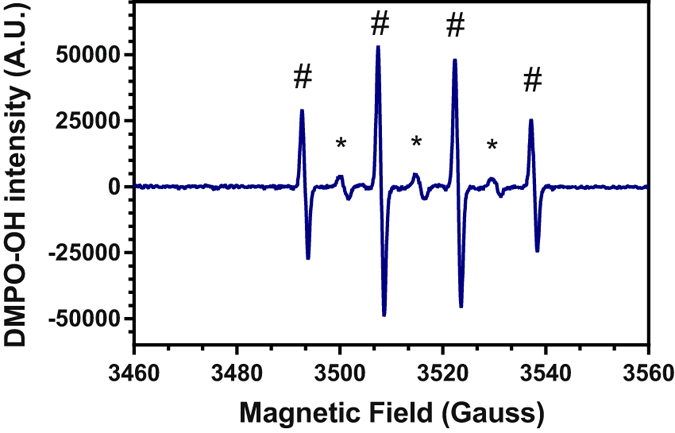
Figure 1
Figure 1
EPR spectrum of DMEM exposed upon 150 s to cold plasma in the presence of DMPO (#DMPO-OH, *DMPO-CH3).
Figure 2
Figure 2
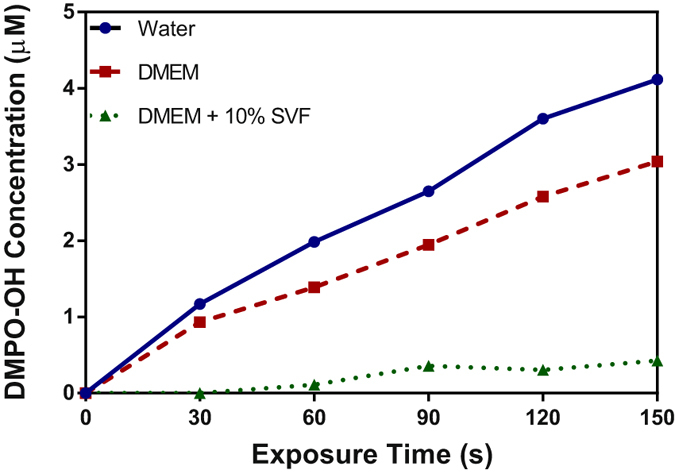
Variation of the concentration of DMPO-OH in water, DMEM + /− 10% FCS as a function of helium plasma jet exposure time. Half height of the second peak of the quartet EPR spectrum was chosen to represent DMPO-OH intensity.
Figure 3
Figure 3
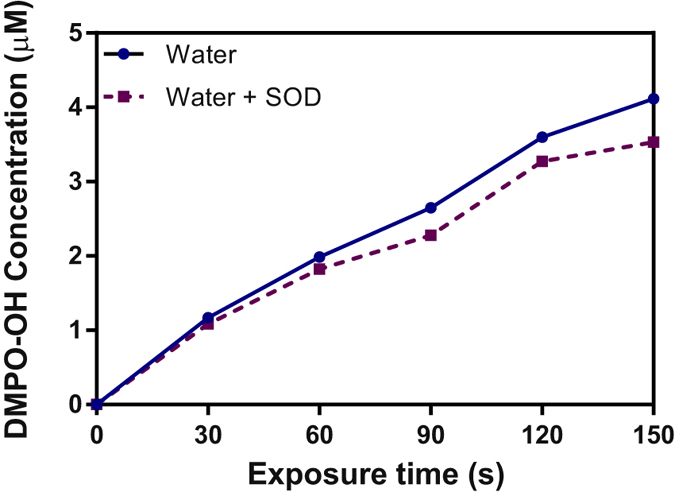
Variation of DMPO-OH concentration in Milli-Q water with or without 150 U of SOD after He plasma treatment at various exposure time. Half height of the second peak of the quartet spectrum was chosen to represent DMPO-OH intensity.
Figure 4
Figure 4
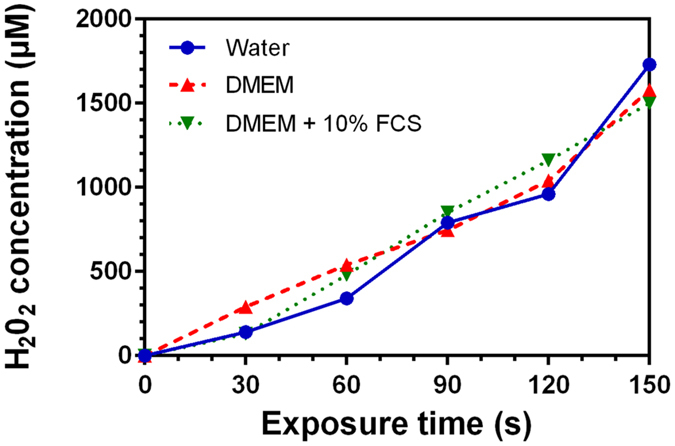
Variation of the concentration of hydrogen peroxide in Milli-Q water, DMEM and DMEM + 10%FCS as a function of He plasma jet time exposition.
Figure 5
Figure 5
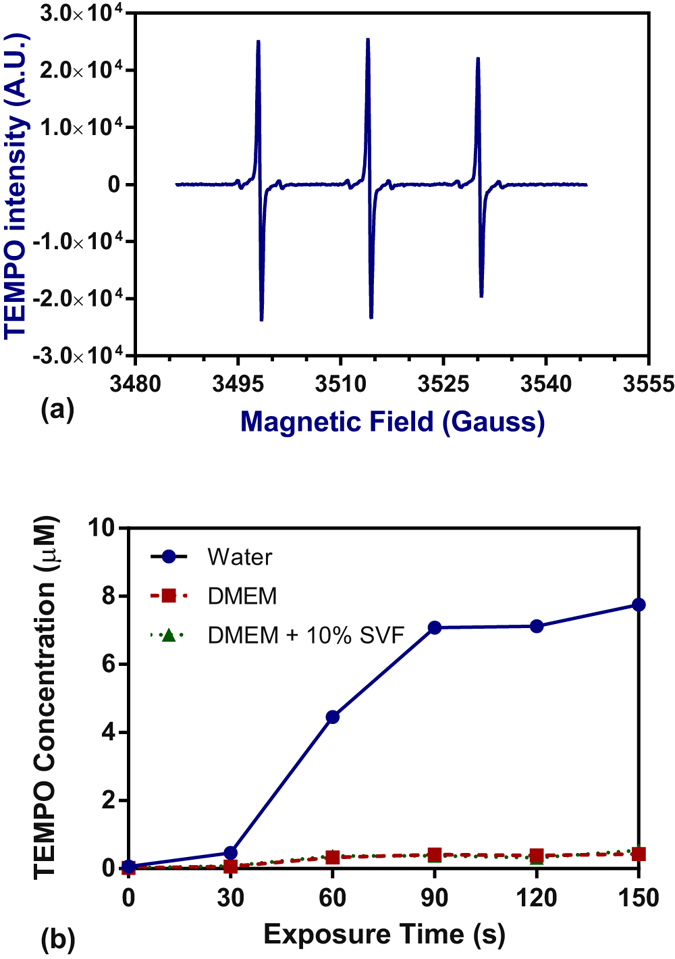
(a) TEMPO EPR spectrum obtained after 150 s of plasma treatment in Milli-Q water. (b) Evolution of TEMPO signal in three media as a function of plasma jet exposure. Half height of the first peak was chosen to represent TEMPO intensity.
Figure 6
Figure 6
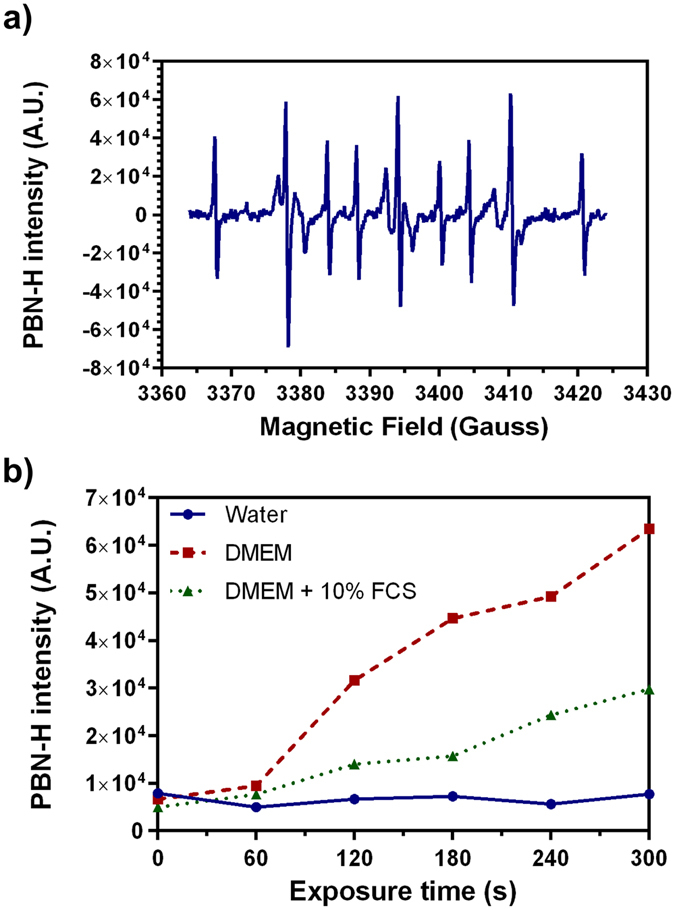
(a) PBN-H spectrum obtained after 150 s of plasma treatment in DMEM. (b) Effect of plasma exposure on PBN-H signal in three solvents. Half height of the middle peak was chosen to represent PBN-H intensity.
Figure 7
Figure 7
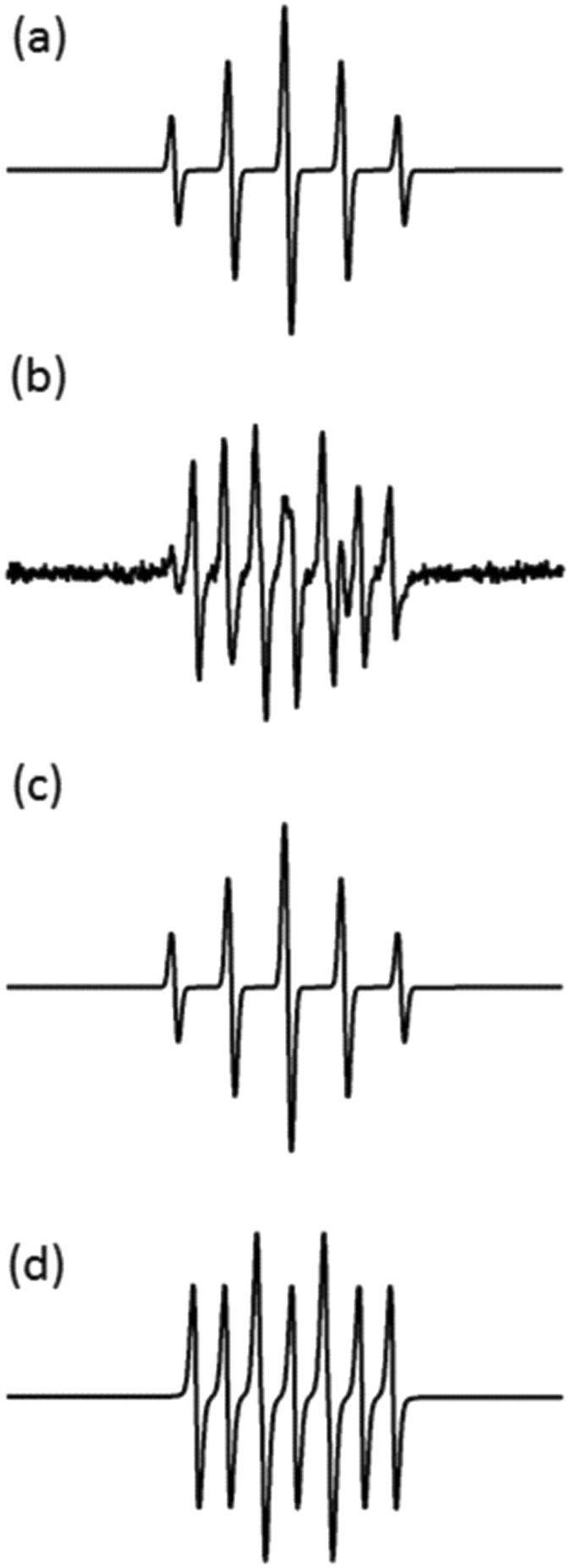
EPR spectra of C-PTIO in Milli-Q water with or without plasma treatment. (a) Experimental spectrum of 166 µM C-PTIO in Milli-Q water. (b) Experimental spectrum of 16 6 µM C-PTIO in Milli-Q water after 150 s of plasma treatment. Two components are identified in experimental spectrum (b) by computer simulation represented in (c) and (d). (c) EPR simulation of C-PTIO identical with spectrum (a). (d) EPR simulation of C-PTI resulting of the interaction between C-PTIO and nitric oxide.
Figure 8
Figure 8
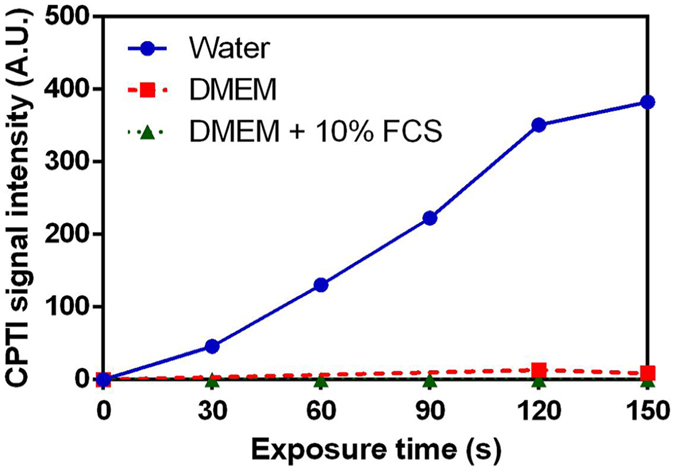
Variation of the concentration of C-PTIin water, DMEM +/− 10% FCS after He plasma treatment at various exposure time.
Figure 9
Figure 9
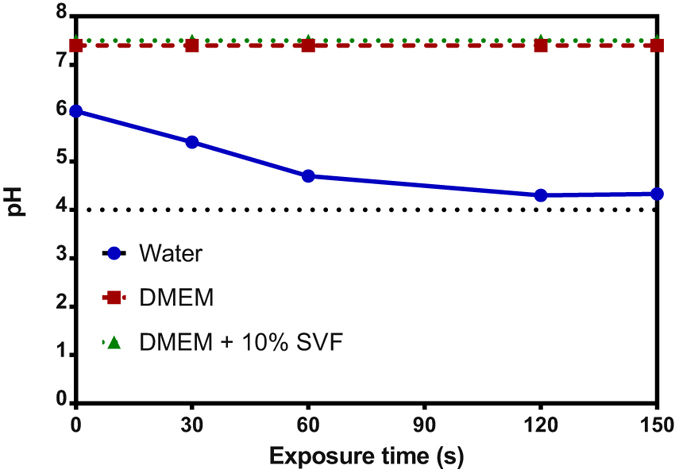
Variation of pH in water after He plasma treatment at various exposure time.
Figure 10
Figure 10
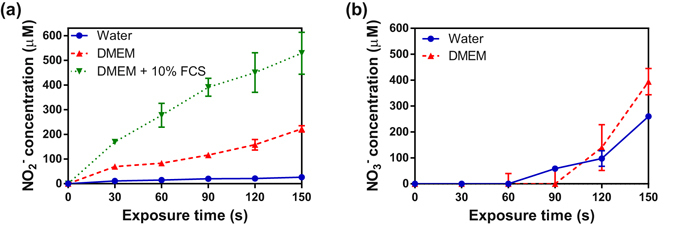
Variation of the concentration of (a) Nitrite anion and (b) Nitrate anion concentration in water, DMEM + /− 10% FCS after He plasma treatment at various exposure time.
Figure 11
Figure 11
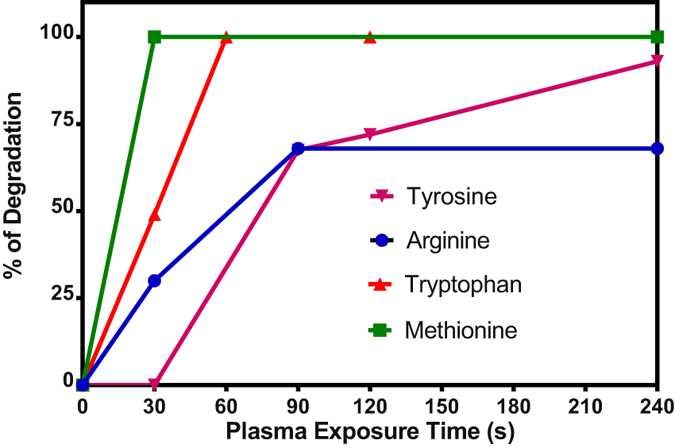
Percentage of degradation of amino acids (0.2 mM) in water after He plasma treatment at various exposure time. The percentage of degradation of each amino acid for an exposure time to He plasma was determined by the following ratio [x−y]/x; where x corresponds to the intensity of the mass peak of the amino acid before treatment and y to the intensity after exposure to He plasma.
Figure 12
Figure 12
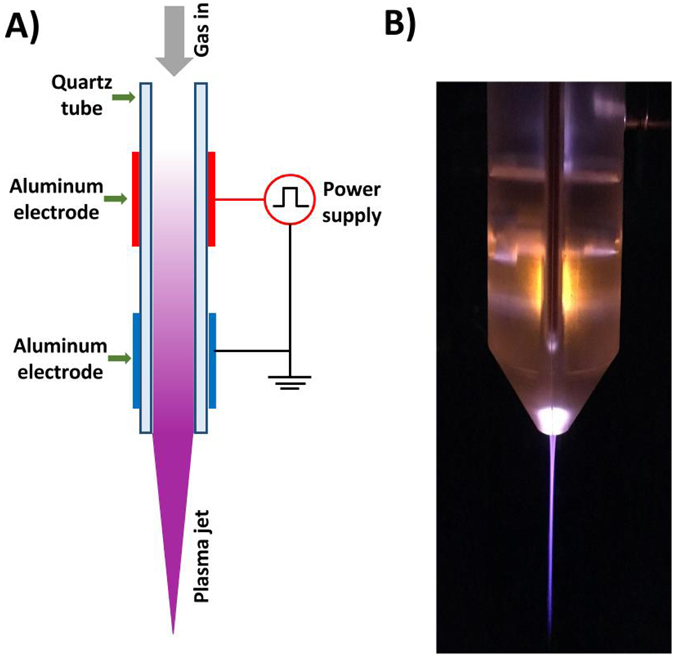
Low temperature plasma jet at atmospheric pressure. (A) Schematic diagram of plasma device. (B) Picture of plasma jet.
Figure 13
Figure 13
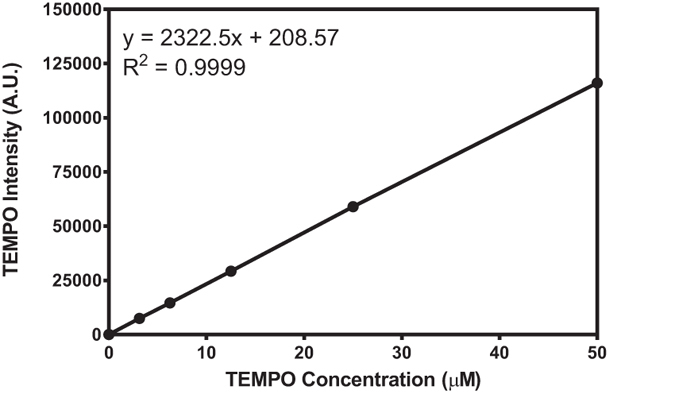
Calibration curve for the analysis of radical adduct using EPR. Double integration of TEMPO EPR spectra versus concentration of TEMPO.
Figure 14
Figure 14
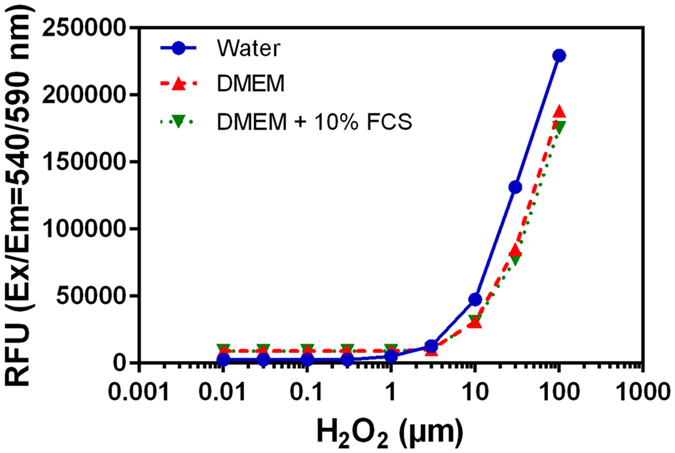
Calibration curves of hydrogen peroxide concentration in three solvents.
Figure 15
Figure 15
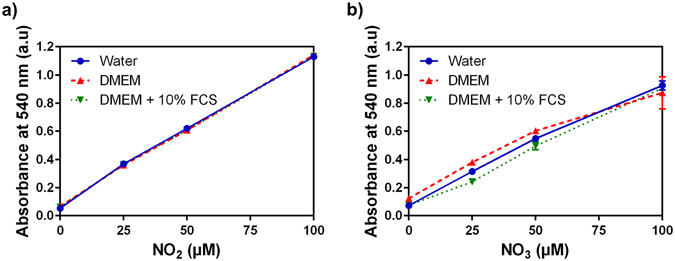
Calibration curves of (a) Nitrite anion and (b) Nitrate anion concentration in three solvents.

References

    1. Fridman, A. Plasma Chemistry, New York: Cambridge University Press (2008).
    1. Cooper M, et al. Decontamination of Surfaces From Extremophile Organisms Using Nonthermal Atmospheric-Pressure Plasmas. IEEE Trans. Plasma Sci. 2009;37:866–871. doi: 10.1109/TPS.2008.2010618. - DOI
    1. Sun P, et al. Tooth Whitening With Hydrogen Peroxide Assisted by a Direct-Current Cold Atmospheric-Pressure Air Plasma Microjet. IEEE Trans. Plasma Sci. 2010;38:1892–1896. doi: 10.1109/TPS.2010.2066991. - DOI
    1. Kalghati S, Friedman G, Fridman A, Clyne AM. Endothelial Cell Proliferation is Enhanced by Low Dose Non-Thermal Plasma Through Fibroblast Growth Factor-2 Release. Ann. Biomed. Engi. 2010;38:748–757. doi: 10.1007/s10439-009-9868-x. - DOI - PubMed
    1. Vandamme M, et al. ROS implication in a new antitumor strategy based on non-thermal plasma. Int. J. Cancer. 2012;130:2185–2194. doi: 10.1002/ijc.26252. - DOI - PubMed

Publication types