


Innate Immune Response in Kidney Ischemia/Reperfusion Injury: Potential Target for Therapy
- PMID: 28676864
- PMCID: PMC5476886
- DOI: 10.1155/2017/6305439
Innate Immune Response in Kidney Ischemia/Reperfusion Injury: Potential Target for Therapy
Abstract
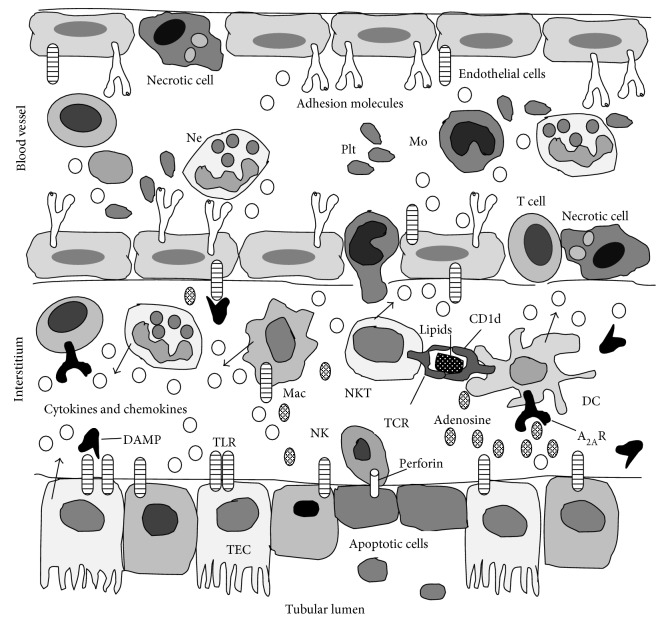
Acute kidney injury caused by ischemia and subsequent reperfusion is associated with a high rate of mortality and morbidity. Ischemia/reperfusion injury in kidney transplantation causes delayed graft function and is associated with more frequent episodes of acute rejection and progression to chronic allograft nephropathy. Alloantigen-independent inflammation is an important process, participating in pathogenesis of injurious response, caused by ischemia and reperfusion. This innate immune response is characterized by the activity of classical cells belonging to the immune system, such as neutrophils, macrophages, dendritic cells, lymphocytes, and also tubular epithelial cells and endothelial cells. These immune cells not only participate in inflammation after ischemia exerting detrimental influence but also play a protective role in the healing response from ischemia/reperfusion injury. Delineating of complex mechanisms of their actions could be fruitful in future prevention and treatment of ischemia/reperfusion injury. Among numerous so far conducted experiments, observed immunomodulatory role of adenosine and adenosine receptor agonists in complex interactions of dendritic cells, natural killer T cells, and T regulatory cells is emphasized as promising in the treatment of kidney ischemia/reperfusion injury. Potential pharmacological approaches which decrease NF-κB activity and antagonize mechanisms downstream of activated Toll-like receptors are discussed.
Figures
References
-
- Chertow G. M., Burdick E., Honour M., Bonventre J. V., Bates D. W. Acute kidney injury, mortality, length of stay, and costs in hospitalized patients. Journal of the American Society of Nephrology. 2005;16(11):3365–3370. - PubMed
Publication types
MeSH terms
Substances
LinkOut - more resources
Full Text Sources
Other Literature Sources
