


The Role of Growth Hormone and Insulin-Like Growth Factor-I in the Liver
- PMID: 28678199
- PMCID: PMC5535938
- DOI: 10.3390/ijms18071447
The Role of Growth Hormone and Insulin-Like Growth Factor-I in the Liver
Abstract
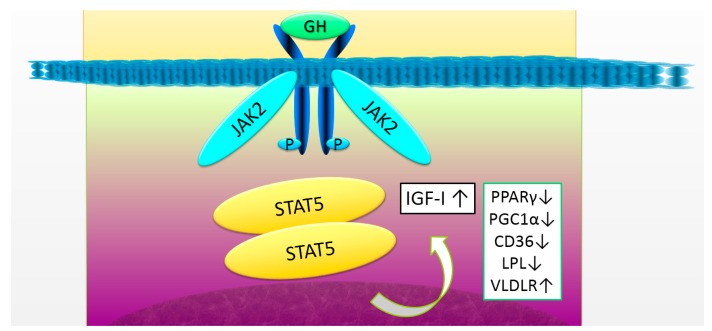
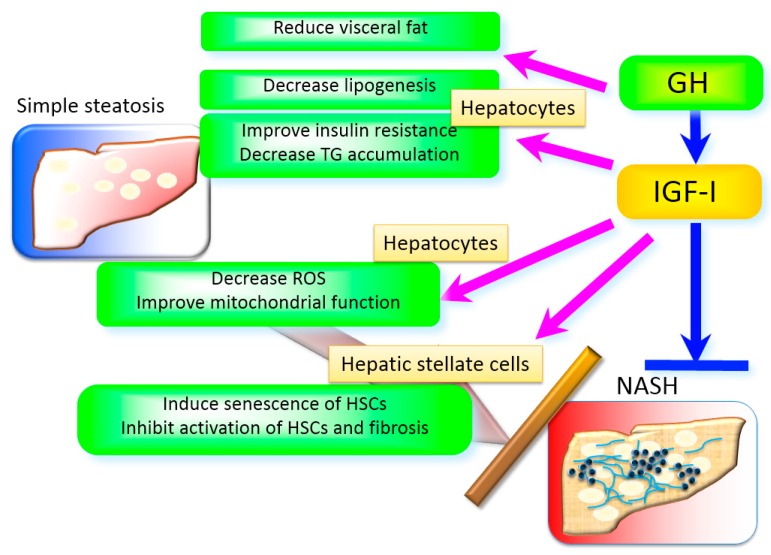
Adult growth hormone deficiency (GHD) is characterized by metabolic abnormalities associated with visceral obesity, impaired quality of life, and increased mortality. Patients with adult GHD show increased prevalence of non-alcoholic fatty liver disease (NAFLD)/non-alcoholic steatohepatitis (NASH), and growth hormone (GH) replacement therapy has been shown to improve these conditions. It has also been demonstrated that a decrease in the GH insulin-like growth factor-I (IGF-I) axis is closely associated with the progression of general NAFLD, suggesting a physiological role of these hormones for the maintenance of the liver. NASH histologically demonstrates inflammation, necrosis, and fibrosis, in addition to steatosis (and is a serious disease because it can progress to liver cirrhosis and hepatocellular carcinoma in a subset of cases). While fibrosis determines the prognosis of the patient, efficacious treatment for fibrosis is crucial; however, it has not yet been established. Recent studies have clarified the essential roles of GH and IGF-I in the liver. GH profoundly reduces visceral fat, which plays an important role in the development of NAFLD. Furthermore, GH directly reduces lipogenesis in the hepatocytes. IGF-I induces cellular senescence and inactivates hepatic stellate cells, therefore ameliorating fibrosis. IGF-I treatment has been shown to improve animal models of NASH and cirrhosis, suggesting potential clinical applications of IGF-I in these conditions. In this review, I will focus on the important roles of GH and IGF-I in the liver, their underlying mechanisms, and their potential therapeutic applications.
Keywords: adult growth hormone deficiency; cirrhosis; growth hormone; hepatic stellate cells; insulin-like growth factor-I; non-alcoholic fatty liver disease; non-alcoholic steatohepatitis.
Conflict of interest statement
The authors declare no conflict of interest.
Figures
References
-
- Italian Association for the Study of the Liver (AISF) Aisf position paper on nonalcoholic fatty liver disease (nafld): Updates and future directions. Dig. Liver Dis. 2017;49:471–483. - PubMed
-
- Adams L.A., Talwalkar J.A. Diagnostic evaluation of nonalcoholic fatty liver disease. J. Clin. Gastroenterol. 2006;40:S34–S38. - PubMed
Publication types
MeSH terms
Substances
LinkOut - more resources
Full Text Sources
Other Literature Sources
