


doi: 10.1164/rccm.201612-2457PP.
Extracellular Vesicle Biology in the Pathogenesis of Lung Disease
Affiliations
- PMID: 28678586
- PMCID: PMC5754438
- DOI: 10.1164/rccm.201612-2457PP
Item in Clipboard
Extracellular Vesicle Biology in the Pathogenesis of Lung Disease
Am J Respir Crit Care Med.
.
No abstract available
Figures
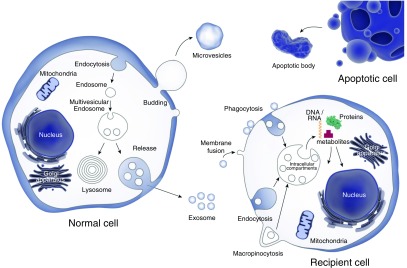
Extracellular vesicle biogenesis. Extracellular vesicles are divided into three main types: exosomes, microvesicles, and apoptotic bodies. Exosomes are formed in multivesicular endosomes and contain molecules including nucleic acids, proteins, lipids, and metabolites. The exosomal content can be transferred to other cells through different processes, including endocytosis, phagocytosis, macropinocytosis, or direct membrane fusion.
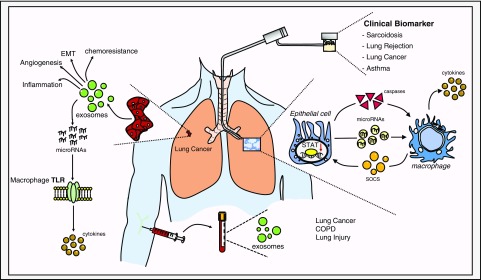
Applications for extracellular vesicles in lung disease. COPD = chronic obstructive pulmonary disease; EMT = epithelial–mesenchymal transition; SOCS = suppressor of cytokine protein signaling; STAT = signal transducers and activators of transcription; TLR = Toll-like receptor.
References
-
- Pan BT, Johnstone RM. Fate of the transferrin receptor during maturation of sheep reticulocytes in vitro: selective externalization of the receptor. Cell. 1983;33:967–978. - PubMed
-
- Buschow SI, Nolte-’t Hoen EN, van Niel G, Pols MS, ten Broeke T, Lauwen M, Ossendorp F, Melief CJ, Raposo G, Wubbolts R, et al. MHC II in dendritic cells is targeted to lysosomes or T cell–induced exosomes via distinct multivesicular body pathways. Traffic. 2009;10:1528–1542. - PubMed
Publication types
MeSH terms
Grants and funding
LinkOut - more resources
Full Text Sources
Other Literature Sources
Medical
