Effect of 1% sodium alendronate in the non-surgical treatment of periodontal intraosseous defects: a 6-month clinical trial
- PMID: 28678950
- PMCID: PMC5482254
- DOI: 10.1590/1678-7757-2016-0252
Effect of 1% sodium alendronate in the non-surgical treatment of periodontal intraosseous defects: a 6-month clinical trial
Abstract
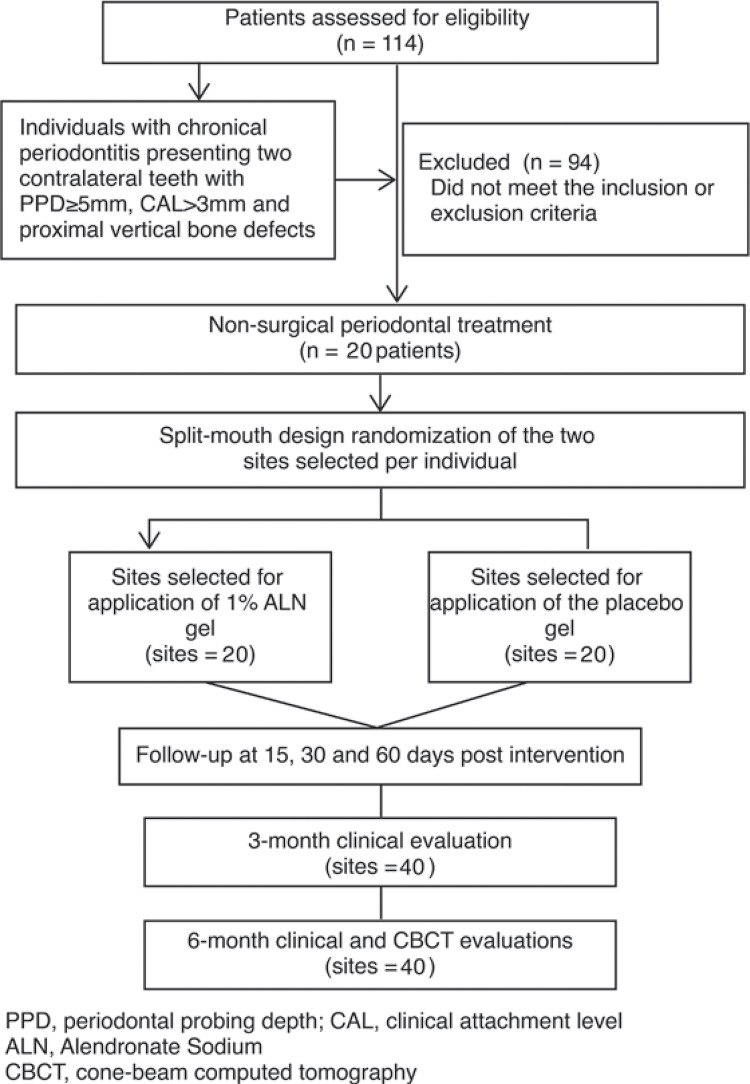
Background and objectives: Few studies have evaluated the effect of the topical application of sodium alendronate (ALN) on the treatment of intrabuccal bone defects, especially those caused by periodontitis. This 6-month randomized placebo controlled clinical trial aimed at evaluating the effect of non-surgical periodontal treatment associated with the use of 1% ALN, through clinical evaluations and cone-beam computed tomography (CBCT).
Material and methods: Twenty individuals with chronic periodontitis underwent periodontal examination at the baseline as well as 3 and 6 months after periodontal treatment, registering clinical attachment level (CAL), periodontal probing depth (PPD), and bleeding on probing (BOP) as the clinical outcomes. After manual scaling and root planing, 40 bilateral sites with interproximal vertical bone defects were randomly treated with either 1% ALN gel or a placebo. Bone defects were evaluated through CBCT at the baseline and 6 months post-treatment. The clinical and CBCT parameters were compared using the Wilcoxon and Friedman tests (p<0.05).
Results: Although ALN produced a greater CAL gain when compared to the placebo at 6 months post-treatment (p=0.021), both treatments produced similar effects on the PPD, BOP, and bone height. Significant differences in bone fill were observed only in patients of the ALN group (4.5 to 3.8 mm; p=0.003) at 6 months post-treatment.
Conclusions: Topical application of 1% ALN might be a beneficial adjuvant to non-surgical periodontal therapy.
References
-
- Aimetti M, Perotto S, Castiglione A, Mariani GM, Ferrarotti F, Romano F. Prevalence of periodontitis in an adult population from an urban area in North Italy: findings from a cross-sectional population-based epidemiological survey. J Clin Periodontol. 2015;42(7):622–631. - PubMed
-
- Almeida J, Ervolino E, Bonfietti LH, Novaes VC, Theodoro LH, Fernandes LA, et al. Adjuvant therapy with sodium alendronate for the treatment of experimental periodontitis in rats. J Periodontol. 2015;86(10):1166–1175. - PubMed
-
- Armitage GC. Development of a classification system for periodontal diseases and conditions. Ann Periodontol. 1999;4(1):1–6. - PubMed
-
- Baron R, Ferrari S, Russel RG. Denosumab and bisphosphonates: different mechanisms of action and effects. Bone. 2011;48(4):677–692. - PubMed
-
- Borromeo GL, Tsao CE, Darby IB, Ebeling PR. A review of the clinical implications of bisphosphonates in dentistry. Aust Dent J. 2011;56(1):2–9. - PubMed
Publication types
MeSH terms
Substances
LinkOut - more resources
Full Text Sources
Other Literature Sources
Medical