


Non-vascularised fibula grafts for reconstruction of segmental and hemicortical bone defects following meta- /diaphyseal tumour resection at the extremities
- PMID: 28679368
- PMCID: PMC5499012
- DOI: 10.1186/s12891-017-1640-z
Non-vascularised fibula grafts for reconstruction of segmental and hemicortical bone defects following meta- /diaphyseal tumour resection at the extremities
Abstract
Background: The reconstruction of meta-/diaphyseal bone defects following bone tumour resection is challenging, and biological treatment options should be applied whenever possible, especially in benign lesions and early stage sarcomas. We aimed to evaluate the results of segmental (SR) and hemicortical reconstructions (HR) at the extremities using non-vascularised fibula grafts.
Methods: We retrospectively enrolled 36 patients who were treated with non-vascularised fibula reconstructions (15 SR, 21 HR) after bone tumour resection (15 malignant, 21 benign). All cases were evaluated regarding consolidation, hypertrophy at the graft-host junctions, and complications; moreover, the functional and oncological results were assessed. The mean follow-up was 8.3 years (2.1-26.6 years).
Results: Primary union was achieved in 94% (SR 87%, HR 100%) of patients, and 85% (SR 81%, HR 88%) showed hypertrophy at the graft-host junction. The overall complication rate was 36% with 4 patients (11%) developing local recurrence. There was a significant correlation between the development of mechanical complications (fracture, delayed-/non-union) and a defect size of ≥12 cm (p = 0.013), segmental defects (p = 0.013) and additional required treatment (p = 0.008). The functional outcome was highly satisfactory (mean MSTS score 86%).
Conclusions: Due to encouraging results and advantages (such as their remodelling capacity at the donor site), non-vascularised fibula reconstructions should be considered a valuable alternative treatment option for patients with hemicortical defects or segmental reconstructions of less than 12 cm in which no additional neo-/adjuvant treatment is necessary.
Keywords: Autograft; Bone defects; Bone tumour; Defect reconstruction; Non-vascularised fibula; Sarcoma.
Conflict of interest statement
Ethics approval and consent to participate
This study and all aspects have been approved by the local ethics committee (Ethikkomission Nordwest und Zentralschweiz, number: 2014/189). Due to the retrospective character of the study (patients treated between 1976 and 2012) and the considerable number of patients with malignant tumors (risk of opening old wounds and deteriorating psychooncological distress problems) gathering an informed consent was waived in accordance with the ethics committee.
Consent for publication
Not applicable.
Competing interests
All authors declare that they have no competing interests.
Publisher’s Note
Springer Nature remains neutral with regard to jurisdictional claims in published maps and institutional affiliations.
Figures
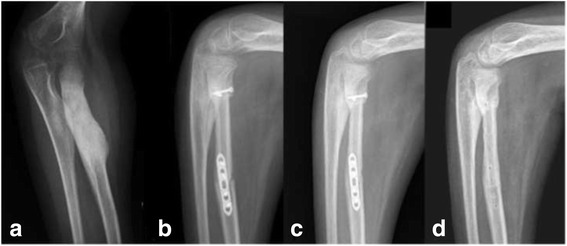
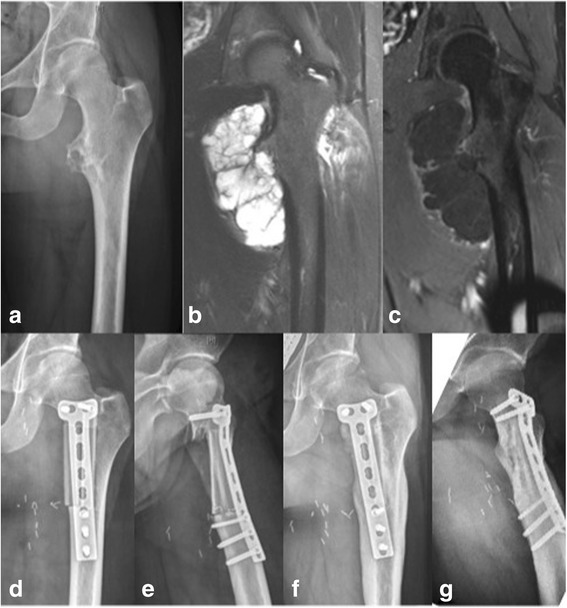
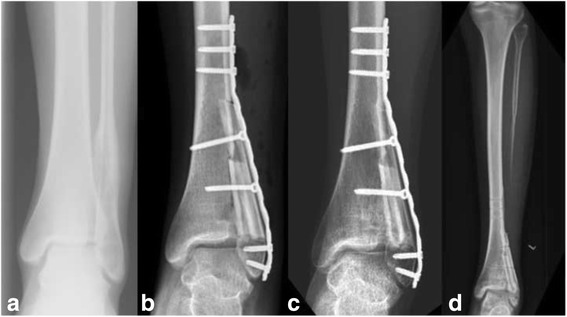
References
-
- Enneking WF, Spanier SS, Goodman MA. A system for the surgical staging of musculoskeletal sarcoma. Clin Orthop Relat Res. 1980;153:106–120. - PubMed
MeSH terms
LinkOut - more resources
Full Text Sources
Other Literature Sources
Medical
Research Materials
