High Level of Tobacco Carcinogen-Derived DNA Damage in Oral Cells Is an Independent Predictor of Oral/Head and Neck Cancer Risk in Smokers
- PMID: 28679497
- PMCID: PMC5712492
- DOI: 10.1158/1940-6207.CAPR-17-0140
High Level of Tobacco Carcinogen-Derived DNA Damage in Oral Cells Is an Independent Predictor of Oral/Head and Neck Cancer Risk in Smokers
Abstract
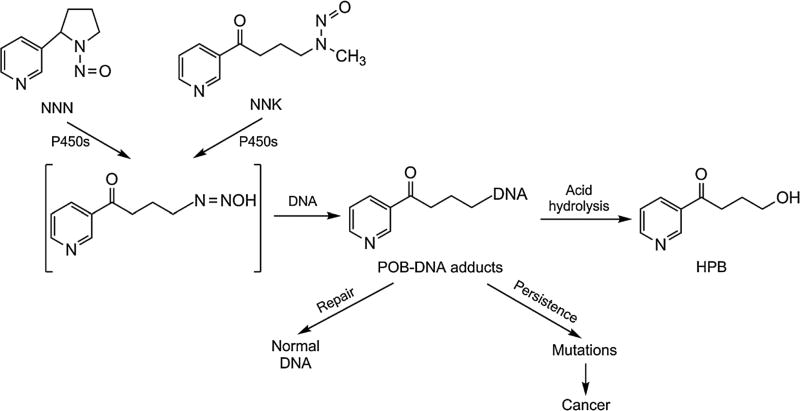
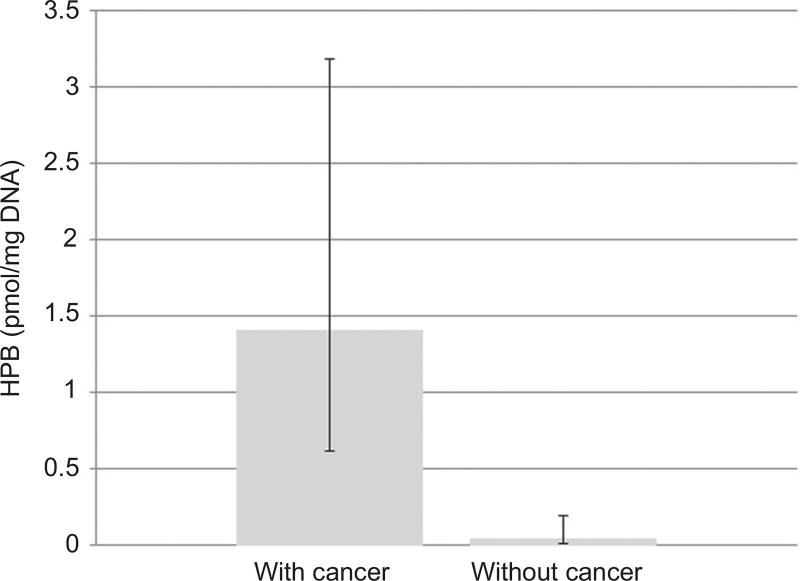
Exposure to tobacco-specific nitrosamines (TSNA) and polycyclic aromatic hydrocarbons (PAH) is recognized to play an important role in the development of oral/head and neck squamous cell cancer (HNSCC). We recently reported higher levels of TSNA-associated DNA adducts in the oral cells of smokers with HNSCC as compared with cancer-free smokers. In this study, we further investigated the tobacco constituent exposures in the same smokers to better understand the potential causes for the elevated oral DNA damage in smokers with HNSCC. Subjects included cigarette smokers with HNSCC (cases, n = 30) and cancer-free smokers (controls, n = 35). At recruitment, tobacco/alcohol use questionnaires were completed, and urine and oral cell samples were obtained. Analysis of urinary 4-(methylnitrosamino)-1-(3-pyridyl)-1-butanol (NNAL) and N'-Nitrosonornicotine (NNN; TSNA biomarkers), 1-hydroxypyrene (1-HOP, a PAH), cotinine, 3'-hydroxycotinine, and the nicotine metabolite ratio (NMR) were performed. Cases and controls differed in mean age, male preponderance, and frequency of alcohol consumption (but not total alcoholic drinks). Univariate analysis revealed similar levels of NNN, 1-HOP, and cotinine between groups but, as reported previously, significantly higher DNA adduct formation in the cases. Multiple regression adjusting for potential confounders showed persistent significant difference in DNA adduct levels between cases and controls [ratio of geometric means, 20.0; 95% CI, 2.7-148.6). Our cohort of smokers with HNSCC demonstrates higher levels of TSNA-derived oral DNA damage in the setting of similar exposure to nicotine and tobacco carcinogens. Among smokers, DNA adduct formation may act as a predictor of eventual development of HNSCC that is independent of carcinogen exposure indicators. Cancer Prev Res; 10(9); 507-13. ©2017 AACRSee related editorial by Johnson and Bauman, p. 489.
©2017 American Association for Cancer Research.
Conflict of interest statement
No potential conflicts of interest were disclosed.
Figures
Comment in
-
When the Damage Is Done: Selecting Patients for Head and Neck Cancer Chemoprevention Trials.Cancer Prev Res (Phila). 2017 Sep;10(9):489-490. doi: 10.1158/1940-6207.CAPR-17-0197. Epub 2017 Aug 18. Cancer Prev Res (Phila). 2017. PMID: 28821544 Free PMC article. No abstract available.
References
MeSH terms
Substances
Grants and funding
LinkOut - more resources
Full Text Sources
Other Literature Sources
Medical