


Quality Improvement Initiative to Increase the Use of Nasogastric Hydration in Infants With Bronchiolitis
- PMID: 28679563
- PMCID: PMC5525377
- DOI: 10.1542/hpeds.2016-0160
Quality Improvement Initiative to Increase the Use of Nasogastric Hydration in Infants With Bronchiolitis
Abstract
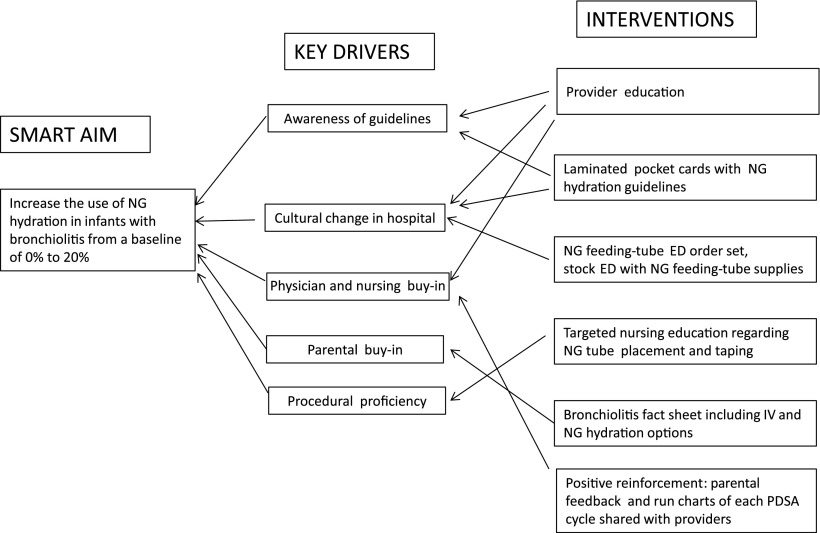
Background and objectives: Intravenous (IV) hydration is used primarily in children with bronchiolitis at our institution. Because nasogastric (NG) hydration can provide better nutrition, the goal of our quality improvement (QI) initiative was to increase the rate of NG hydration in eligible children 1 to 23 months old with bronchiolitis by 20% over 6 months.
Methods: We used Plan-Do-Study-Act cycles to increase the use of NG hydration in eligible children. Interventions included educational and system-based changes and sharing parental feedback with providers. Chart reviews were performed to identify the rates of NG hydration, which were plotted over time in a statistical process control p chart. The balancing measure was the rate of complications in children with NG versus IV hydration.
Results: Two hundred and ninety-three children who were hospitalized with bronchiolitis needed supplemental hydration during the QI initiative (January 2016-April 2016). Ninety-one children were candidates for NG hydration, and 53 (58%) received NG hydration. The rates of NG hydration increased from a baseline of 0% pre-QI bronchiolitis season (January 2015-April 2015) to 58% during the initiative. There was no aspiration and no accidental placement of the NG tube into a child's airway. Nine patients (17%) in the NG group had a progression of disease requiring nil per os status, and 6 of these were transferred to the PICU whereas none of those in the IV group were transferred to the PICU. Post-QI initiative, the majority of nurses (63%) and physicians (95%) stated that they are more likely to consider NG hydration in children with bronchiolitis.
Conclusions: We successfully increased the rates of NG hydration in eligible children with bronchiolitis by using educational and system-based interventions.
Copyright © 2017 by the American Academy of Pediatrics.
Conflict of interest statement
POTENTIAL CONFLICT OF INTEREST: The authors have indicated they have no potential conflicts of interest to disclose.
Figures


References
-
- Ralston SL, Lieberthal AS, Meissner HC, et al. ; American Academy of Pediatrics. Clinical practice guideline: the diagnosis, management, and prevention of bronchiolitis. Pediatrics. 2014;134(5). Available at: www.pediatrics.org/cgi/content/full/134/5/e1474 - PubMed
-
- Oakley E, Borland M, Neutze J, et al. ; Paediatric Research in Emergency Departments International Collaborative (PREDICT). Nasogastric hydration versus intravenous hydration for infants with bronchiolitis: a randomised trial. Lancet Respir Med. 2013;1(2):113–120 - PubMed
-
- Nunez J, Liu DR, Nager AL. Dehydration treatment practices among pediatrics-trained and non-pediatrics trained emergency physicians. Pediatr Emerg Care. 2012;28(4):322–328 - PubMed
-
- Babl FE, Sheriff N, Neutze J, Borland M, Oakley E. Bronchiolitis management in pediatric emergency departments in Australia and New Zealand: a PREDICT study. Pediatr Emerg Care. 2008;24(10):656–658 - PubMed
MeSH terms
Grants and funding
LinkOut - more resources
Full Text Sources
Other Literature Sources
Miscellaneous
