


Rehabilitation and exercise oncology program: translating research into a model of care
- PMID: 28680286
- PMCID: PMC5486391
- DOI: 10.3747/co.24.3498
Rehabilitation and exercise oncology program: translating research into a model of care
Abstract
Introduction: The Rehabilitation and Exercise Oncology model of care (ActivOnco) was established to optimize cancer survivorship through exercise prescription and active lifestyle promotion, providing a transition of care from hospital to community. Patients having any cancer diagnosis, stage of disease, and treatment were eligible for evaluation and exercise prescription upon deterioration of performance status. The team of professionals included hospital-based physiotherapists proactively screening for rehabilitation needs, loss of functional independence, and exercise eligibility, plus exercise specialists in a community-based Wellness Centre to provide follow-up or direct access for post-treatment or non-complex patients.
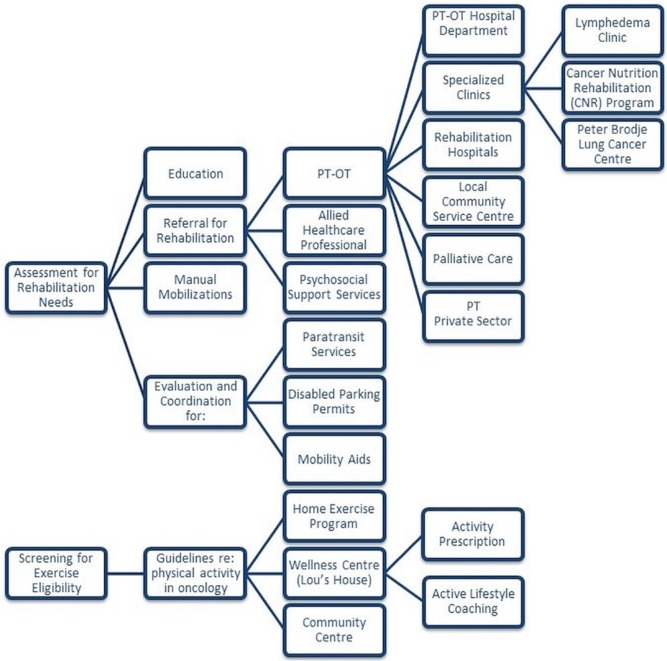
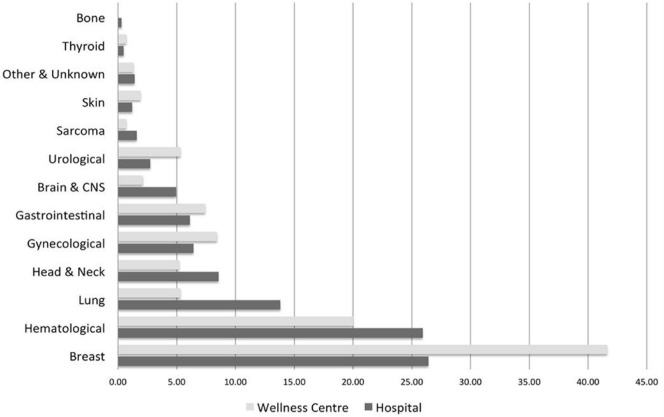
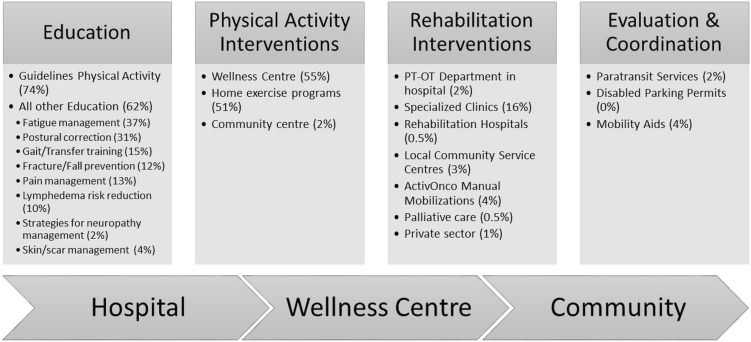
Methods: From January 2011 to December 2015, the hospital team assessed 1635 patients representing all major cancer sites, and the Wellness Centre team evaluated and prescribed exercise for 1066 participants. Primary interventions provided were education about fatigue management, physical activity promotion, exercise prescription, fracture risk reduction, referral to specialized follow-up services (for example, occupational therapy, lymphedema clinic), and coordination for mobility aids and paratransit services.
Results and conclusions: Implementation of the ActivOnco model of care showed that exercise alone is not a panacea for all functional deterioration associated with the cancer trajectory and its treatment. However, screening to identify rehabilitation needs combined with exercise prescription can effectively improve the quality of survivorship in cancer patients. Program developments are limited by the cost of human resources, lack of hospital-based physical resources, and lack of public funding, all of which significantly limit the scope and development of appropriate services.
Keywords: Oncology rehabilitation; exercise; models of care; quality of life; survivorship.
Conflict of interest statement
We have read and understood Current Oncology’s policy on disclosing conflicts of interest, and we declare that we have none.
Figures
References
-
- Mirolla M. The Cost of Chronic Disease in Canada. Ottawa, ON: The Chronic Disease Prevention Alliance of Canada; 2004.
-
- Boucher P, Langlois PE, on behalf of the Coalition Priorité Cancer au Québec . Les coûts économiques du cancer au Québec en 2013. Montreal, QC: Coalition Priorité Cancer au Québec; 2014. [Available online at: http://en.calameo.com/read/0012859279adcfde6a198?authid=pIlthvR5cjdR; cited 5 July 2016]
-
- Silver JK, Baima J, Newman R, Galantino ML, Shockney LD. Cancer rehabilitation may improve function in survivors and decrease the economic burden of cancer to individuals and society. Work. 2013;46:455–72. - PubMed
LinkOut - more resources
Full Text Sources
Other Literature Sources
