


The presenting and prescribing patterns of migraine in an Australian emergency department: A descriptive exploratory study
- PMID: 28680512
- PMCID: PMC5496823
- DOI: 10.5847/wjem.j.1920-8642.2017.03.002
The presenting and prescribing patterns of migraine in an Australian emergency department: A descriptive exploratory study
Abstract
Background: Migraine is a common neurological condition that frequently presents to the emergency department (ED). Many medications are available to treat migraine. This study aims to characterize the demographics of patients who present to a large metropolitan ED with migraine, and to identify the medications used in treating this condition.
Methods: This study is a retrospective database interrogation of clinical records, used to collect quantitative data on patient demographics and medication prescriptions in the ED.
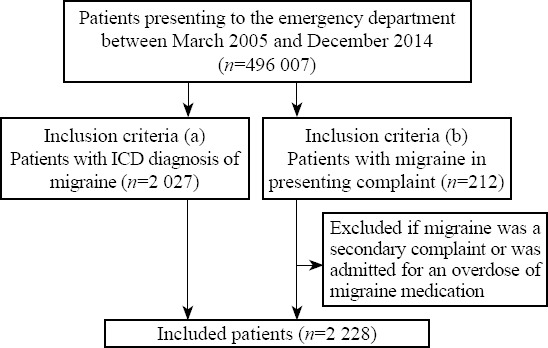
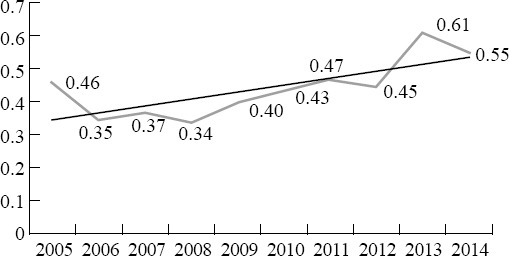
Results: A total of 2 228 patients were identified as being treated for migraine over a 10-year period. The proportion of the ED population presenting with migraine steadily increased in this time. Females (71%) more commonly presented to the ED with migraine than males. The migraine population was significantly younger (M=37.05, SD=13.23) than the whole ED population (M=46.17 SD=20.50) (P<0.001). A variety of medications were used in the treatment of migraine in the ED. Simple analgesics such as paracetamol and ibuprofen, anti-emetics and intravenous (IV) fluids with phenothiazine additives were commonly used. Over 20% of patients were prescribed oral or parenteral opiates (42 of 194 initial medication prescriptions, and 64 of 292 as required medication prescriptions). Triptans were very rarely used.
Conclusion: Migraine is an increasingly common presentation to the ED. People presenting to the ED with migraine are more likely to be younger and female than the general ED population. Peak presentations for migraines occurred in January and February. The medications that are prescribed in the ED for migraine is varied and are not always in line with current evidence for the treatment of migraine. The excessive reliance on opiates and lack of the use of triptans denotes a significant variation from published guidelines.
Keywords: Analgesia; Emergency department; Headache; Migraine; Pain.
Conflict of interest statement
Conflicts of interest: There is no conflict of interest related to this study.
Figures
References
-
- Lipton R, Stewart W, Diamond S, Diamond M. Prevalence and burden of migraine in the United States:Data From the American Migraine Study II. Headache. 2001;41(7):646–57. - PubMed
-
- Smetana GW. The diagnostic value of historical features in primary headache syndromes:A comprehensive review. Arch Intern Med. 2000;160(18):2729–37. - PubMed
-
- Wöber C, Wöber-Bingöl Ç. Triggers of migraine and tension-type headache. Handb Clin Neurol. 2010;97(C):161–72. - PubMed
-
- Stewart WF, Lipton RB, Simon D. Work-related disability:Results from the American Migraine Study. Cephalalgia. 1996;16(4):231–8. - PubMed
-
- Year Book Australia 2012. Statistics ABo. Canberra, Australia 2012:
LinkOut - more resources
Full Text Sources
Other Literature Sources