


Doege-Potter syndrome: A review of the literature including a new case report
- PMID: 28682900
- PMCID: PMC5502173
- DOI: 10.1097/MD.0000000000007417
Doege-Potter syndrome: A review of the literature including a new case report
Abstract
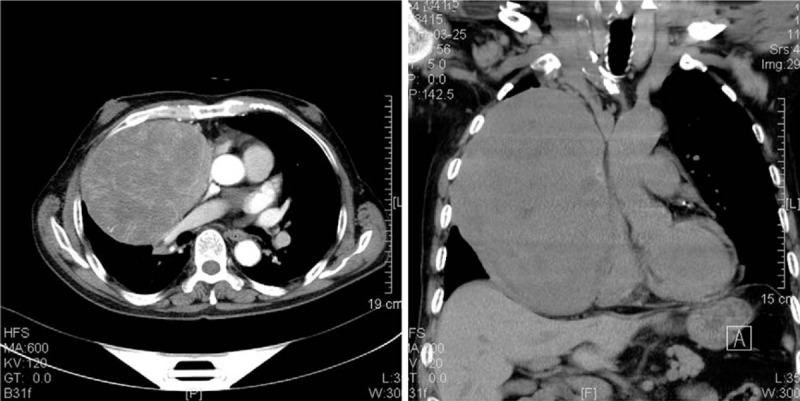
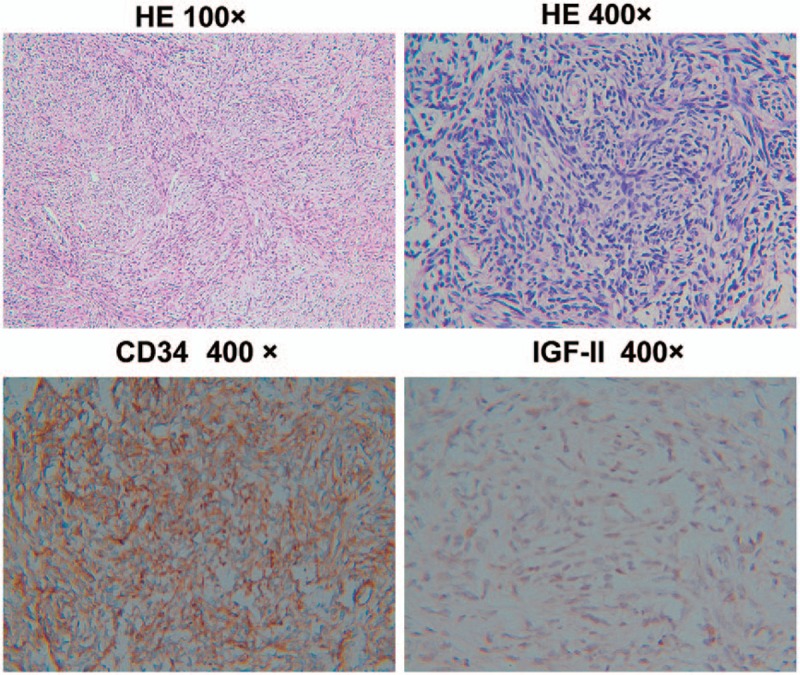
Rationale: We reviewed 76 published cases of Doege-Potter syndrome, and non-islet cell tumor hypoglycemia (NICTH) secondary to a solitary fibrous tumor (SFT) between 1989 and 2016, to study disease pathogenesis, diagnosis, and treatment of this rare paraneoplastic disease. Further, we report 1 new case of a patient presenting with Doege-Potter syndrome.
Patients concerns: The tumors originated from the pleural cavity, lung, pelvis, liver, retroperitoneum, kidney, mediastinal, the sella, uterus, bladder, intestine, mandibular, and the thigh. The most common location was the pleural cavity (left 12 cases and right 28 cases). Moreover, 28/71 (39.4%) were benign and 43/71 (60.6%) were malignant. SFTs with NICTH were more likely to be malignant and present at a higher rate than previously published (5%-10.4%). The malignancy rate of extrathoracic SFTs was higher than that of thoracic SFTs, 20 (66.7%) as compared with 23 (56.1%). Age of onset varied from 24 to 85 years (mean 59 years), with 47 males and 28 females, and gender unavailable for 1 case. When comparing clinical characteristics of patients with benign as compared malignant tumors, no significant differences in the age of onset, gender, or size of tumor were seen. Among 15/19 cases, the insulin-like growth factor II (IGF-II)/IGF-I ration was >10.0. Complete tumor resection remained the only definitive treatment.
Outcomes and lessens: Glucocorticoids dose-dependently reduce the frequency and severity of hypoglycemic episodes. Low doses of prednisone were ineffective at relieving hypoglycemia. The effect of neoadjuvant treatment, consisting of chemoradiation, and consecutive selective embolization of vessels feeding the tumor were not identified.
Conflict of interest statement
The authors have no funding and conflicts of interest to disclose.
Figures
References
-
- Kinoshita T, Ishii K, Higashiiwai H, et al. Malignant solitary fibrous tumour of the peritoneum. Clin Radiol 2000;55:157–60. - PubMed
-
- de Groot JW, Rikhof B, Van DJ, et al. Non-islet cell tumour-induced hypoglycaemia: a review of the literature including two new cases. Endocr Relat Cancer 2007;14:979–93. - PubMed
-
- England DM, Hochholzer L, Mccarthy MJ. Localized benign and malignant fibrous tumors of the pleura. A clinicopathologic review of 223 cases. Am J Surg Pathol 1989;13:640–58. - PubMed
-
- Pavelic K, Spaventi S, Gluncic V, et al. The expression and role of insulin-like growth factor II in malignant hemangiopericytomas. J Mol Med (Berl) 1999;77:865–9. - PubMed
Publication types
MeSH terms
LinkOut - more resources
Full Text Sources
Other Literature Sources
Medical
