


Sharing Annotated Audio Recordings of Clinic Visits With Patients-Development of the Open Recording Automated Logging System (ORALS): Study Protocol
- PMID: 28684387
- PMCID: PMC5519830
- DOI: 10.2196/resprot.7735
Sharing Annotated Audio Recordings of Clinic Visits With Patients-Development of the Open Recording Automated Logging System (ORALS): Study Protocol
Abstract
Background: Providing patients with recordings of their clinic visits enhances patient and family engagement, yet few organizations routinely offer recordings. Challenges exist for organizations and patients, including data safety and navigating lengthy recordings. A secure system that allows patients to easily navigate recordings may be a solution.
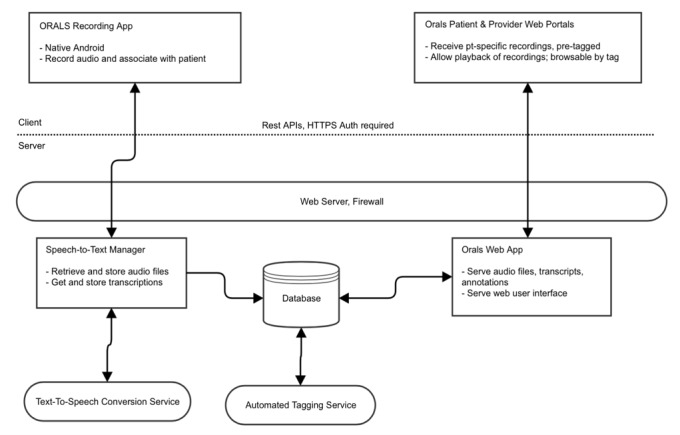
Objective: The aim of this project is to develop and test an interoperable system to facilitate routine recording, the Open Recording Automated Logging System (ORALS), with the aim of increasing patient and family engagement. ORALS will consist of (1) technically proficient software using automated machine learning technology to enable accurate and automatic tagging of in-clinic audio recordings (tagging involves identifying elements of the clinic visit most important to patients [eg, treatment plan] on the recording) and (2) a secure, easy-to-use Web interface enabling the upload and accurate linkage of recordings to patients, which can be accessed at home.
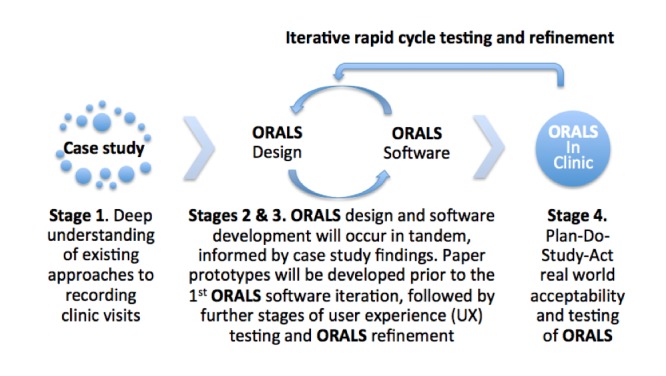
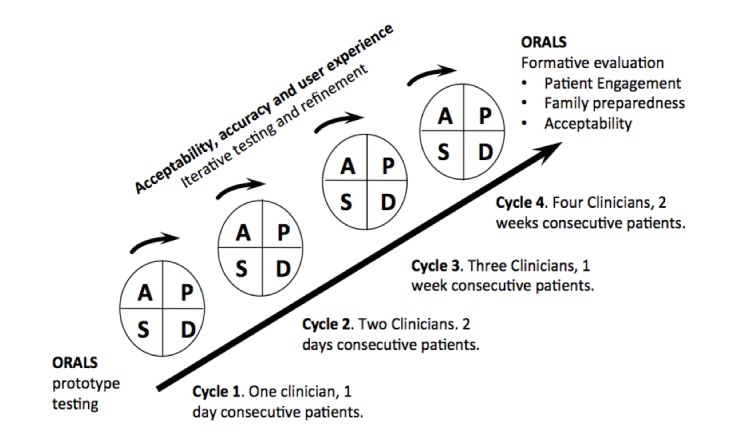
Methods: We will use a mixed methods approach to develop and formatively test ORALS in 4 iterative stages: case study of pioneer clinics where recordings are currently offered to patients, ORALS design and user experience testing, ORALS software and user interface development, and rapid cycle testing of ORALS in a primary care clinic, assessing impact on patient and family engagement. Dartmouth's Informatics Collaboratory for Design, Development and Dissemination team, patients, patient partners, caregivers, and clinicians will assist in developing ORALS.
Results: We will implement a publication plan that includes a final project report and articles for peer-reviewed journals. In addition to this work, we will regularly report on our progress using popular relevant Tweet chats and online using our website, www.openrecordings.org. We will disseminate our work at relevant conferences (eg, Academy Health, Health Datapalooza, and the Institute for Healthcare Improvement Quality Forums). Finally, Iora Health, a US-wide network of primary care practices (www.iorahealth.com), has indicated a willingness to implement ORALS on a larger scale upon completion of this development project.
Conclusions: Upon the completion of this project we will have developed a novel recording system that will be ready for large-scale testing. Our long-term goal is for ORALS to seamlessly fit into a clinic's and patient's daily routine, increasing levels of patient engagement and transparency of care.
Keywords: audiovisual aids; caregivers; disease management; machine learning; patient engagement; patients.
©Paul J Barr, Michelle D Dannenberg, Craig H Ganoe, William Haslett, Rebecca Faill, Saeed Hassanpour, Amar Das, Roger Arend, Meredith C Masel, Sheryl Piper, Haley Reicher, James Ryan, Glyn Elwyn. Originally published in JMIR Research Protocols (http://www.researchprotocols.org), 06.07.2017.
Conflict of interest statement
Conflicts of Interest: Glyn Elwyn has been a consultant to Emmi Solutions LLC, which develops patient decision support tools; National Quality Forum on certification of decision support tools; Washington State Health Department on certification of decision support tools; PatientWisdom LLC; SciMentum LLC, Amsterdam; and Access Community Health Network, Chicago. He receives royalties on sales of the books
Figures
References
-
- Watson PW, McKinstry B. A systematic review of interventions to improve recall of medical advice in healthcare consultations. J R Soc Med. 2009 Jun;102(6):235–243. doi: 10.1258/jrsm.2009.090013. http://europepmc.org/abstract/MED/19531618 - DOI - PMC - PubMed
-
- Ley P. Memory for medical information. Br J Soc Clin Psychol. 1979 Jun;18(2):245–255. - PubMed
-
- Kessels RP. Patients' memory for medical information. J R Soc Med. 2003 May;96(5):219–222. http://europepmc.org/abstract/MED/12724430 - PMC - PubMed
-
- McCarthy DM, Waite KR, Curtis LM, Engel KG, Baker DW, Wolf MS. What did the doctor say? Health literacy and recall of medical instructions. Med Care. 2012 Apr;50(4):277–282. doi: 10.1097/MLR.0b013e318241e8e1. http://europepmc.org/abstract/MED/22411440 - DOI - PMC - PubMed
LinkOut - more resources
Full Text Sources
Other Literature Sources
