


Washing in hypotonic saline reduces the fraction of irreversibly-damaged cells in stored blood: a proof-of-concept study
- PMID: 28686152
- PMCID: PMC5589709
- DOI: 10.2450/2017.0013-17
Washing in hypotonic saline reduces the fraction of irreversibly-damaged cells in stored blood: a proof-of-concept study
Abstract
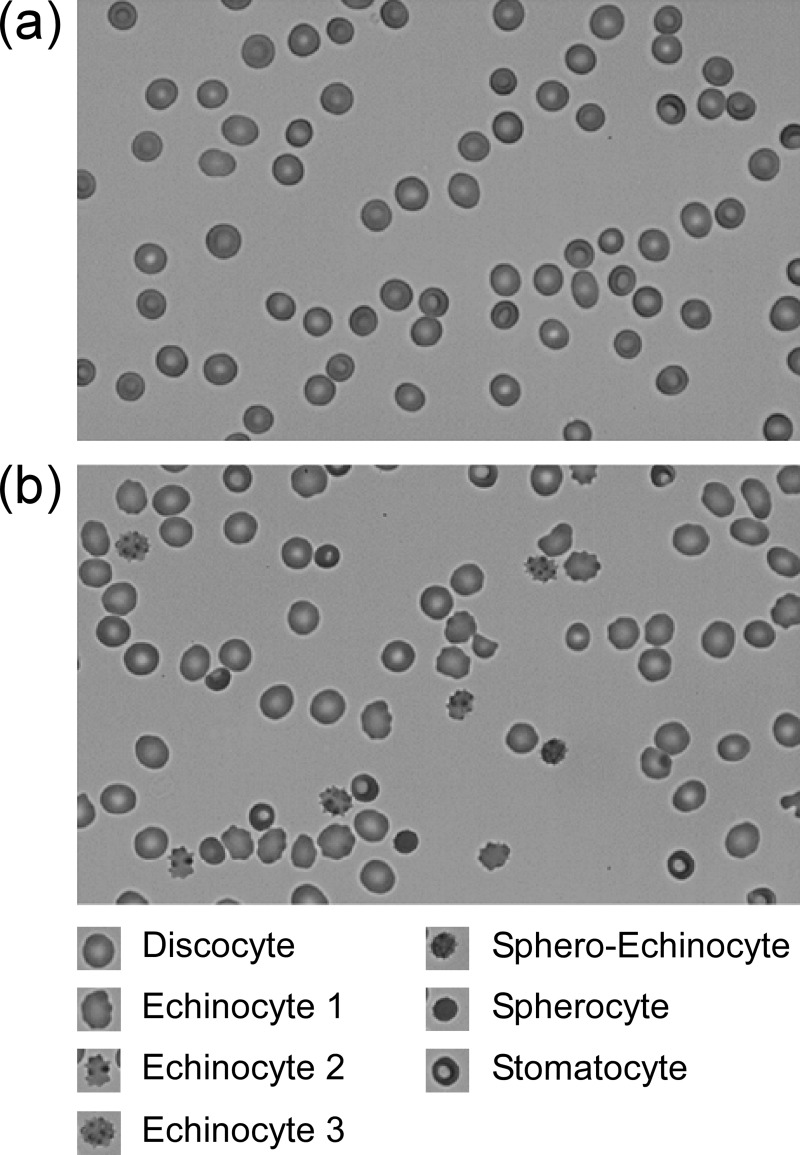
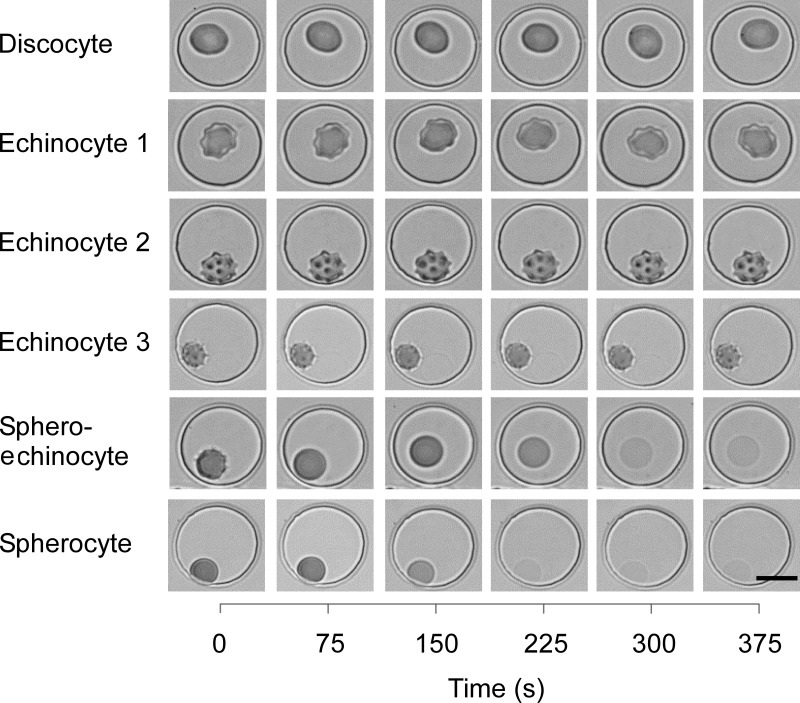
Background: During hypothermic storage, a substantial fraction of red blood cells (RBCs) transforms from flexible discocytes to rigid sphero-echinocytes and spherocytes. Infusion of these irreversibly-damaged cells into the recipient during transfusion serves no therapeutic purpose and may contribute to adverse outcomes in some patients. In this proof-of-concept study we describe the use of hypotonic washing for selective removal of the irreversibly-damaged cells from stored blood.
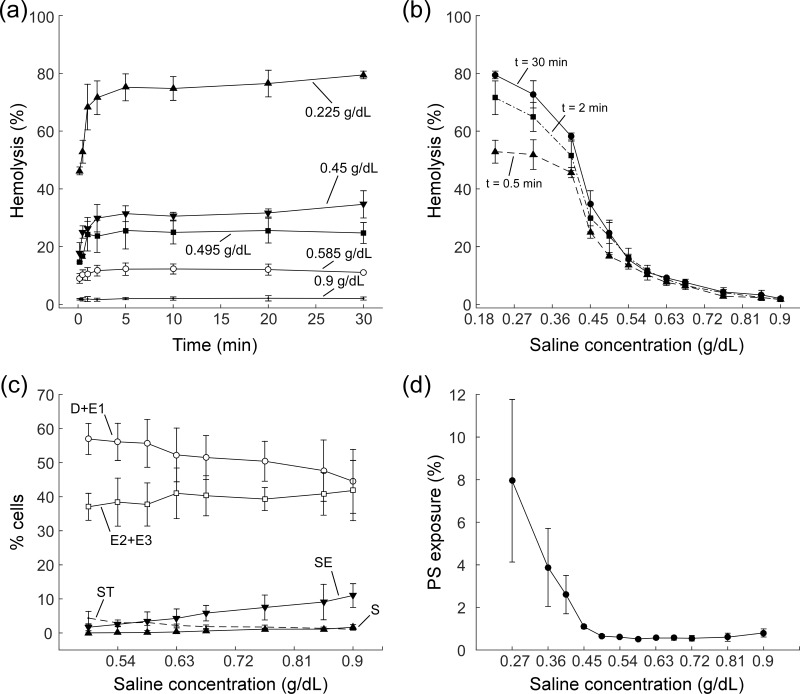
Materials and methods: Stored RBCs were mixed with saline of various concentrations to identify optimal concentration for inducing osmotic swelling and selective bursting of spherical cells (sphero-echinocytes, spherocytes), while minimising indiscriminate lysis of other RBCs. Effectiveness of optimal treatment was assessed by measuring morphology, rheological properties, and surface phosphatidylserine (PS) exposure for cells from several RBCs units (n=5, CPD>AS-1, leucoreduced, 6 weeks storage duration) washed in hypotonic vs isotonic saline.
Results: Washing in mildly hypotonic saline (0.585 g/dL, osmolality: 221.7±2.3 mmol/kg) reduced the fraction of spherical cells 3-fold from 9.5±3.4% to 3.2±2.8%, while cutting PS exposure in half from 1.48±0.86% to 0.59±0.29%. Isotonic washing had no effect on PS exposure or the fraction of spherical cells. Both isotonic and hypotonic washing increased the fraction of well-preserved cells (discocytes, echinocytes 1) substantially, and improved the ability of stored RBCs to perfuse an artificial microvascular network by approximately 25%, as compared with the initial sample.
Discussion: This study demonstrated that washing in hypotonic saline could selectively remove a significant fraction of the spherical and PS-exposing cells from stored blood, while significantly improving the rheological properties of remaining well-preserved RBCs. Further studies are needed to access the potential effect from hypotonic washing on transfusion outcomes.
Conflict of interest statement
The Authors declare no conflicts of interest.
Figures
References
-
- Hess JR. Red cell changes during storage. Transfus Apher Sci. 2010;43:51–9. - PubMed
-
- Hess JR. Measures of stored red blood cell quality. Vox Sang. 2014;107:1–9. - PubMed
-
- Tzounakas VL, Georgatzakou HT, Kriebardis AG, et al. Uric acid variation among regular blood donors is indicative of red blood cell susceptibility to storage lesion markers: A new hypothesis tested. Transfusion. 2015;55:2659–71. - PubMed
-
- Reinhart WH, Chien S. Red cell rheology in stomatocyte-echinocyte transformation: roles of cell geometry and cell shape. Blood. 1986;67:1110–8. - PubMed
MeSH terms
Substances
Grants and funding
LinkOut - more resources
Full Text Sources
Research Materials
