The cyanobacterial circadian clock follows midday in vivo and in vitro
- PMID: 28686160
- PMCID: PMC5605227
- DOI: 10.7554/eLife.23539
The cyanobacterial circadian clock follows midday in vivo and in vitro
Abstract
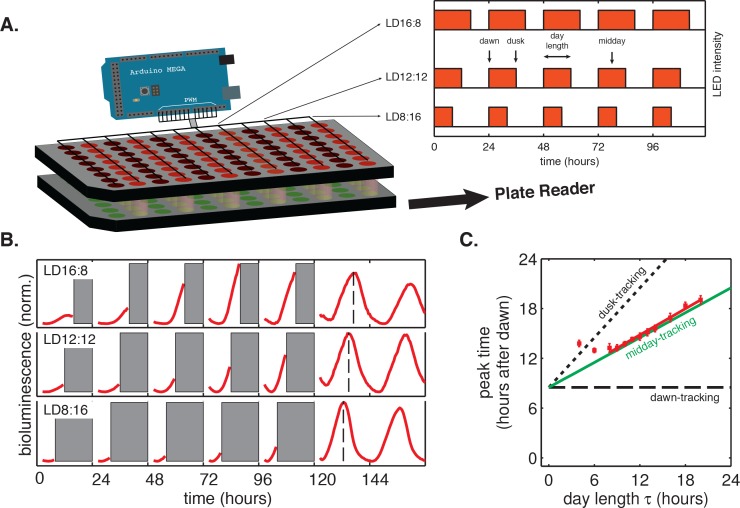
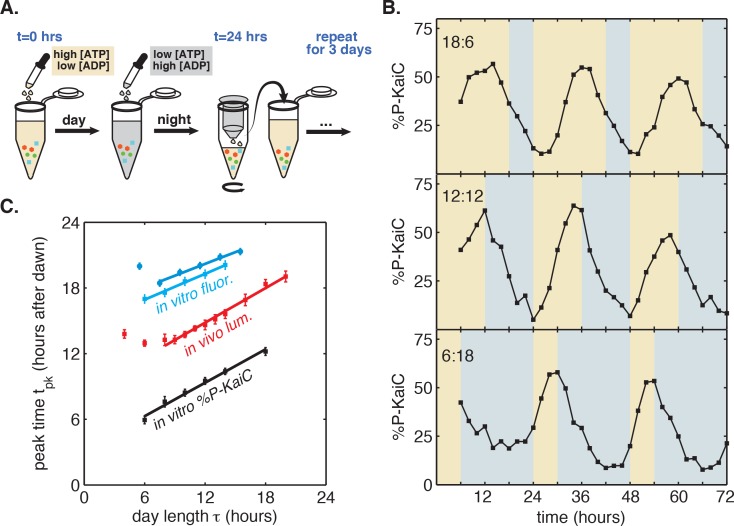
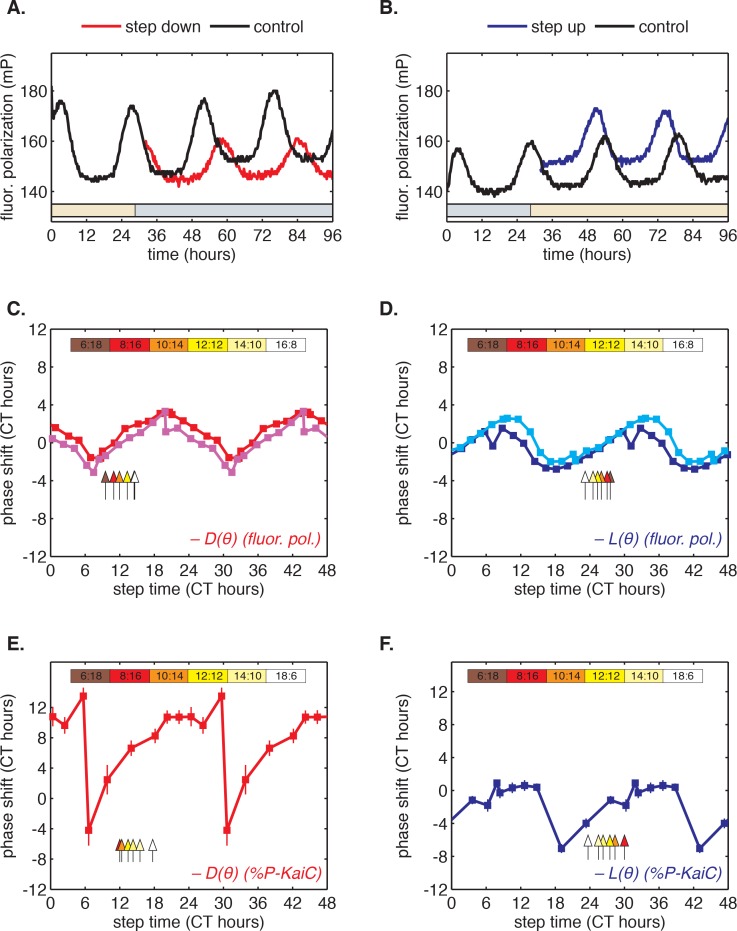
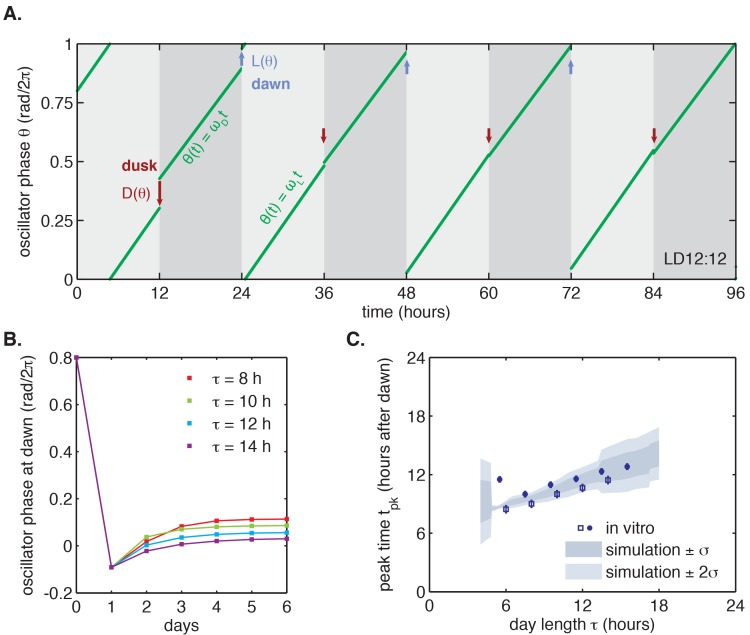
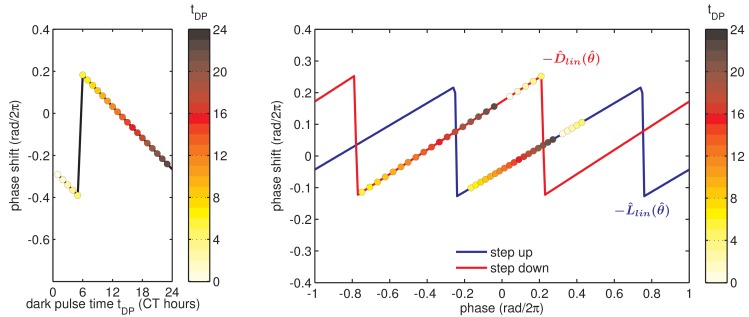
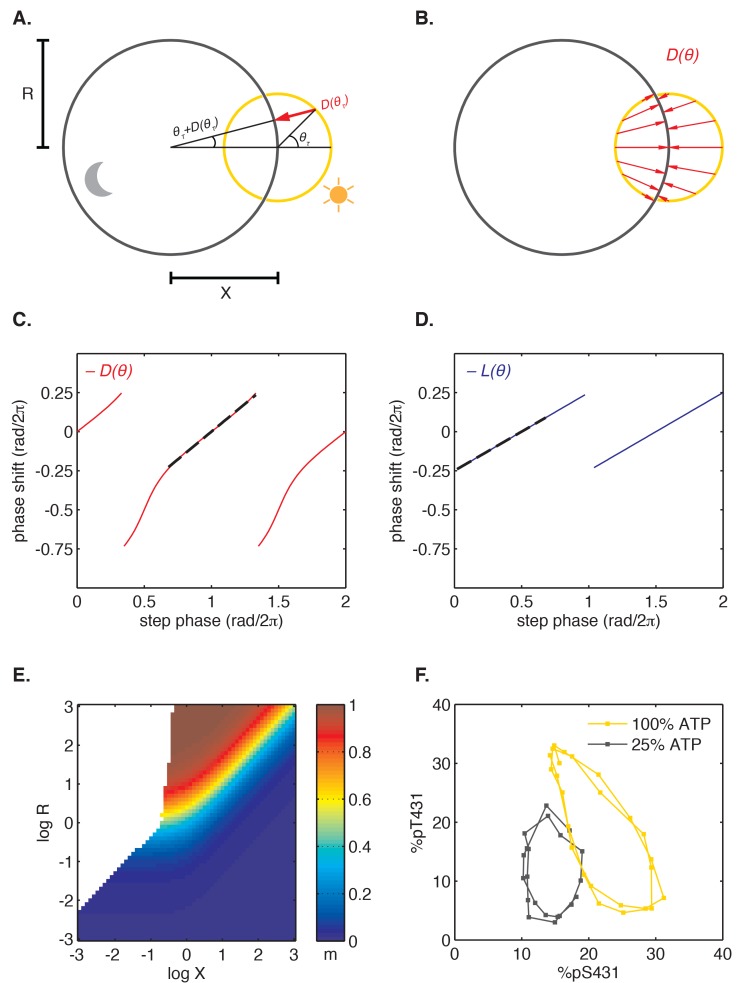
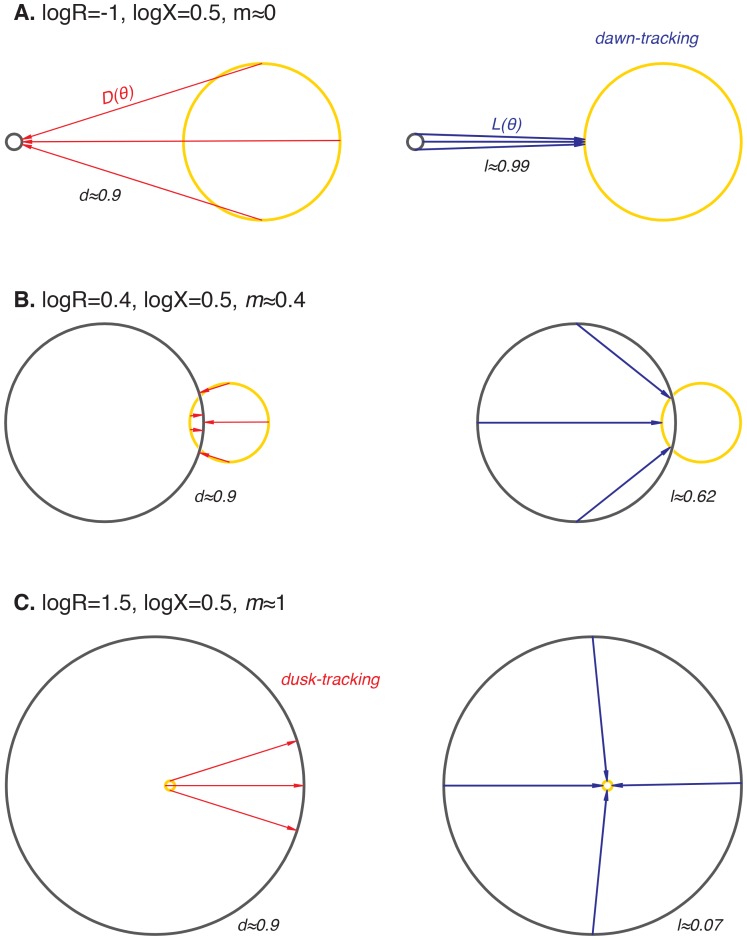
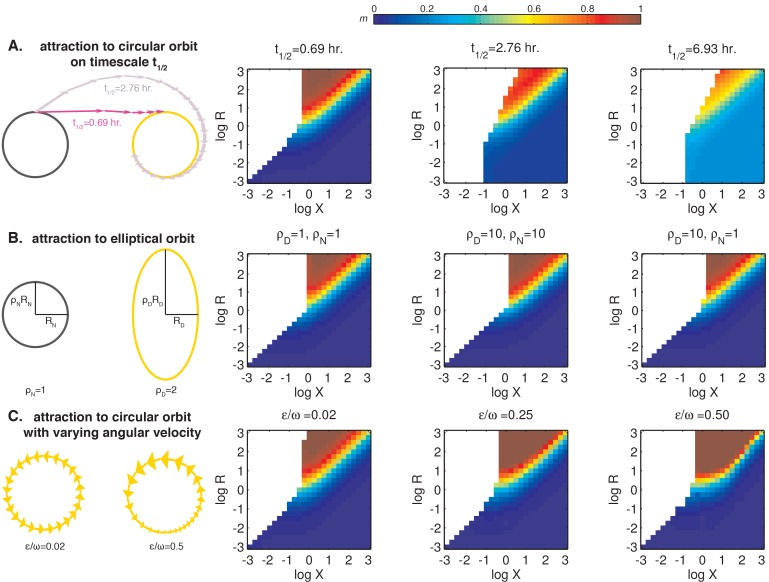
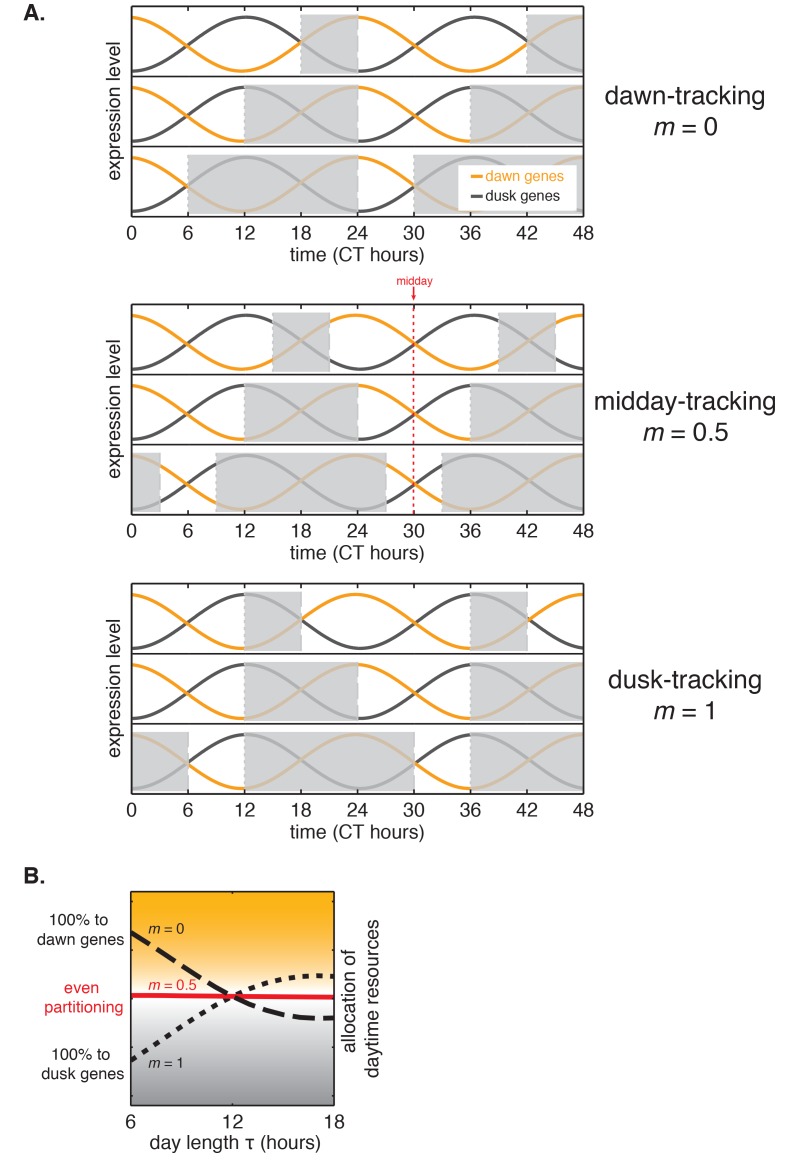
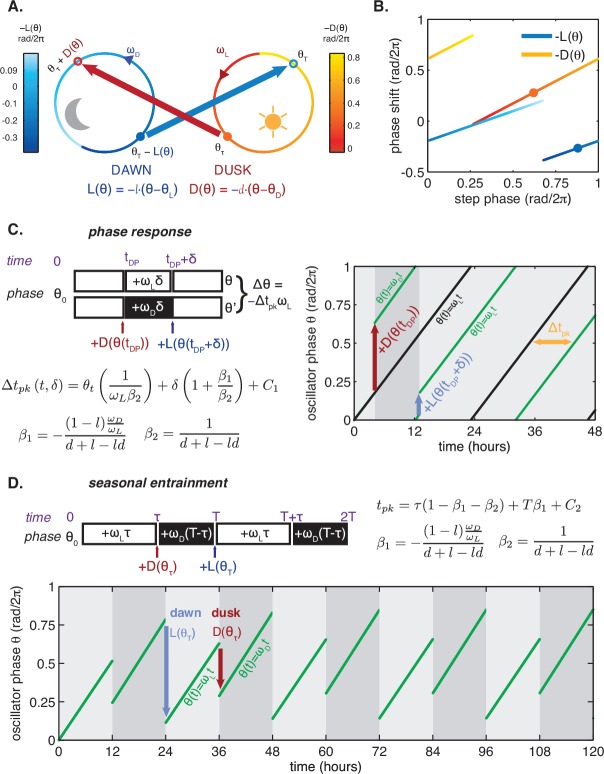
Circadian rhythms are biological oscillations that schedule daily changes in physiology. Outside the laboratory, circadian clocks do not generally free-run but are driven by daily cues whose timing varies with the seasons. The principles that determine how circadian clocks align to these external cycles are not well understood. Here, we report experimental platforms for driving the cyanobacterial circadian clock both in vivo and in vitro. We find that the phase of the circadian rhythm follows a simple scaling law in light-dark cycles, tracking midday across conditions with variable day length. The core biochemical oscillator comprised of the Kai proteins behaves similarly when driven by metabolic pulses in vitro, indicating that such dynamics are intrinsic to these proteins. We develop a general mathematical framework based on instantaneous transformation of the clock cycle by external cues, which successfully predicts clock behavior under many cycling environments.
Keywords: circadian; computational biology; cyanobacteria; dynamical systems; infectious disease; microbiology; systems biology.
Conflict of interest statement
The authors declare that no competing interests exist.
Figures



References
-
- Chen Y, Kim YI, Mackey SR, Holtman CK, LiWang A, Golden SS. A novel allele of kaiA shortens the circadian period and strengthens interaction of oscillator components in the Cyanobacterium synechococcus elongatus PCC 7942. Journal of Bacteriology. 2009;191:4392–4400. doi: 10.1128/JB.00334-09. - DOI - PMC - PubMed
-
- Daan S, Beersma DGM, Spoelstra K. In: Biological Rhythms (10th Sapporo Symposium) Honma K, Honma S, editors. 2003. pp. 110–125.
Publication types
MeSH terms
Substances
Grants and funding
LinkOut - more resources
Full Text Sources
Other Literature Sources