


Protective Role for Antioxidants in Acute Kidney Disease
- PMID: 28686196
- PMCID: PMC5537833
- DOI: 10.3390/nu9070718
Protective Role for Antioxidants in Acute Kidney Disease
Abstract
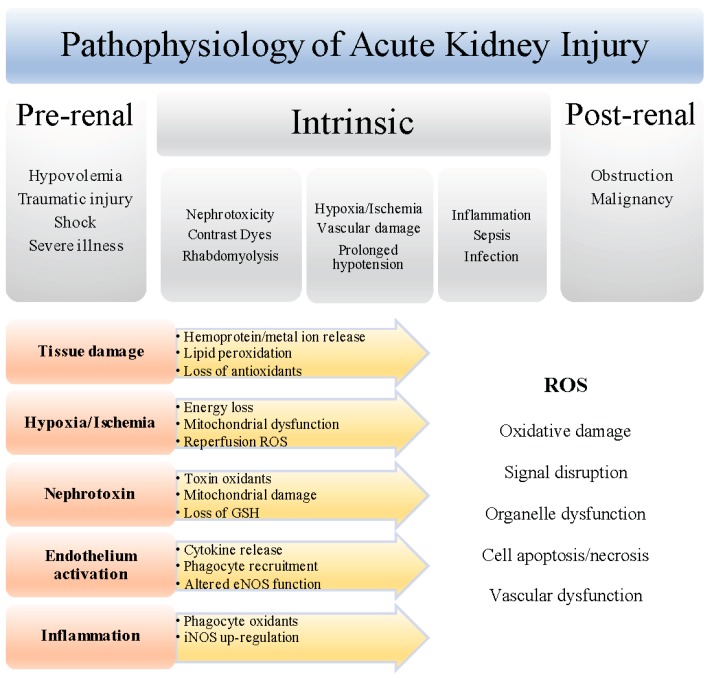
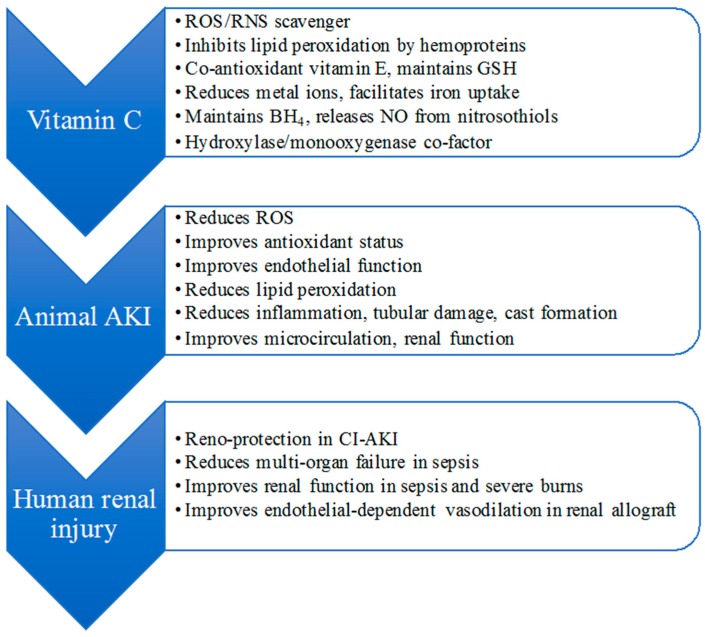
Acute kidney injury causes significant morbidity and mortality in the community and clinic. Various pathologies, including renal and cardiovascular disease, traumatic injury/rhabdomyolysis, sepsis, and nephrotoxicity, that cause acute kidney injury (AKI), induce general or regional decreases in renal blood flow. The ensuing renal hypoxia and ischemia promotes the formation of reactive oxygen species (ROS) such as superoxide radical anions, peroxides, and hydroxyl radicals, that can oxidatively damage biomolecules and membranes, and affect organelle function and induce renal tubule cell injury, inflammation, and vascular dysfunction. Acute kidney injury is associated with increased oxidative damage, and various endogenous and synthetic antioxidants that mitigate source and derived oxidants are beneficial in cell-based and animal studies. However, the benefit of synthetic antioxidant supplementation in human acute kidney injury and renal disease remains to be realized. The endogenous low-molecular weight, non-proteinaceous antioxidant, ascorbate (vitamin C), is a promising therapeutic in human renal injury in critical illness and nephrotoxicity. Ascorbate may exert significant protection by reducing reactive oxygen species and renal oxidative damage via its antioxidant activity, and/or by its non-antioxidant functions in maintaining hydroxylase and monooxygenase enzymes, and endothelium and vascular function. Ascorbate supplementation may be particularly important in renal injury patients with low vitamin C status.
Keywords: antioxidant; endothelium; hypoxia; ischemia; oxidant; renal injury; vitamin C.
Conflict of interest statement
The authors declare no conflict of interest.
Figures
References
-
- McCord J.M. Oxygen-derived free radicals in postischemic tissue injury. N. Engl. J. Med. 1985;312:159–163. - PubMed
Publication types
MeSH terms
Substances
LinkOut - more resources
Full Text Sources
Other Literature Sources
Medical
