


Sputum quality and diagnostic performance of GeneXpert MTB/RIF among smear-negative adults with presumed tuberculosis in Uganda
- PMID: 28686705
- PMCID: PMC5501569
- DOI: 10.1371/journal.pone.0180572
Sputum quality and diagnostic performance of GeneXpert MTB/RIF among smear-negative adults with presumed tuberculosis in Uganda
Abstract
Background: Introduction of GeneXpert MTB/RIF (Xpert) assay has constituted a major breakthrough for tuberculosis (TB) diagnostics. Several patient factors may influence diagnostic performance of Xpert including sputum quality.
Objective: We carried out a prospective, observational, cross-sectional study to determine the effect of sputum quality on diagnostic performance of Xpert among presumed TB patients in Uganda.
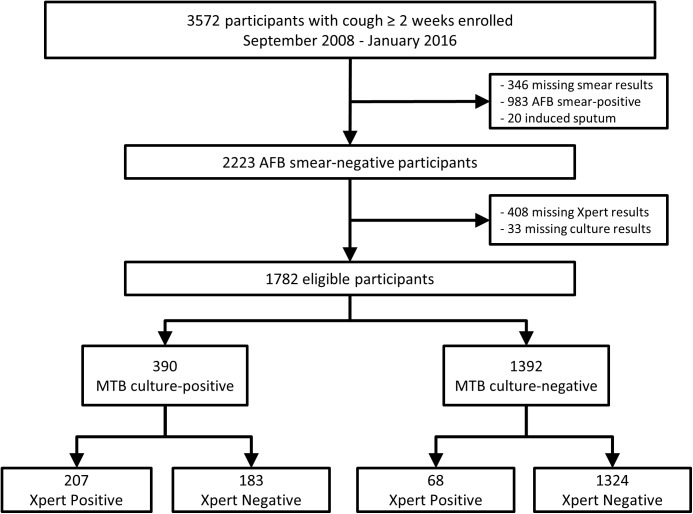
Methods: We collected clinical and demographic information and two sputum samples from participants. Staff recorded sputum quality and performed LED fluorescence microscopy and mycobacterial culture on each sample. If both smear examinations were negative, Xpert testing was performed. We calculated diagnostic yield, sensitivity, specificity, and other indicators for Xpert for each stratum of sputum quality in reference to a standard of mycobacterial culture.
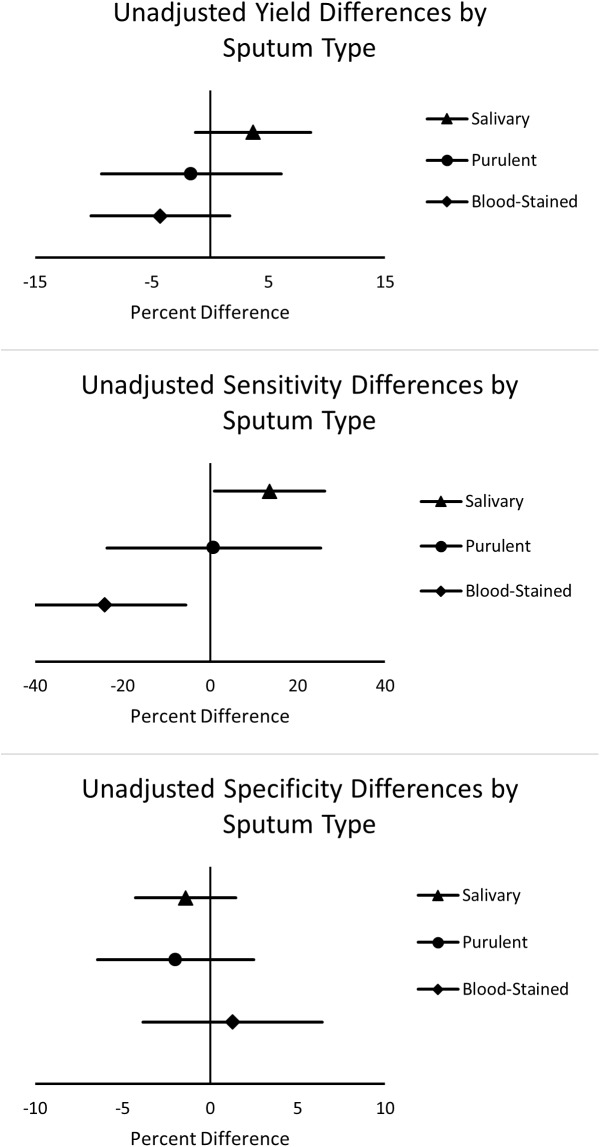
Results: Patients with salivary sputum showed a trend towards a substantially higher proportion of samples that were Xpert-positive (54/286, 19%, 95% CI 15-24) compared with those with all other sputum sample types (221/1496, 15%, 95% CI 13-17). Blood-stained sputum produced the lowest sensitivity (28%; 95% CI 12-49) and salivary sputum the highest (66%; 95% CI 53-77). Specificity didn't vary meaningfully by sample types. Salivary sputum was significantly more sensitive than mucoid sputum (+13%, 95% CI +1 to +26), while blood-stained sputum was significantly less sensitive (-24%, 95% CI -42 to -5).
Conclusions: Our findings demonstrate the need to exercise caution in collecting sputum for Xpert and in interpreting results because sputum quality may impact test yield and sensitivity. In particular, it may be wise to pursue additional testing should blood-stained sputum test negative while salivary sputum should be readily accepted for Xpert testing given its higher sensitivity and potentially higher yield than other sample types. These findings challenge conventional recommendations against collecting salivary sputum for TB diagnosis and could inform new standards for sputum quality.
Conflict of interest statement
Figures
References
-
- Boehme CC, Nabeta P, Hillemann D, Nicol MP, Shenai S, Krapp F, et al. Rapid Molecular Detection of Tuberculosis and Rifampin Resistance. New England Journal of Medicine. 2010;363(11):1005–15. doi: 10.1056/NEJMoa0907847 . - DOI - PMC - PubMed
-
- Vassall A, van Kampen S, Sohn H, Michael JS, John KR, den Boon S, et al. Rapid Diagnosis of Tuberculosis with the Xpert MTB/RIF Assay in High Burden Countries: A Cost-Effectiveness Analysis. PLoS Med. 2011;8(11):e1001120 doi: 10.1371/journal.pmed.1001120 - DOI - PMC - PubMed
-
- Theron G ZL, Chanda D, Clowes P, Rachow A, Lesosky M, Bara W, Mungofa S, et al. Feasibility, accuracy, and clinical effect of point-of-care Xpert MTB/RIF testing for tuberculosis in primary-care settings in Africa: a multicentre, randomised, controlled trial. The Lancet. 2013;383(9915):424–35. - PubMed
-
- Churchyard GJ SW, Mametja LD, McCarthy KM, Chihota V, Nicol MP, Erasmus LK, et al. Xpert MTB/RIF versus sputum microscopy as the initial diagnostic test for tuberculosis: a cluster-randomised trial embedded in South African roll-out of Xpert MTB/RIF. The Lancet Global Health. 2015;3(8):e450–7. doi: 10.1016/S2214-109X(15)00100-X - DOI - PubMed
MeSH terms
Grants and funding
LinkOut - more resources
Full Text Sources
Other Literature Sources
