Review
. 2017 Jul-Aug;5(4):918-927.
doi: 10.1016/j.jaip.2017.05.001.

Asthma Exacerbations: Pathogenesis, Prevention, and Treatment

Affiliations
Review

Asthma Exacerbations: Pathogenesis, Prevention, and Treatment

Jamee R Castillo et al. J Allergy Clin Immunol Pract. 2017 Jul-Aug.

Abstract

Guideline-based management of asthma focuses on disease severity and choosing the appropriate medical therapy to control symptoms and reduce the risk of exacerbations. However, irrespective of asthma severity and often despite optimal medical therapy, patients may experience acute exacerbations of symptoms and a loss of disease control. Asthma exacerbations are most commonly triggered by viral respiratory infections, particularly with human rhinovirus. Given the importance of these events to asthma morbidity and health care costs, we will review common inciting factors for asthma exacerbations and approaches to prevent and treat these events.

Keywords: Allergy; Anti-IL5; Anti-IgE; Anticholinergics; Asthma; Asthma exacerbation; Inhaled corticosteroids; Leukotriene antagonist; Long-acting β2-agonists; Prevention; Systemic corticosteroids; Treatment; Viral infection.


Figures

Figure 1
Figure 1
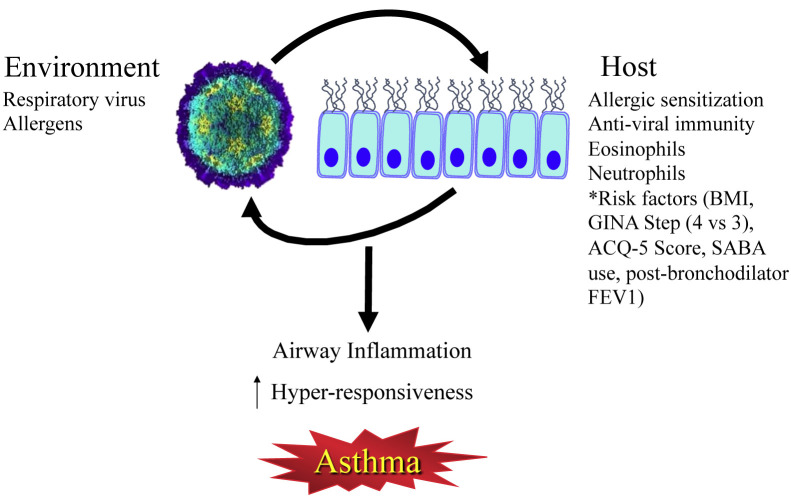
The interplay of the environment and host susceptibility factors in the pathogenesis of asthma exacerbations. Risk factors from Bateman et al.ACQ, Asthma Control Questionnaire; BMI, body mass index; FEV1, forced expiratory volume in 1 second; GINA, Global Initiative for Asthma; SABA, short-acting β2-agonist.
Figure 2
Figure 2
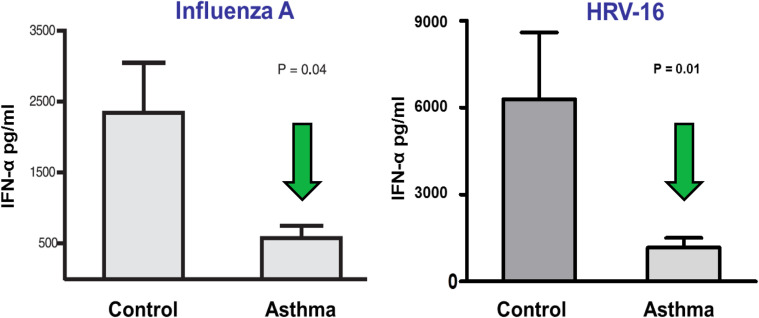
Impaired plasmacytoid dendritic cell (pDC) IFN-α response in patients with allergic asthma. pDCs from patients with physician-diagnosed asthma and allergic sensitization secreted less IFN-α on exposure to viruses compared with patients without asthma.
Figure 3
Figure 3
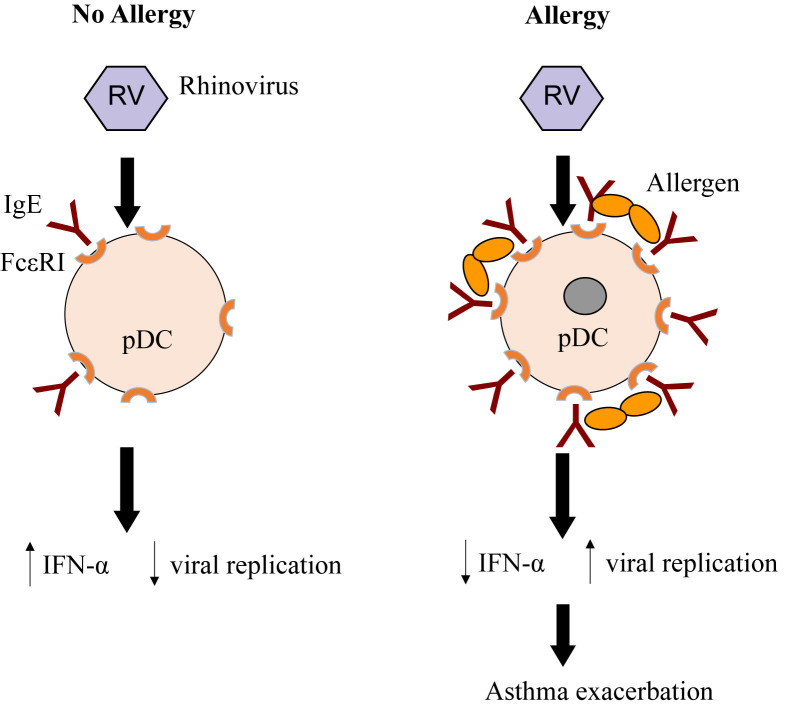
Effect of high-affinity IgE receptors (FcεRI) on plasmacytoid dendritic cells (pDCs) and antiviral immunity. In the absence of allergy, pDCs express low levels of cell surface FcεRI, some occupied by IgE. Rhinovirus (RV) infection induces secretion of interferon, thereby inhibiting viral replication. In the presence of allergen and allergic sensitization, FcεRI and IgE are increased, and cross-linking of IgE receptors by allergen can inhibit interferon secretion, resulting in increased viral replication, and an increased risk of asthma exacerbation.
Figure 4
Figure 4
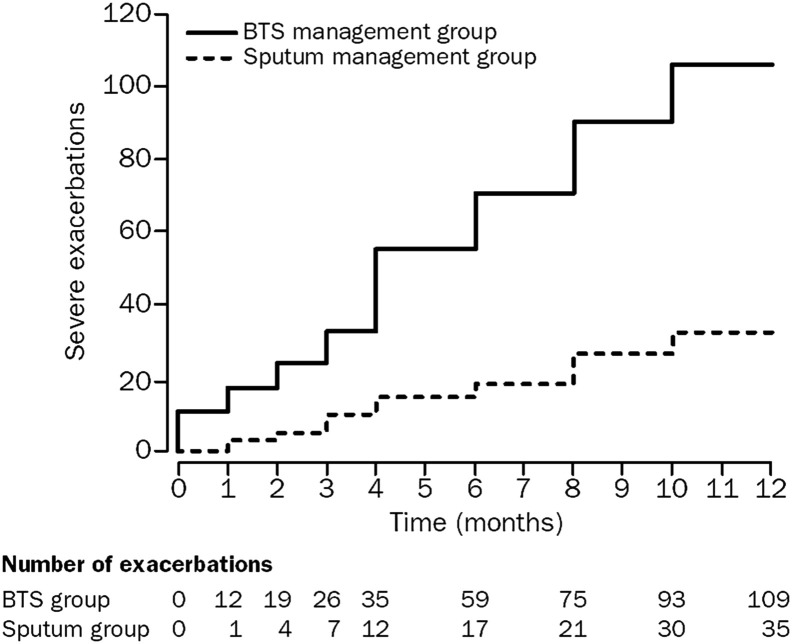
Cumulative asthma exacerbations in the British Thoracic Society (BTS) asthma guidelines management group versus the sputum management group. There were significantly less asthma exacerbations in the sputum management group (35 vs 109; P = .01), where inhaled corticosteroid dose was titrated to normalize induced sputum eosinophil counts and reduce symptoms.
Figure 5
Figure 5
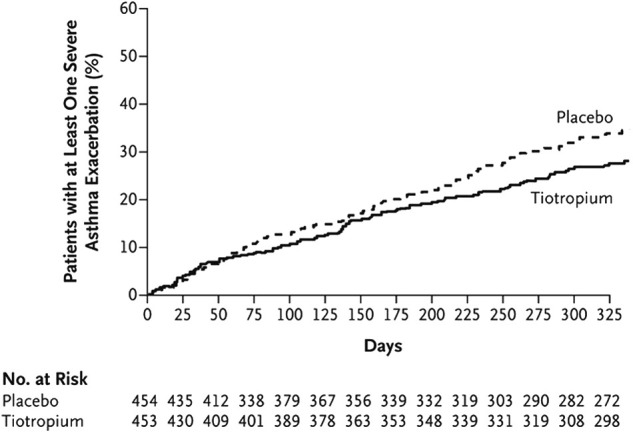
Cumulative number of severe exacerbations in patients with severe asthma on inhaled corticosteroid/long-acting β-agonist treated with the addition of tiotropium versus placebo. There was a 21% risk reduction in asthma exacerbations (hazard ratio, 0.79; P = .03 in pooled analysis) for the tiotropium group.
Figure 6
Figure 6
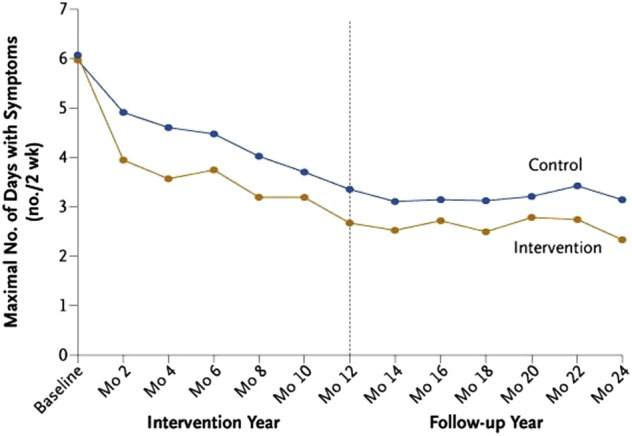
Mean maximal number of days with symptoms for every 2-week period before a follow-up assessment during the intervention year and follow-up year. The Inner-City Asthma Study evaluated the effectiveness of a multifaceted, home-based, environmental intervention for inner-city children with asthma. The difference between the 2 groups was significant in both the intervention year (P < .001) and the follow-up year (P < .001).
Figure 7
Figure 7
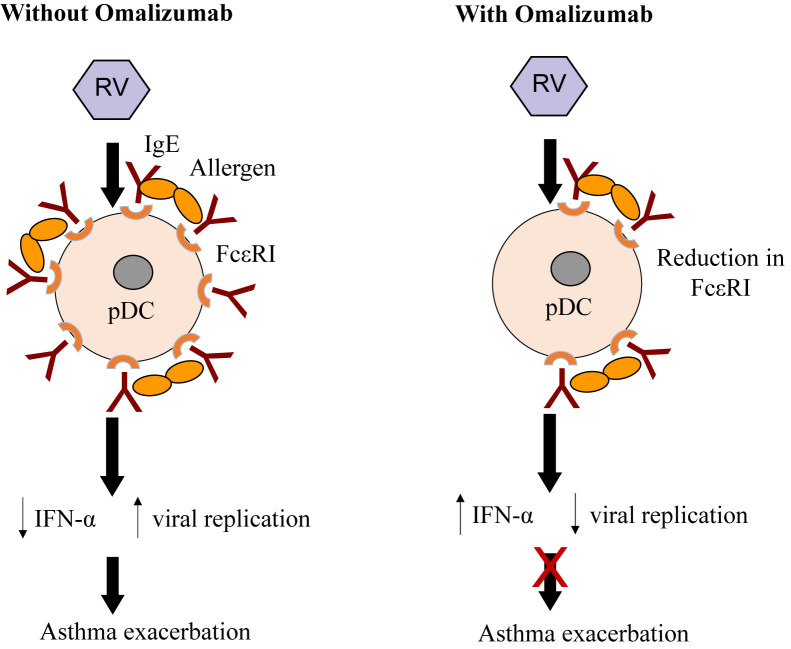
Effect of omalizumab on IgE-mediated functions in virus-provoked asthma exacerbations. FcεRI, High-affinity IgE receptor; pDC, plasmacytoid dendritic cell; RV, rhinovirus.
Figure 8
Figure 8
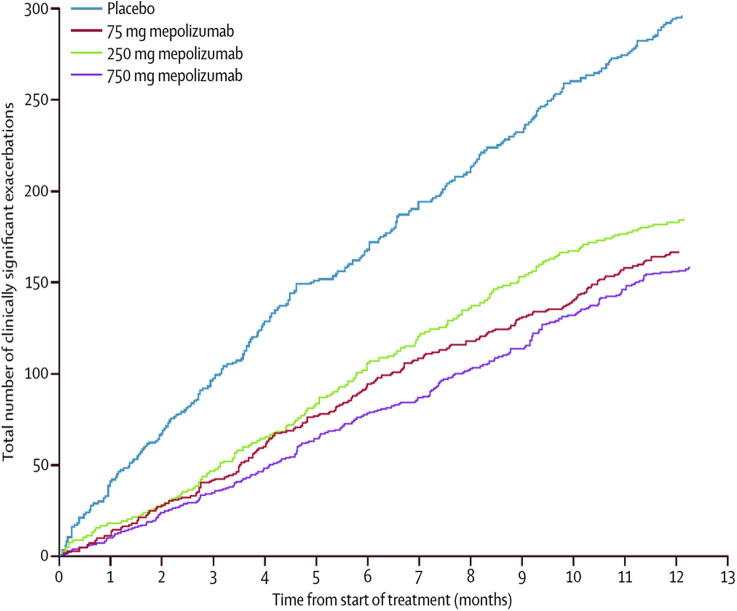
Reduction in the cumulative number of asthma exacerbations with mepolizumab versus placebo.

References

    1. Bai T.R., Vonk J.M., Postma D.S., Boezen H.M. Severe exacerbations predict excess lung function decline in asthma. Eur Respir J. 2007;30:452–456. - PubMed
    1. O'Byrne P.M., Pedersen S., Lamm C.J., Tan W.C., Busse W.W. Severe exacerbations and decline in lung function in asthma. Am J Respir Crit Care Med. 2009;179:19–24. - PubMed
    1. Ivanova J.I., Bergman R., Birnbaum H.G., Colice G.L., Silverman R.A., McLaurin K. Effect of asthma exacerbations on health care costs among asthmatic patients with moderate and severe persistent asthma. J Allergy Clin Immunol. 2012;129:1229–1235. - PubMed
    1. Barnett S.B., Nurmagambetov T.A. Costs of asthma in the United States: 2002-2007. J Allergy Clin Immunol. 2011;127:145–152. - PubMed
    1. Miller M.K., Lee J.H., Miller D.P., Wenzel S.E., Group T.S. Recent asthma exacerbations: a key predictor of future exacerbations. Respir Med. 2007;101:481–489. - PubMed

Substances