


Comment
doi: 10.1038/cmi.2017.54.
Epub 2017 Jul 10.
Diet as a strategy for type 1 diabetes prevention
Affiliations
- PMID: 28690331
- PMCID: PMC5827178
- DOI: 10.1038/cmi.2017.54
Item in Clipboard
Comment
Diet as a strategy for type 1 diabetes prevention
Cell Mol Immunol.
2018 Jan.
No abstract available
Conflict of interest statement
The authors declare no conflict of interest.
Figures
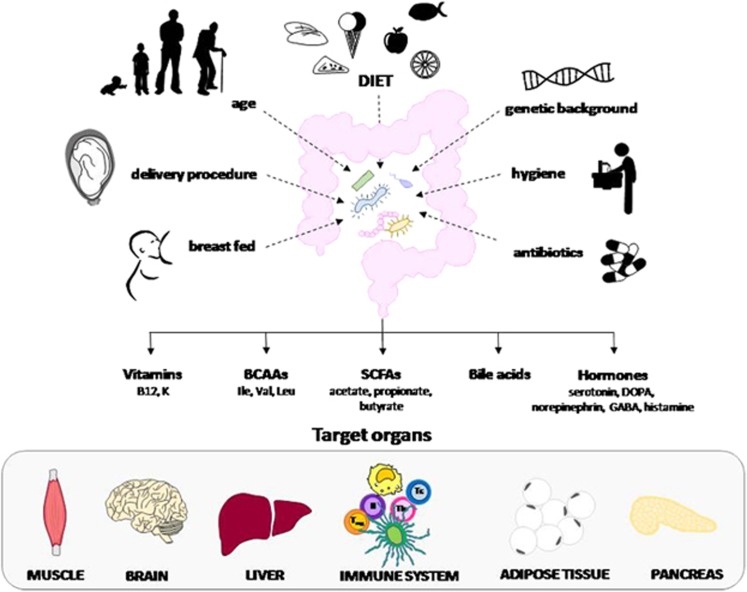
The gut microbiota is influenced by several factors, including maternal nutrition, type of delivery, age, genetic background, hygienic conditions, antibiotic treatments and precocious diet factors. It influences the mucosal immune response and the integrity of the mucosal barrier, with effects on systemic immunity and inflammation. This is partly due to the production of signaling metabolites targeting endocrine, neuronal and immune cells of the gut and liver and influences of lipid and glucose metabolism. BCAAs, branched-chain amino acids; SCFAs, short-chain fatty acids.
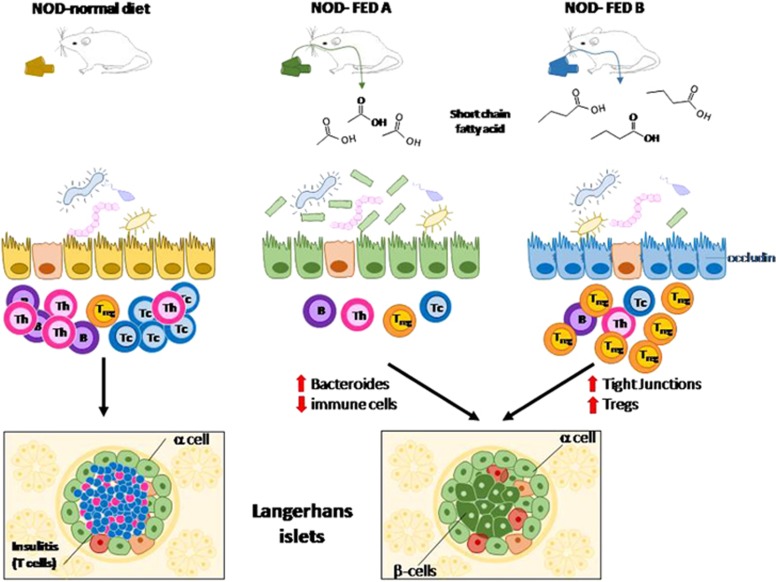
Non-obese diabetic (NOD) mice are an animal model of T1DM. The disease is influenced by the gut microbiota. Disease onset is preceded by the development of inflammatory infiltration, which is rich with T cells, in the pancreatic islets (insulitis). Diets that release high amounts of two SCFAs, acetate (FED-A) or butyrate (FED-B), in the gut substantially prevent the onset of disease in NOD mice. The acetate-enriched diet predominantly acts by decreasing activation of the autoimmune effector T cells, and it is associated with an increase in Bacteroides. The above effects are minimal or absent from the FED-B mice. By contrast, these mice show an expansion of Treg cells, which protect the integrity of the mucosal barrier, by increasing the expression of occludin in tight junctions in the colon.
Comment on
-
Gut microbial metabolites limit the frequency of autoimmune T cells and protect against type 1 diabetes.Nat Immunol. 2017 May;18(5):552-562. doi: 10.1038/ni.3713. Epub 2017 Mar 27. Nat Immunol. 2017. PMID: 28346408
References
-
- Mariño E, Richards JL, McLeod KH, Stanley D, Yap YA, Knight J et al. Gut microbial metabolites limit the frequency of autoimmune T cells and protect against type 1 diabetes. Nat Immunol 2017; 18: 552–562. - PubMed
-
- Patterson CC, Dahlquist GG, Gyürüs E, Green A, Soltész G, EURODIAB Study Group. Incidence trends for childhood type 1 diabetes in Europe during 1989–2003 and predicted new cases 2005–20: a multicentre prospective registration study. Lancet 2009; 373: 2027–2033. - PubMed
-
- Insel R, Dunne JL. JDRF's vision and strategy for prevention of type 1 diabetes. Pediatr Diabetes 2016; 17 (Suppl 22): 87–92. - PubMed
Publication types
MeSH terms
LinkOut - more resources
Full Text Sources
Other Literature Sources
Medical
