


Brain signature and functional impact of centralized pain: a multidisciplinary approach to the study of chronic pelvic pain (MAPP) network study
- PMID: 28692006
- PMCID: PMC5964335
- DOI: 10.1097/j.pain.0000000000001001
Brain signature and functional impact of centralized pain: a multidisciplinary approach to the study of chronic pelvic pain (MAPP) network study
Abstract
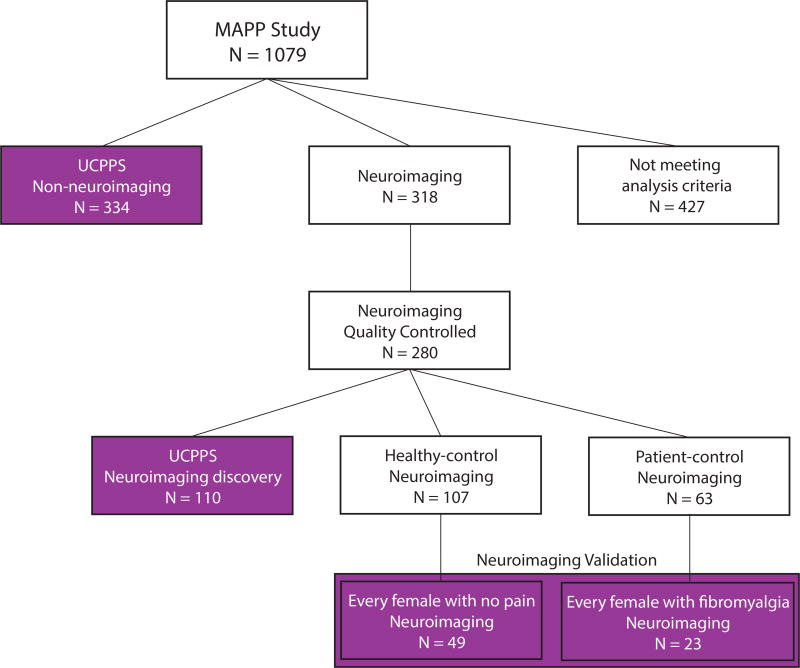
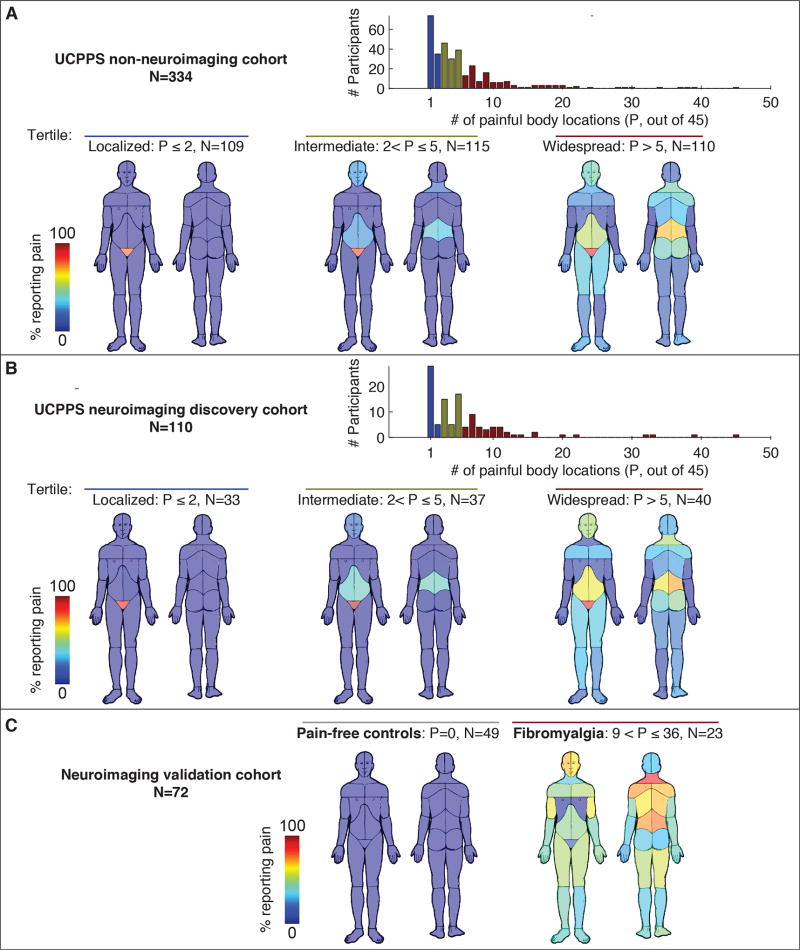
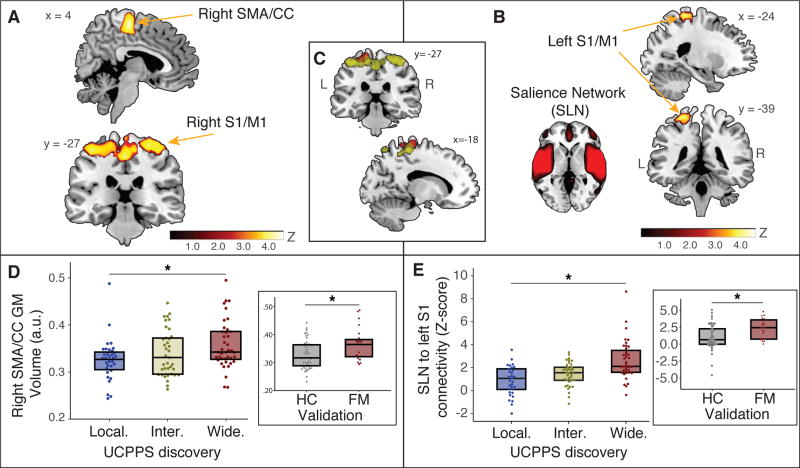
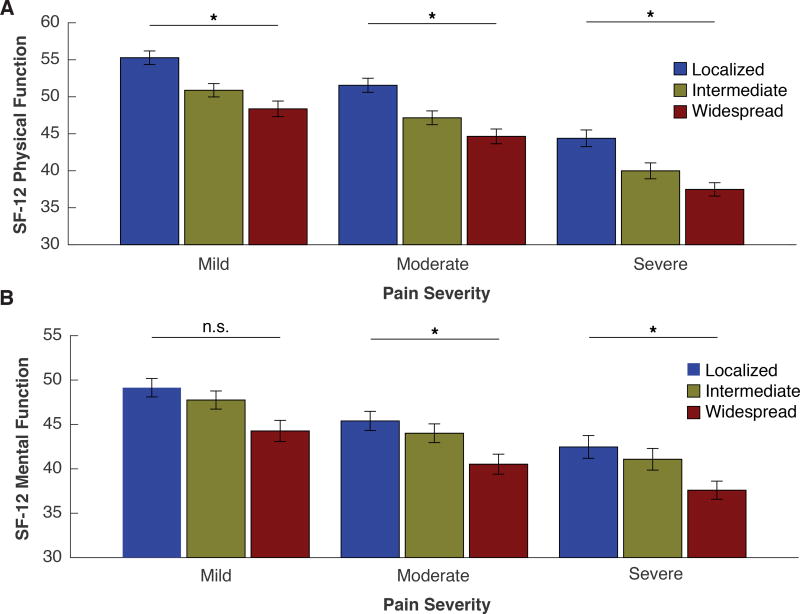
Chronic pain is often measured with a severity score that overlooks its spatial distribution across the body. This widespread pain is believed to be a marker of centralization, a central nervous system process that decouples pain perception from nociceptive input. Here, we investigated whether centralization is manifested at the level of the brain using data from 1079 participants in the Multidisciplinary Approach to the Study of Chronic Pelvic Pain Research Network (MAPP) study. Participants with a clinical diagnosis of urological chronic pelvic pain syndrome (UCPPS) were compared to pain-free controls and patients with fibromyalgia, the prototypical centralized pain disorder. Participants completed questionnaires capturing pain severity, function, and a body map of pain. A subset (UCPPS N = 110; fibromyalgia N = 23; healthy control N = 49) underwent functional and structural magnetic resonance imaging. Patients with UCPPS reported pain ranging from localized (pelvic) to widespread (throughout the body). Patients with widespread UCPPS displayed increased brain gray matter volume and functional connectivity involving sensorimotor and insular cortices (P < 0.05 corrected). These changes translated across disease diagnoses as identical outcomes were present in patients with fibromyalgia but not pain-free controls. Widespread pain was also associated with reduced physical and mental function independent of pain severity. Brain pathology in patients with centralized pain is related to pain distribution throughout the body. These patients may benefit from interventions targeting the central nervous system.
Figures
References
-
- Relieving Pain in America: A Blueprint for Transforming Prevention, Care, Education, and Research. Washington (DC): 2011. - PubMed
-
- Aaron LA, Buchwald D. A review of the evidence for overlap among unexplained clinical conditions. Ann Intern Med. 2001;134(9 Pt 2):868–881. - PubMed
-
- Alger JR, Ellingson BM, Ashe-McNalley C, Woodworth DC, Labus JS, Farmer M, Huang L, Apkarian AV, Johnson KA, Mackey SC, Ness TJ, Deutsch G, Harris RE, Clauw DJ, Glover GH, Parrish TB, Hollander J, Kusek JW, Mullins C, Mayer EA Investigators MRN. Multisite, multimodal neuroimaging of chronic urological pelvic pain: Methodology of the MAPP Research Network. Neuroimage Clin. 2016;12:65–77. - PMC - PubMed
-
- Allsop SA, Erstad DJ, Brook K, Bhai SF, Cohen JM, Dimitrakoff JD. The DABBEC phenotyping system: towards a mechanistic understanding of CP/CPPS. Nat Rev Urol. 2011;8(2):107–113. - PubMed
-
- Apkarian AV, Bushnell MC, Treede RD, Zubieta JK. Human brain mechanisms of pain perception and regulation in health and disease. Eur J Pain. 2005;9(4):463–484. - PubMed
Publication types
MeSH terms
Substances
Grants and funding
- U01 DK082345/DK/NIDDK NIH HHS/United States
- U01 DK082315/DK/NIDDK NIH HHS/United States
- U01 DK082316/DK/NIDDK NIH HHS/United States
- U01 DK082344/DK/NIDDK NIH HHS/United States
- U01 DK082333/DK/NIDDK NIH HHS/United States
- U24 DK082316/DK/NIDDK NIH HHS/United States
- P30 DK041301/DK/NIDDK NIH HHS/United States
- U01 DK082325/DK/NIDDK NIH HHS/United States
- U01 DK103260/DK/NIDDK NIH HHS/United States
- U01 DK082370/DK/NIDDK NIH HHS/United States
- U01 DK082342/DK/NIDDK NIH HHS/United States
- U01 DK103271/DK/NIDDK NIH HHS/United States
- U24 DK082333/DK/NIDDK NIH HHS/United States
- R01 AT007550/AT/NCCIH NIH HHS/United States
LinkOut - more resources
Full Text Sources
Other Literature Sources
Medical
