


Single-cell transcriptomics of East-Asian pancreatic islets cells
- PMID: 28694456
- PMCID: PMC5504042
- DOI: 10.1038/s41598-017-05266-4
Single-cell transcriptomics of East-Asian pancreatic islets cells
Abstract
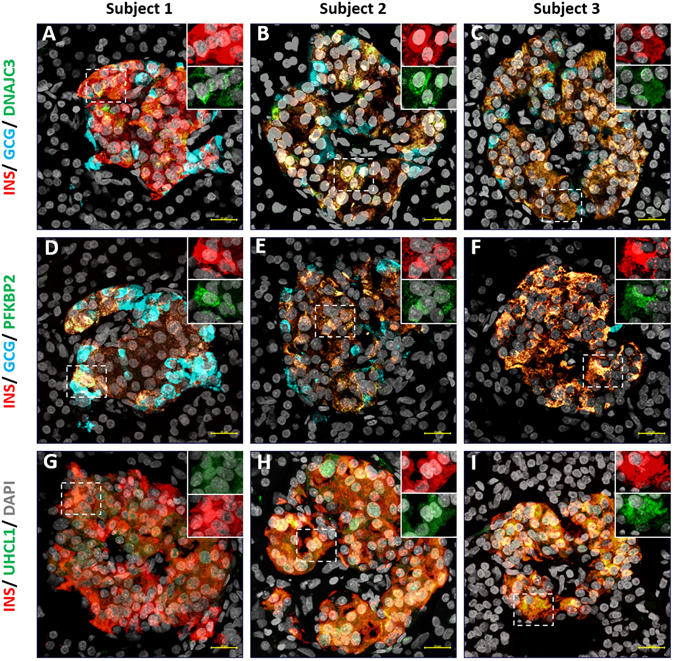
Single-cell RNA-seq (scRNA-seq) of pancreatic islets have reported on α- and β-cell gene expression in mice and subjects of predominantly European ancestry. We aimed to assess these findings in East-Asian islet-cells. 448 islet-cells were captured from three East-Asian non-diabetic subjects for scRNA-seq. Hierarchical clustering using pancreatic cell lineage genes was used to assign cells into cell-types. Differentially expressed transcripts between α- and β-cells were detected using ANOVA and in silico replications of mouse and human islet cell genes were performed. We identified 118 α, 105 β, 6 δ endocrine cells and 47 exocrine cells. Besides INS and GCG, 26 genes showed differential expression between α- and β-cells. 10 genes showed concordant expression as reported in rodents, while FAM46A was significantly discordant. Comparing our East-Asian data with data from primarily European subjects, we replicated several genes implicated in nuclear receptor activations, acute phase response pathway, glutaryl-CoA/tryptophan degradations and EIF2/AMPK/mTOR signaling. Additionally, we identified protein ubiquitination to be associated among East-Asian β-cells. We report on East-Asian α- and β-cell gene signatures and substantiate several genes/pathways. We identify expression signatures in East-Asian β-cells that perhaps reflects increased susceptibility to cell-death and warrants future validations to fully appreciate their role in East-Asian diabetes pathogenesis.
Conflict of interest statement
The authors declare that they have no competing interests.
Figures
References
Publication types
MeSH terms
LinkOut - more resources
Full Text Sources
Other Literature Sources
Molecular Biology Databases
Miscellaneous
