


Effect of Topically Administered Chitosan- N-acetylcysteine on Corneal Wound Healing in a Rabbit Model
- PMID: 28695002
- PMCID: PMC5485343
- DOI: 10.1155/2017/5192924
Effect of Topically Administered Chitosan- N-acetylcysteine on Corneal Wound Healing in a Rabbit Model
Abstract
Purpose: The present study was performed to investigate the effect of topically administered chitosan-N-acetylcysteine (C-NAC) on corneal wound healing in a rabbit model.
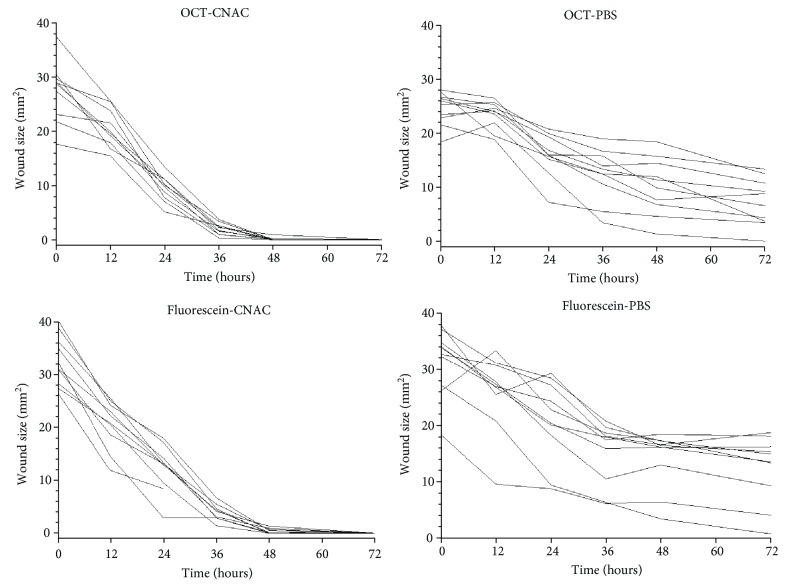
Methods: A total of 20 New Zealand White rabbits were included in the randomized, masked, placebo-controlled experiment. A monocular epithelial debridement was induced by manual scraping under general anesthesia. Animals were randomized to receive either C-NAC two times daily or placebo. Monitoring of corneal wound healing was performed with ultra-high-resolution optical coherence tomography (OCT) and epithelial fluorescein staining. Measurements were done immediately after and up to 72 hours after wound induction.
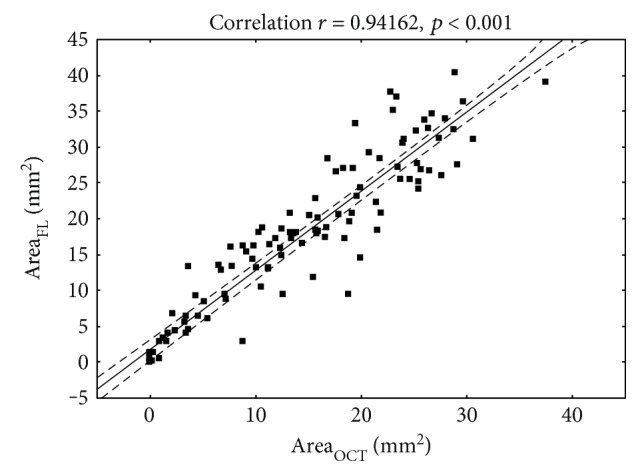
Results: No difference in wound size was found immediately after surgical debridement between the C-NAC group and the placebo group. Wound healing was significantly faster in the C-NAC group compared to the placebo group (p < 0.01 for both methods). A good correlation was found between the OCT technique and the epithelial fluorescein staining in terms of wound size (r = 0.94).
Conclusions: Administration of C-NAC containing eye drops twice daily leads to a faster corneal wound healing in a rabbit model of corneal debridement as compared to placebo. Ultra-high-resolution OCT is considered a noninvasive, dye-free alternative to conventional fluorescein staining in assessing corneal wound healing also in humans.
Figures
References
-
- Wipperman J. L., Dorsch J. N. Evaluation and management of corneal abrasions. American Family Physician. 2013;87(2):114–120. Epub 2013/01/16. - PubMed
LinkOut - more resources
Full Text Sources
Other Literature Sources
