


Case Reports
doi: 10.1016/j.artd.2016.11.006.
eCollection 2017 Jun.
Inflammatory pseudotumor after ceramic-on-ceramic total hip arthroplasty
Affiliations
- PMID: 28695179
- PMCID: PMC5485220
- DOI: 10.1016/j.artd.2016.11.006
Item in Clipboard
Case Reports
Inflammatory pseudotumor after ceramic-on-ceramic total hip arthroplasty
Arthroplast Today.
.
Abstract
We present a unique case of a symptomatic adverse local tissue reaction in a patient with a ceramic-on-ceramic total hip bearing surface. To our knowledge, this pathological finding has not yet been described in a ceramic-on-ceramic articulation without a cobalt-chromium alloy trunnion or modular neck component as a source of metal wear. We conclude that despite its mechanical mostly benign wear characteristics, ceramic wear debris is not entirely inert and may lead to the development of adverse local tissue reaction.
Keywords: ALTR; Ceramic-on-ceramic; Pseudotumor; Revision total hip arthroplasty; THA.
Figures
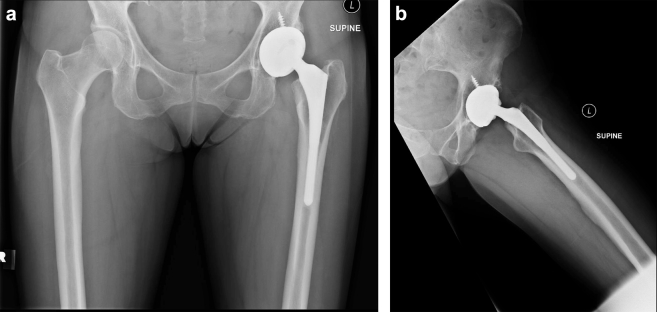
Anteroposterior (AP) pelvis (a) and frog lateral (b) left hip at presentation showing no evidence of loosening, osteolysis, or apparent complication.
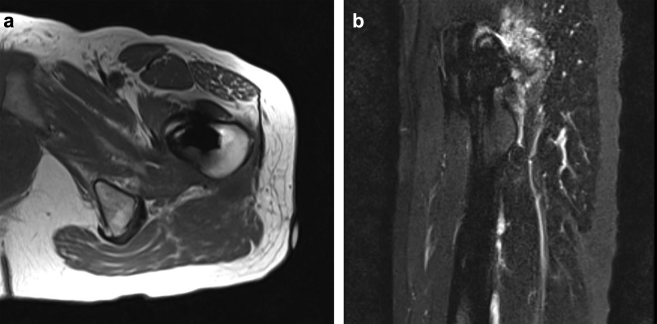
Axial T2 (a) and sagittal short tau inversion recovery (STIR) sequence (b) magnetic resonance imaging (MRI) showing pseudotumor formation with communication with the hip.
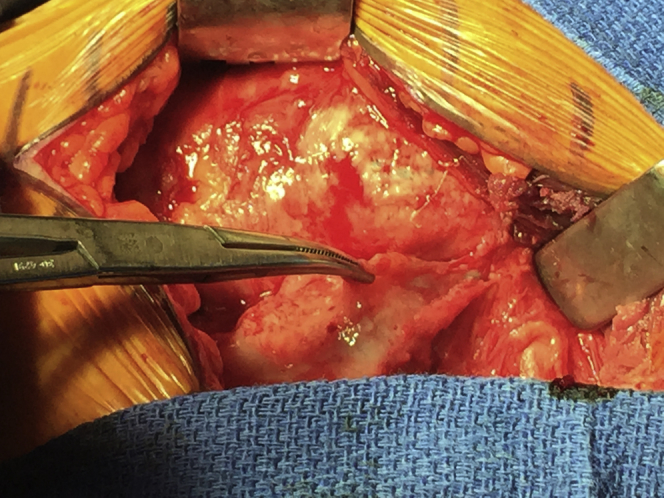
Intraoperative photograph showing a pseudocyst protruding from the joint capsule, lying on the abductors.
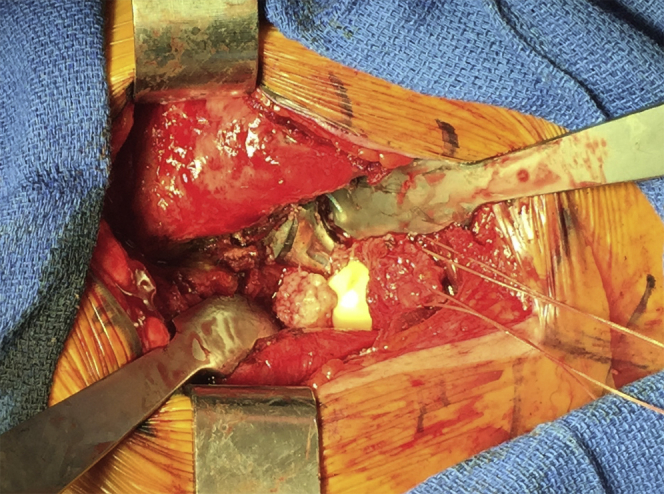
Intraoperative photograph showing the caseous appearing contents of the cyst in communication with the joint.
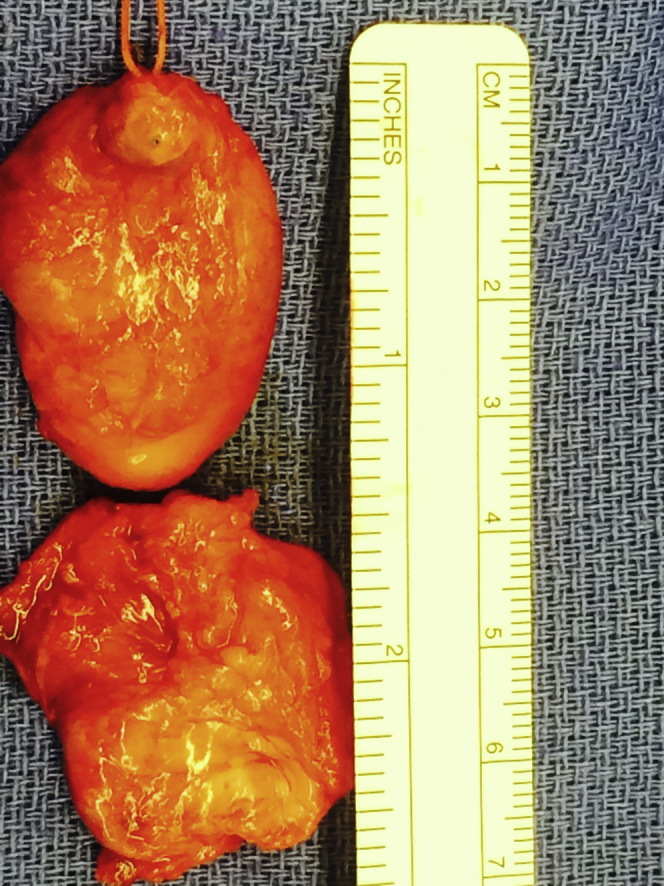
Photograph of gross specimens removed.
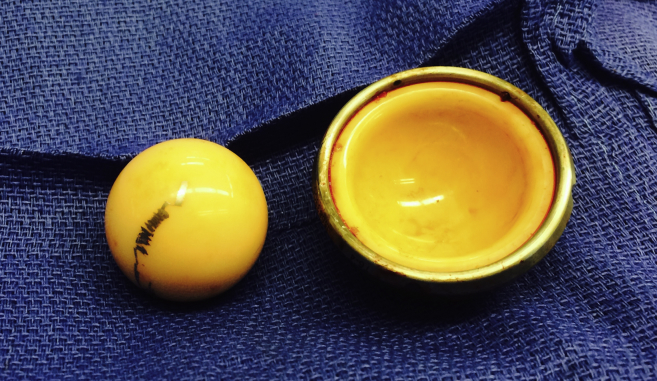
Photograph of removed ceramic components without obvious defects or stripe wear. The “lead pencil” mark was a result of intraoperative dislocation and not present before dislocation.
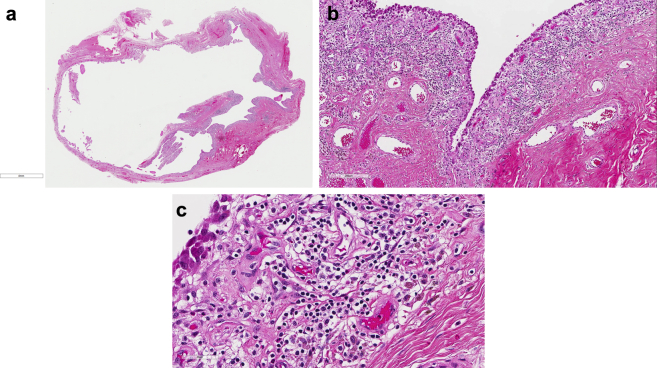
Low power histology of pseudocyst, displaying synovial lined cyst-like structure (a). Histology of the pseudocyst at 10× (b) and 40× (c) magnification showing the pseudosynovial lined cyst with abundant histiocyte and lymphocyte infiltration.
References
-
- Harris W.H., Schiller A.L., Scholler J.M., Freiberg R.A., Scott R. Extensive localized bone resorption in the femur following total hip replacement. J Bone Joint Surg Am. 1976;58(5):612. - PubMed
-
- McGrory B.J., MacKenzie J., Babikian G. A high prevalence of corrosion at the head–neck taper with contemporary Zimmer non-cemented femoral hip components. J Arthroplasty. 2015;30(7):1265. - PubMed
-
- Griffiths H.J., Burke J., Bonfiglio T.A. Granulomatous pseudotumors in total joint replacement. Skeletal Radiol. 1987;16(2):146. - PubMed
-
- Boardman D.R., Middleton F.R., Kavanagh T.G. A benign psoas mass following metal-on-metal resurfacing of the hip. J Bone Joint Surg Br. 2006;88(3):402. - PubMed
Publication types
LinkOut - more resources
Full Text Sources
Other Literature Sources
