


Dendritic Cells and Their Role in Allergy: Uptake, Proteolytic Processing and Presentation of Allergens
- PMID: 28696399
- PMCID: PMC5535981
- DOI: 10.3390/ijms18071491
Dendritic Cells and Their Role in Allergy: Uptake, Proteolytic Processing and Presentation of Allergens
Abstract
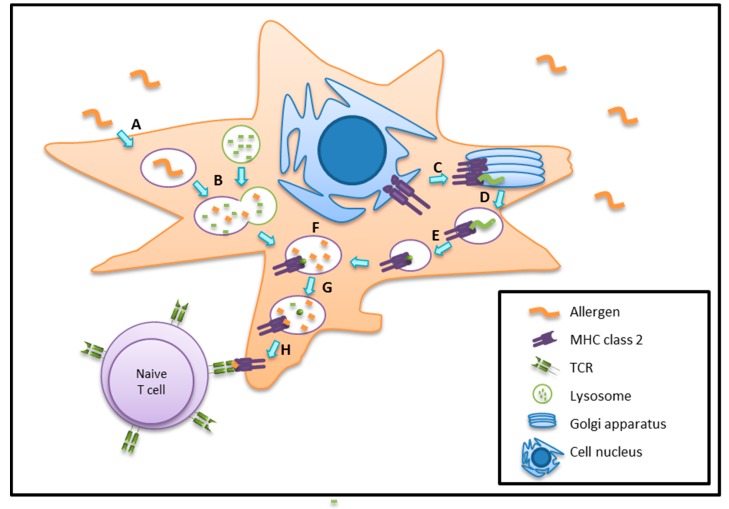
Dendritic cells (DCs) are the most important antigen presenting cells to activate naïve T cells, which results in the case of Type 1 allergies in a Type 2 helper T cell (Th2)-driven specific immune response towards allergens. So far, a number of different subsets of specialized DCs in different organs have been identified. In the recent past methods to study the interaction of DCs with allergenic proteins, their different uptake and processing mechanisms followed by the presentation to T cells were developed. The following review aims to summarize the most important characteristics of DC subsets in the context of allergic diseases, and highlights the recent findings. These detailed studies can contribute to a better understanding of the pathomechanisms of allergic diseases and contribute to the identification of key factors to be addressed for therapeutic interventions.
Keywords: allergens; dendritic cells; presentation; processing; uptake.
Conflict of interest statement
The authors declare not conflicts of interest.
Figures


References
-
- EAACI . European Academy of Allergy and Clinical Immunology; Florence, Italy: 2014. Global Atlas of Allergy.
-
- Bogh K.L., van Bilsen J., Glogowski R., Lopez-Exposito I., Bouchaud G., Blanchard C., Bodinier M., Smit J., Pieters R., Bastiaan-Net S., et al. Current challenges facing the assessment of the allergenic capacity of food allergens in animal models. Clin. Transl. Allergy. 2016;6:21. doi: 10.1186/s13601-016-0110-2. - DOI - PMC - PubMed
Publication types
MeSH terms
Substances
LinkOut - more resources
Full Text Sources
Other Literature Sources
Medical
Miscellaneous
