


Preschool and School Meal Policies: An Overview of What We Know about Regulation, Implementation, and Impact on Diet in the UK, Sweden, and Australia
- PMID: 28696403
- PMCID: PMC5537850
- DOI: 10.3390/nu9070736
Preschool and School Meal Policies: An Overview of What We Know about Regulation, Implementation, and Impact on Diet in the UK, Sweden, and Australia
Abstract
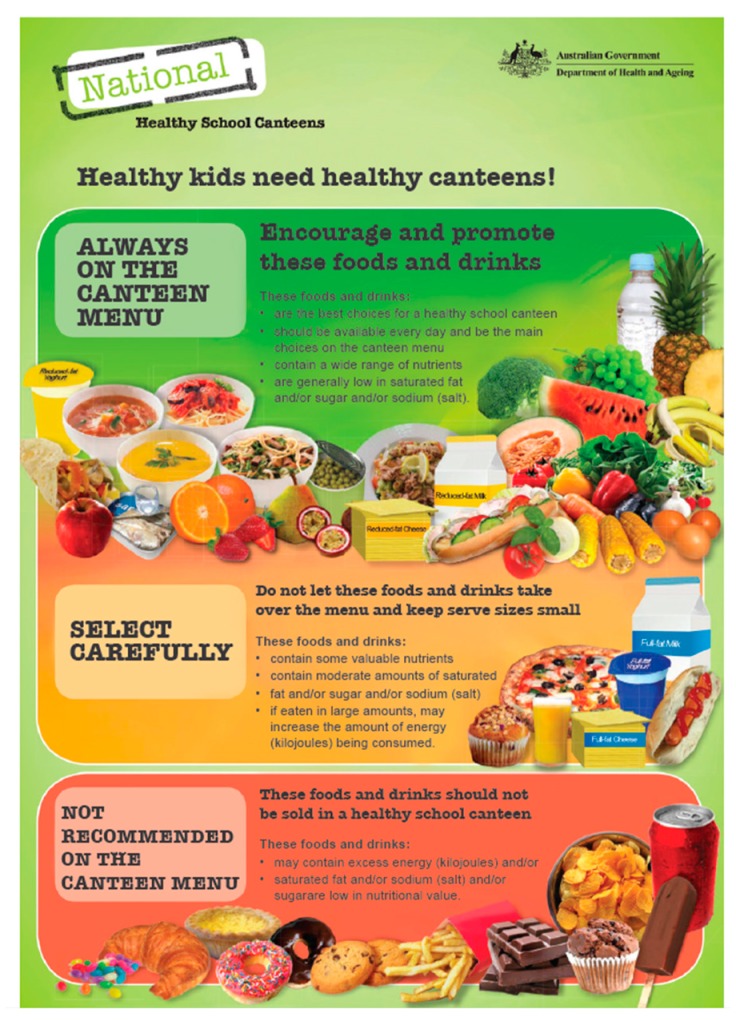
School meals make significant contributions to healthy dietary behaviour, at a time when eating habits and food preferences are being formed. We provide an overview of the approaches to the provision, regulation, and improvement of preschool and primary school meals in the UK, Sweden, and Australia, three countries which vary in their degree of centralisation and regulation of school meals. Sweden has a centralised approach; all children receive free meals, and a pedagogical approach to meals is encouraged. Legislation demands that meals are nutritious. The UK system is varied and decentralised. Meals in most primary schools are regulated by food-based standards, but preschool-specific meal standards only exist in Scotland. The UK uses food groups (starchy foods, fruit and vegetables, proteins and dairy) in a healthy plate approach. Australian States and Territories all employ guidelines for school canteen food, predominantly using a "traffic light" approach outlining recommended and discouraged foods; however, most children bring food from home and are not covered by this guidance. The preschool standards state that food provided should be nutritious. We find that action is often lacking in the preschool years, and suggest that consistent policies, strong incentives for compliance, systematic monitoring, and an acknowledgement of the broader school eating environment (including home provided food) would be beneficial.
Keywords: children; nutrition intake; policy; preshool; school; school meals.
Conflict of interest statement
The authors declare no conflict of interest.
Figures
References
-
- WHO What Is a Health Promoting School? [(accessed on 12 April 2017)]; Available online: http://www.who.int/school_youth_health/gshi/hps/en/
Publication types
MeSH terms
LinkOut - more resources
Full Text Sources
Other Literature Sources
Molecular Biology Databases
