


Therapeutic Uses of Triphala in Ayurvedic Medicine
- PMID: 28696777
- PMCID: PMC5567597
- DOI: 10.1089/acm.2017.0083
Therapeutic Uses of Triphala in Ayurvedic Medicine
Abstract
Aim: The aim of this article is to review the current literature on the therapeutic uses and efficacy of Triphala. Herbal remedies are among the most ancient medicines used in traditional systems of healthcare such as Ayurveda. Triphala, a well-recognized and highly efficacious polyherbal Ayurvedic medicine consisting of fruits of the plant species Emblica officinalis (Amalaki), Terminalia bellerica (Bibhitaki), and Terminalia chebula (Haritaki), is a cornerstone of gastrointestinal and rejuvenative treatment.
Methods: A search of the PubMed database was conducted.
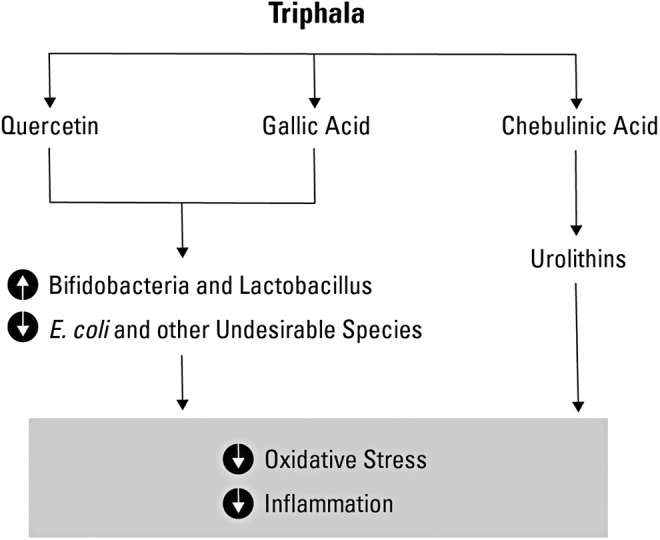
Results: In addition, numerous additional therapeutic uses described both in the Ayurvedic medical literature and anecdotally are being validated scientifically. In addition to laxative action, Triphala research has found the formula to be potentially effective for several clinical uses such as appetite stimulation, reduction of hyperacidity, antioxidant, anti-inflammatory, immunomodulating, antibacterial, antimutagenic, adaptogenic, hypoglycemic, antineoplastic, chemoprotective, and radioprotective effects, and prevention of dental caries. Polyphenols in Triphala modulate the human gut microbiome and thereby promote the growth of beneficial Bifidobacteria and Lactobacillus while inhibiting the growth of undesirable gut microbes. The bioactivity of Triphala is elicited by gut microbiota to generate a variety of anti-inflammatory compounds.
Conclusions: This review summarizes recent data on pharmacological properties and clinical effects of Triphala while highlighting areas in need of additional investigation and clinical development.
Keywords: Ayurveda; anti-inflammatory; antimicrobial; antioxidant; immunomodulating; microbiota.
Conflict of interest statement
C.T.P. is a postdoctoral fellow at UCSD partially funded by the Chopra Foundation. D.C. is a founder of the Chopra Foundation and Chopra Center and a co-owner of the Chopra Center.
Figures
References
-
-
Agniveśa , Cakrap
idatta , Śarm
RM, Dash B. Agniveaś's Caraka sa
hita: Text with English Translation & Critical Exposition Based on Cakrap
i Datta's
yurveda d
pik
, 1st ed. Varanasi, India: Chowkhamba Sanskrit Series Office, 1976
-
Agniveśa , Cakrap
-
- Bhishagratna K. An English Translation of the Sushruta Samhita, Based on Original Sanskrit Text, with a Full and Comprehensive Introd., Additional Texts, Different Readings, Notes, Comparative Views, Index, Glossary And Plates, 2nd ed. Varanasi, India: Chowkhamba Sanskrit Series Office, 1963
-
- Lloyd GER. (ed). Hippocratic Writings, new ed. Chadwick J, Mann WN. (translators). London, England: Penguin, 1978
-
- Baliga MS, et al. Scientific validation of the ethnomedicinal properties of the Ayurvedic drug Triphala: A review. Chin J Integr Med 2012;18:946–954 - PubMed
Publication types
MeSH terms
Substances
LinkOut - more resources
Full Text Sources
Other Literature Sources
Medical
