


A genome-wide association study suggests the HLA Class II region as the major susceptibility locus for IgA vasculitis
- PMID: 28698626
- PMCID: PMC5506002
- DOI: 10.1038/s41598-017-03915-2
A genome-wide association study suggests the HLA Class II region as the major susceptibility locus for IgA vasculitis
Abstract
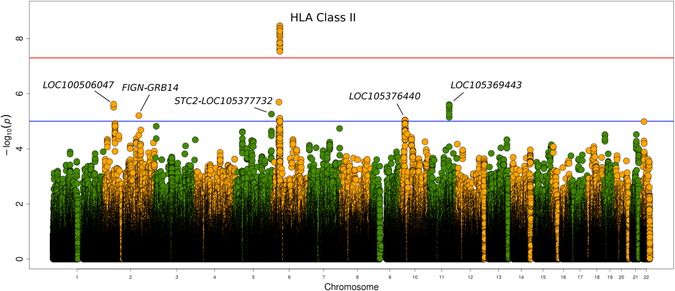
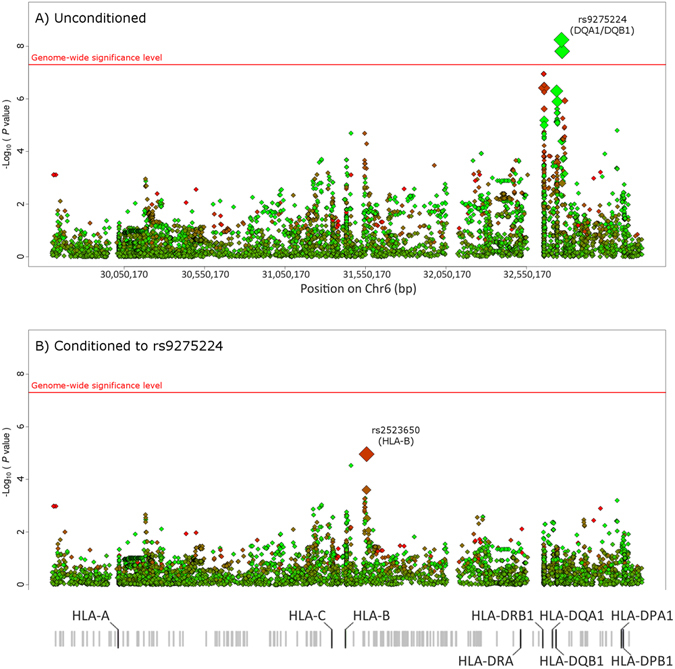
The genetic component of Immunoglobulin-A (IgA) vasculitis is still far to be elucidated. To increase the current knowledge on the genetic component of this vasculitis we performed the first genome-wide association study (GWAS) on this condition. 308 IgA vasculitis patients and 1,018 healthy controls from Spain were genotyped by Illumina HumanCore BeadChips. Imputation of GWAS data was performed using the 1000 Genomes Project Phase III dataset as reference panel. After quality control filters and GWAS imputation, 285 patients and 1,006 controls remained in the datasets and were included in further analysis. Additionally, the human leukocyte antigen (HLA) region was comprehensively studied by imputing classical alleles and polymorphic amino acid positions. A linkage disequilibrium block of polymorphisms located in the HLA class II region surpassed the genome-wide level of significance (OR = 0.56, 95% CI = 0.46-0.68). Although no polymorphic amino acid positions were associated at the genome-wide level of significance, P-values of potential relevance were observed for the positions 13 and 11 of HLA-DRB1 (P = 6.67E-05, P = 1.88E-05, respectively). Outside the HLA, potential associations were detected, but none of them were close to the statistical significance. In conclusion, our study suggests that IgA vasculitis is an archetypal HLA class II disease.
Conflict of interest statement
The authors declare that they have no competing interests.
Figures
References
Publication types
MeSH terms
Substances
LinkOut - more resources
Full Text Sources
Other Literature Sources
Medical
Research Materials
Miscellaneous
