


Anti-N-Methyl-D-aspartate Receptor Encephalitis: A Severe, Potentially Reversible Autoimmune Encephalitis
- PMID: 28698711
- PMCID: PMC5494059
- DOI: 10.1155/2017/6361479
Anti-N-Methyl-D-aspartate Receptor Encephalitis: A Severe, Potentially Reversible Autoimmune Encephalitis
Abstract
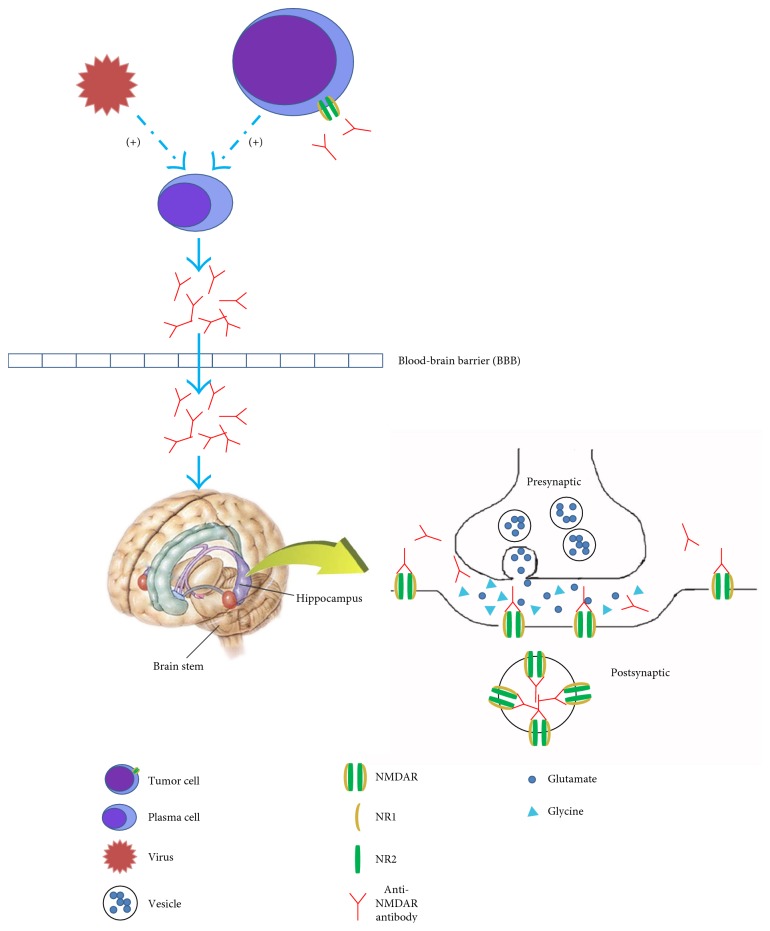
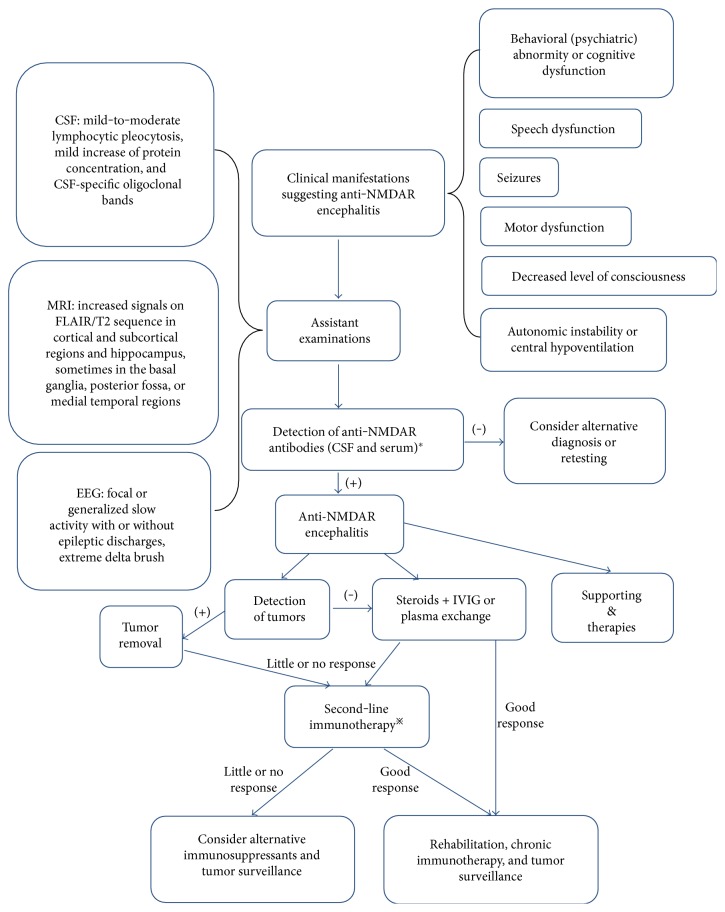
Anti-N-methyl-D-aspartate receptor (NMDAR) encephalitis is potentially lethal, but it is also a treatable autoimmune disorder characterized by prominent psychiatric and neurologic symptoms. It is often accompanied with teratoma or other neoplasm, especially in female patients. Anti-NMDAR antibodies in cerebrospinal fluid (CSF) and serum are characteristic features of the disease, thereby suggesting a pathogenic role in the disease. Here, we summarize recent studies that have clearly documented that both clinical manifestations and the antibodies may contribute to early diagnosis and multidisciplinary care. The clinical course of the disorder is reversible and the relapse could occur in some patients. Anti-NMDAR encephalitis coexisting with demyelinating disorders makes the diagnosis more complex; thus, clinicians should be aware of the overlapping diseases.
Figures
References
-
- Gable M. S., Sheriff H., Dalmau J., Tilley D. H., Glaser C. A. The frequency of autoimmune N-methyl-D-aspartate receptor encephalitis surpasses that of individual viral etiologies in young individuals enrolled in the California Encephalitis Project. Clinical Infectious Diseases. 2012;54(7):899–904. doi: 10.1093/cid/cir1038. - DOI - PMC - PubMed
Publication types
MeSH terms
Substances
Supplementary concepts
LinkOut - more resources
Full Text Sources
Other Literature Sources
Medical
