


Forecasting Individual Headache Attacks Using Perceived Stress: Development of a Multivariable Prediction Model for Persons With Episodic Migraine
- PMID: 28699328
- PMCID: PMC5950708
- DOI: 10.1111/head.13137
Forecasting Individual Headache Attacks Using Perceived Stress: Development of a Multivariable Prediction Model for Persons With Episodic Migraine
Abstract
Objective: To develop and validate a prediction model that forecasts future migraine attacks for an individual headache sufferer.
Background: Many headache patients and physicians believe that precipitants of headache can be identified and avoided or managed to reduce the frequency of headache attacks. Of the numerous candidate triggers, perceived stress has received considerable attention for its association with the onset of headache in episodic and chronic headache sufferers. However, no evidence is available to support forecasting headache attacks within individuals using any of the candidate headache triggers.
Methods: This longitudinal cohort with forecasting model development study enrolled 100 participants with episodic migraine with or without aura, and N = 95 contributed 4626 days of electronic diary data and were included in the analysis. Individual headache forecasts were derived from current headache state and current levels of stress using several aspects of the Daily Stress Inventory, a measure of daily hassles that is completed at the end of each day. The primary outcome measure was the presence/absence of any headache attack (head pain > 0 on a numerical rating scale of 0-10) over the next 24 h period.
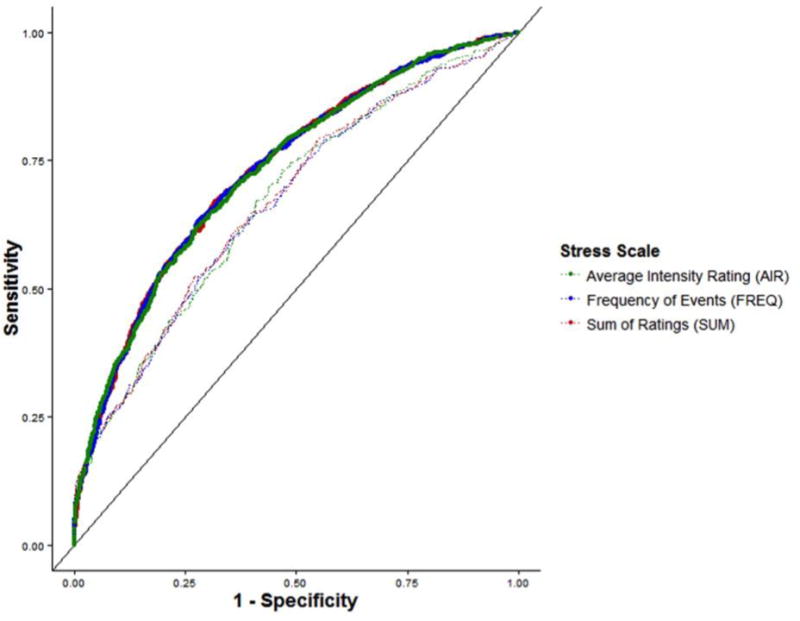
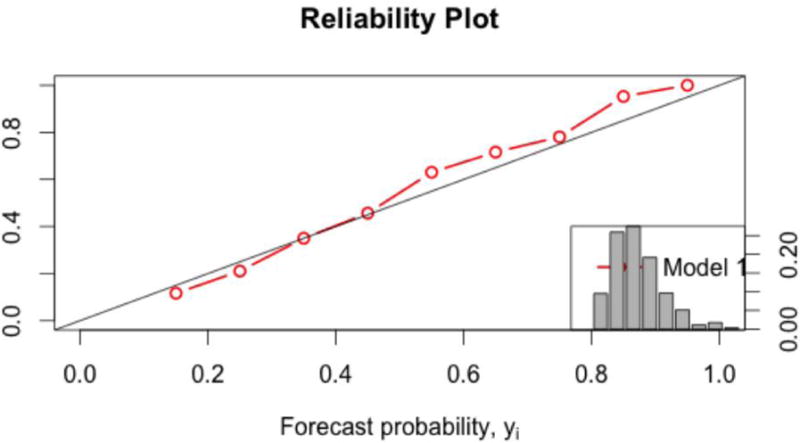
Results: After removing missing data (n = 431 days), participants in the study experienced a headache attack on 1613/4195 (38.5%) days. A generalized linear mixed-effects forecast model using either the frequency of stressful events or the perceived intensity of these events fit the data well. This simple forecasting model possessed promising predictive utility with an AUC of 0.73 (95% CI 0.71-0.75) in the training sample and an AUC of 0.65 (95% CI 0.6-0.67) in a leave-one-out validation sample. This forecasting model had a Brier score of 0.202 and possessed good calibration between forecasted probabilities and observed frequencies but had only low levels of resolution (ie, sharpness).
Conclusions: This study demonstrates that future headache attacks can be forecasted for a diverse group of individuals over time. Future work will enhance prediction through improvements in the assessment of stress as well as the development of other candidate domains to use in the models.
Keywords: forecasting; migraine; preemptory; stress; trigger.
© 2017 American Headache Society.
Conflict of interest statement
Conflicts of Interest:
T. T. Houle, D. P. Turner, A. N. Golding, C. H. Tegeler, and J. A. H. Porter report no conflicts.
V. T. Martin reports the following: Speaker for Allergan & Duramed, Speaker/Consultant for Avenir, Consultant for Eli Lilly & Amgen
D. B. Penzien reports an unrestricted grant from Merck, Inc.
Figures
References
-
- Lipton RB, Stewart WF, Diamond S, Diamond ML, Reed M. Prevalence and burden of migraine in the United States: data from the American Migraine Study II. Headache: The Journal of Head and Face Pain. 2001;41:646–657. - PubMed
-
- Stovner LJ, Hagen K, Jensen R, et al. The global burden of headache: a documentation of headache prevalence and disability worldwide. Cephalalgia. 2007;27:193–210. - PubMed
-
- Schuster NM, Rapoport AM. New strategies for the treatment and prevention of primary headache disorders. Nature Reviews Neurology. 2016;12:635–650. - PubMed
-
- Burstein R, Yarnitsky D, Goor Aryeh I, Ransil BJ, Bajwa ZH. An association between migraine and cutaneous allodynia. Annals of neurology. 2000;47:614–624. - PubMed
MeSH terms
Grants and funding
LinkOut - more resources
Full Text Sources
Other Literature Sources
Medical
Miscellaneous
