


Accuracy of a Fourth-Generation Subcutaneous Continuous Glucose Sensor
- PMID: 28700272
- PMCID: PMC5567873
- DOI: 10.1089/dia.2017.0087
Accuracy of a Fourth-Generation Subcutaneous Continuous Glucose Sensor
Abstract
Background: This study evaluated the accuracy and performance of a fourth-generation subcutaneous glucose sensor (Guardian™ Sensor 3) in the abdomen and arm.
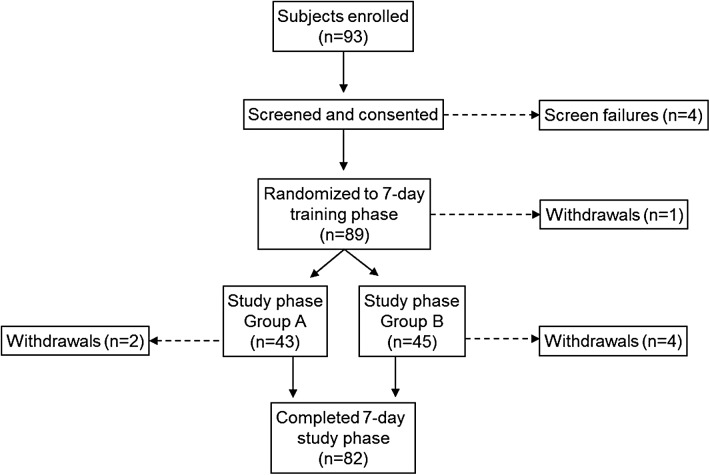
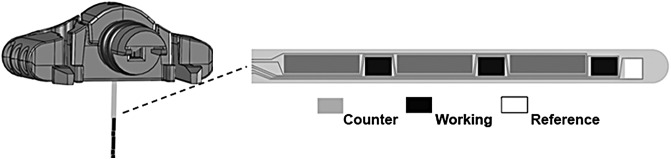
Methods: Eighty-eight subjects (14-75 years of age, mean ± standard deviation [SD] of 42.0 ± 19.1 years) with type 1 or type 2 diabetes participated in the study. Subjects wore two sensors in the abdomen that were paired with either a MiniMed™ 640G insulin pump, or an iPhone® or iPod® touch® running a glucose monitoring mobile application (Guardian Connect system) and a third sensor in the arm, which was connected to a glucose sensor recorder (GSR). Subjects were also asked to undergo in-clinic visits of 12-14 h on study days 1, 3, and 7 for frequent blood glucose sample testing using a Yellow Springs Instrument (YSI) reference.
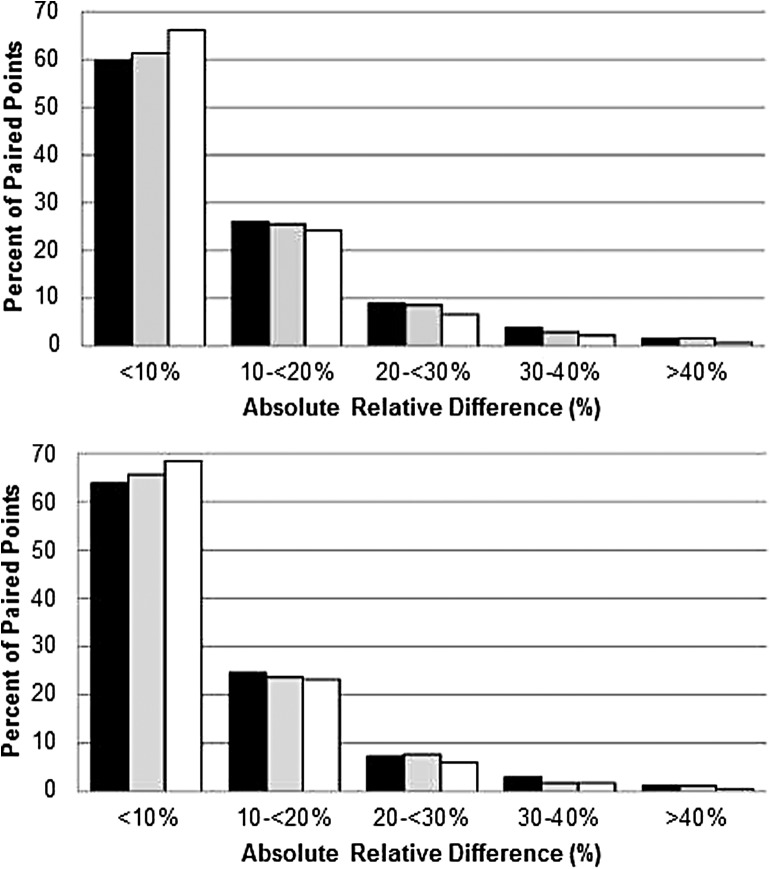
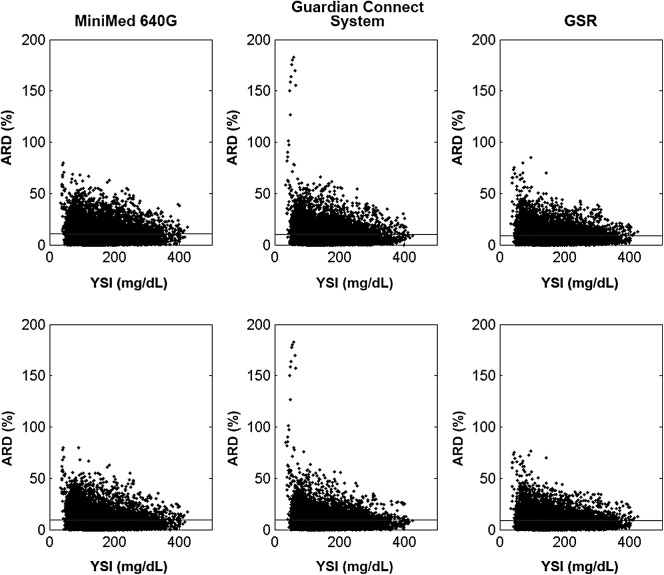
Results: The overall mean absolute relative difference (MARD ± SD) between abdomen sensor glucose (SG) and YSI reference values was 9.6% ± 9.0% and 9.4% ± 9.8% for the MiniMed 640G insulin pump and Guardian Connect system, respectively; and 8.7% ± 8.0% between arm SG and YSI reference values. The percentage of SG values within 20% agreement of the YSI reference value (for YSI >80 mg/dL) was 90.7% with the MiniMed 640G insulin pump, 91.8% with the Guardian Connect system, and 93.1% for GSR-connected arm sensors. Mean functional sensor life, when calibrating 3-4 times/day, was 145.9 ± 39.3 h for sensors paired with the MiniMed 640G insulin pump, 146.1 ± 41.6 h for sensors paired with the Guardian Connect system, and 147.6 ± 40.4 h for sensors connected to the GSR. Responses to survey questions regarding sensor comfort and ease of use were favorable.
Conclusions: The Guardian Sensor 3 glucose sensor, whether located in abdomen or the arm, provided accurate glucose readings when compared with the YSI reference and demonstrated functional life commensurate with the intended 7-day use. ClinicalTrials.gov : NCT02246582.
Keywords: Glucose sensor; MARD; Mobile device; Sensor accuracy; Sensor-integrated pump.
Conflict of interest statement
The study's principal investigators: Drs. Christiansen, Garg, Brazg, Bode, Bailey, and Slover received research support and compensation for conducting the study from Medtronic. Francine R. Kaufman, MD; Scott W. Lee, MD; John Shin, PhD, MBA; Suiying Huang, MSc; Ashley Sullivan, MSc; and Toni L. Cordero, PhD, employees of Medtronic, were involved in the data analysis, development, and/or critical review of the article. The study was funded by Medtronic.
Figures
Comment in
-
Advances in Subcutaneous Glucose Sensing.Diabetes Technol Ther. 2017 Aug;19(8):441-442. doi: 10.1089/dia.2017.0233. Epub 2017 Aug 2. Diabetes Technol Ther. 2017. PMID: 28767273 Free PMC article. No abstract available.
References
-
- Beck RW, Riddlesworth T, Ruedy K, et al. : Effect of continuous glucose monitoring on glycemic control in adults with type 1 diabetes using insulin injections: the DIAMOND randomized clinical trial. JAMA 2017;317:371–378 - PubMed
-
- Lind M, Polonsky W, Hirsch IB, et al. : Continuous glucose monitoring vs conventional therapy for glycemic control in adults with type 1 diabetes treated with multiple daily insulin injections: the GOLD randomized clinical trial. JAMA 2017;317:379–387 - PubMed
-
- Luo P, Cheng Q, Chen B, et al. : Hypoglycemia and blood glucose fluctuations in the application of a sensor-augmented insulin pump. Diabetes Technol Ther 2013;15:984–989 - PubMed
-
- Bergenstal RM, Tamborlane WV, Ahmann A, et al. : Effectiveness of sensor-augmented insulin-pump therapy in type 1 diabetes. N Engl J Med 2010;363:311–320 - PubMed
Publication types
MeSH terms
Substances
Associated data
LinkOut - more resources
Full Text Sources
Other Literature Sources
Medical
